
Boost your AI visibility for real estate agents with this practical guide. Learn proven strategies for content, SEO, and multi-platform authority.
Forget everything you thought you knew about getting found online. For real estate agents, the game isn't about keywords anymore. It's about becoming a trusted, authoritative source that AI engines like Gemini and ChatGPT will actually cite in their answers. This isn't a minor tweak; it's a complete overhaul of how we approach digital marketing, demanding a consistent, expert presence across every platform you touch.
The New Search Landscape in Real Estate
The ground has completely shifted for the real estate industry. For years, the path to new clients was paved with traditional search engine optimization (SEO)—you won the keyword game on Google, you won the business. That entire playbook is quickly becoming a relic.
Now, potential clients aren't just typing "homes for sale in Denver." They're asking AI conversational questions and getting back synthesized, definitive answers. This fundamental change is creating an entirely new class of winners and losers, and most agents are on the wrong side of the divide.
From Keywords to Authority
The heart of this new world is a pivot from keyword stuffing to demonstrating genuine authority. AI models don't just skim your website for phrases; they pull together information from countless sources to figure out who the real market experts are. This is the core principle behind what we call Generative Engine Optimization (GEO).
GEO is all about optimizing your entire digital footprint so you become the most credible, unassailable answer to a potential client's question. It means building a reputation so strong and clear that AI has no choice but to reference you. Success isn't measured in clicks anymore—it's measured in citations. For a much deeper look at these concepts, check out our complete guide on AI search engine optimization.
This chart lays out the shocking reality of just how few agents are visible in this new AI-first world.
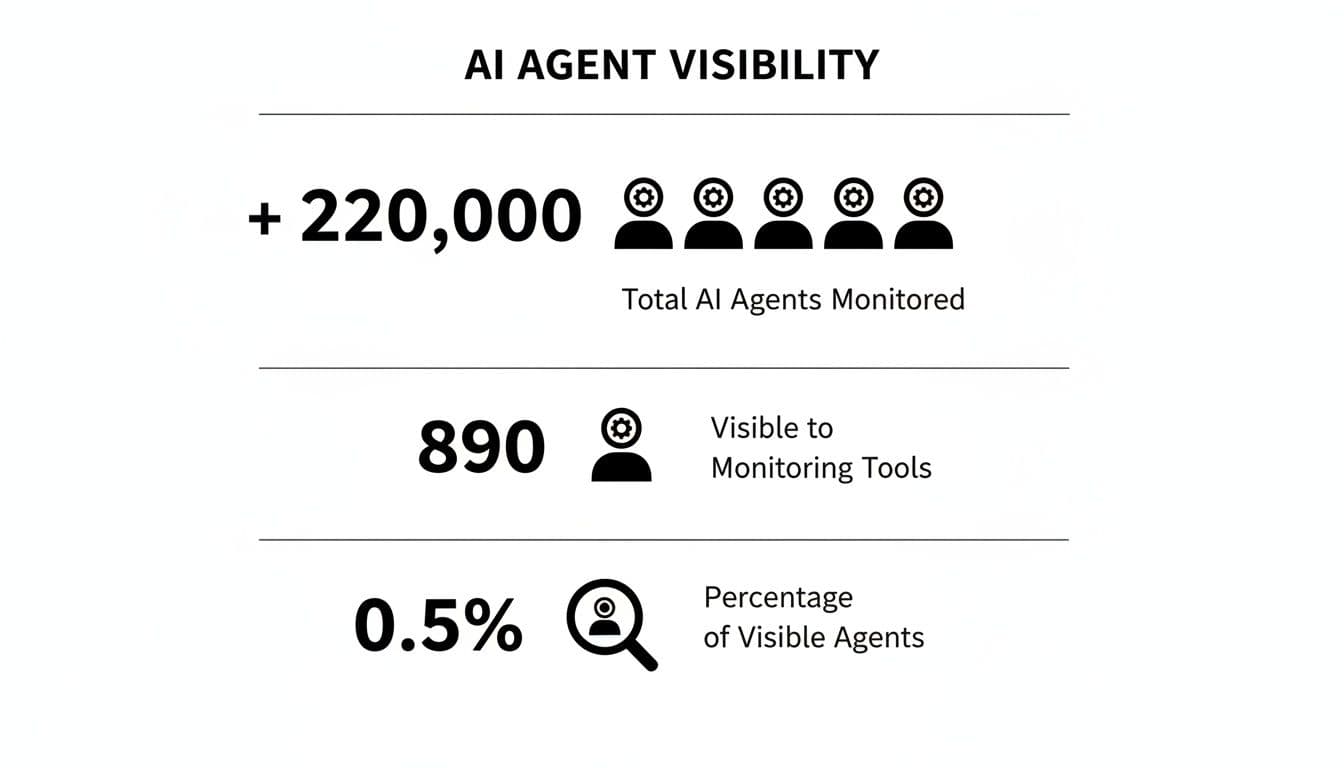
As you can see, the gap between the number of agents out there and the number being recognized by AI is staggering.
The Stark Reality of AI Visibility
Our latest analysis paints a pretty grim picture. As of early 2024, AI search engines are gatekeeping visibility on a massive scale. Only about 0.5% of licensed agents—that's a mere 890 out of 220,000 we monitored—are being validated and included in high-value, AI-generated top-10 lists.
This seismic shift proves why old-school SEO focused on just ranking a website is no longer enough. The game has changed.
The table below breaks down the strategic shift required to succeed. We're moving from a simple, on-site checklist to a much more holistic approach focused on proving your expertise across the web.
Traditional SEO vs Generative Engine Optimization
Ultimately, the goal is no longer just to rank; it's to be cited. AI prioritizes verifiable expertise, and that makes your overall digital authority your most valuable asset.
To really get ahead, you also have to understand how to build authority on the major platforms AI already trusts. For example, mastering portal-specific optimization, like these Rightmove SEO strategies, can offer crucial lessons. This isn't about chasing algorithms anymore. It's about building an undeniable, multi-faceted presence that establishes you as the go-to expert in your market.
Building Your Foundational Content Hub
Getting seen by AI isn't some secret handshake or a single magic trick. It's about building a solid, trustworthy digital foundation that AI models can easily understand and pull from. This all starts with the assets you own and control—primarily your website and your Google Business Profile (GBP). Think of these as your digital headquarters.
Your website is the command center. It can't just be a pretty digital brochure anymore; it needs to be a deep well of structured, accurate information about you, what you do, and the markets you live and breathe. In the same vein, your GBP is probably the most powerful tool you have for local discovery, feeding information directly into Google's search results and its AI models.
Establishing Unshakeable Consistency
The first rule of laying this foundation is absolute, non-negotiable consistency. AI models are built on clear, unambiguous data. When they crawl the web and find conflicting information about you, it’s a red flag. That confusion erodes their trust in your data, and your chances of getting cited plummet.
This means your Name, Address, and Phone number (NAP) must be a perfect match everywhere. I don't just mean on your website and GBP. I’m talking about Zillow, Realtor.com, and every last professional directory you’re listed on. Even something as small as "St." versus "Street" can throw a wrench in the works.
Your digital identity must be a perfect mirror across all platforms. Every piece of information—from your professional bio and headshot to your service areas and contact details—needs to be perfectly aligned. This consistency is the strongest signal of authority you can send.
Structuring Your Website for AI Consumption
Once your core business information is locked down and consistent, it's time to structure your website content to directly answer the questions your clients are asking. AI models are on the hunt for quick, definitive answers. If you organize your site with that goal in mind, you become a prime source for them to reference.

This means creating dedicated pages for each neighborhood or city you serve. On those pages, you need to include the kind of specific, structured information a potential client is looking for:
- Market Statistics: Think average home price, days on market, and recent sales trends.
- Lifestyle Information: Get into the weeds with details on local schools, parks, new restaurants, and community events.
- Frequently Asked Questions: Build out a dedicated FAQ section that tackles the most common queries about living in that specific area.
This structured approach transforms your website from a simple collection of listings into an indispensable local resource. For a more detailed look at this process, our article on web content creation goes much deeper.
Why Owned Platforms Are Your Strongest Asset
Here’s the thing: the control you have over your own website and business listings is your single greatest advantage. Recent analysis shows that businesses actually control a staggering 86% of the content that AI models cite.
This breaks down into websites (44%), business listings like GBP (42%), and a smaller chunk from reviews and social media. With 67% of buyers expected to ask tools like ChatGPT for agent recommendations, getting these owned assets right isn't just a good idea—it’s essential for survival. This level of control is exactly why focusing your energy on this foundational hub is the most effective strategy for boosting your visibility in the age of AI.
Achieving Omnipresence with Off-Platform Content
Having a solid website and a dialed-in Google Business Profile is a great start—that’s your digital command center. But if you stop there, you're making a huge mistake in the age of AI search. Generative models are built to look for consensus. They verify expertise by cross-referencing what they find about you from a whole bunch of different, credible sources. Real ai visibility for real estate agents isn't about having one great website; it's about your name and expertise showing up consistently everywhere.
This creates a powerful echo chamber of authority. Imagine an AI finds your hyper-local market analysis on your blog. Then it sees a video of you on YouTube breaking down those same trends. A moment later, it discovers a thread on Reddit where you answered a specific question about a neighborhood you just wrote about. This creates an interconnected web of trust that proves your expertise isn't just something you claim—it's been validated out in the open.
Strategic Platform Selection for Maximum Impact
You can't just throw content at the wall and hope it sticks. Not all platforms carry the same weight in the eyes of an AI. The goal is to show up on the channels that these models already see as trustworthy sources for specific kinds of information. It's a matching game: right content format, right platform, right moment in the buyer's journey.
Here's how I think about it:
- YouTube for Visual Storytelling: This is non-negotiable for video market reports, neighborhood tours, and client testimonials. Video is incredibly effective for showing, not just telling, and AI-driven search loves to feature it.
- Medium for In-Depth Guides: This is the perfect spot for your long-form, authoritative articles like "The Ultimate Guide to Relocating to [Your City]" or "A Deep Dive into the [Neighborhood] School District." Medium carries a lot of weight online, and that authority rubs off on you.
- Reddit for Authentic Engagement: Find the local subreddits (like r/[YourCity]) and just be helpful. Genuinely answer questions people have about the housing market or specific neighborhoods. You'll come across as a local expert, not a salesperson, and these forums are a goldmine of conversational data for AI.
- Local News Sites for Credibility: Getting a guest post published or even just being quoted as an expert in a local news story about real estate is huge. It provides a high-authority backlink and sends a massive signal that you're a prominent local figure.
Key takeaway: Stop thinking about your content in isolated pieces. An AI doesn't see a single blog post. It sees a network of connected signals. Your presence on diverse, respected platforms is what turns you from just another agent into a verified local authority.
Creating a Content Ecosystem
The most efficient and effective strategy is to build a content ecosystem where every piece of content supports the others. For example, that detailed blog post on your site about "First-Time Homebuyer Mistakes in [Your State]" can be the seed for a dozen other assets. Before you start, make sure your core business listings are in order. Our guide on effective business listing management can walk you through that.
Here’s what this repurposing strategy looks like in practice:
- Core Content: Start with the original, in-depth blog post on your website.
- Video Summary: Film a 5-minute YouTube video breaking down the top three mistakes from the article.
- Short-Form Video: Pull out one critical mistake and turn it into a 60-second Instagram Reel or TikTok video.
- Informative Slideshow: Create a LinkedIn carousel post using key stats and takeaways from the blog.
- Community Discussion: Start a conversation in a local Reddit or Facebook group. Ask something like, "What's the one piece of advice you'd give a first-time homebuyer in our area?" and then link back to your findings.
This isn't just about saving time. It's about amplifying your message across all the digital spaces where potential clients—and the AIs they’re starting to use—are actively looking for answers. This is how you build the kind of omnipresence that's absolutely essential to win in real estate today.
Your Playbook for Creating AI-Ready Content
Winning in this new era of AI-driven search means making a pretty fundamental change in how you think about content. For years, we’ve been told to write long, narrative-style blog posts. That playbook is now outdated. Today, the goal is to provide clear, concise, and highly structured answers that AI models can grab and present as fact.
This isn't about storytelling; it's about becoming an authoritative data source.
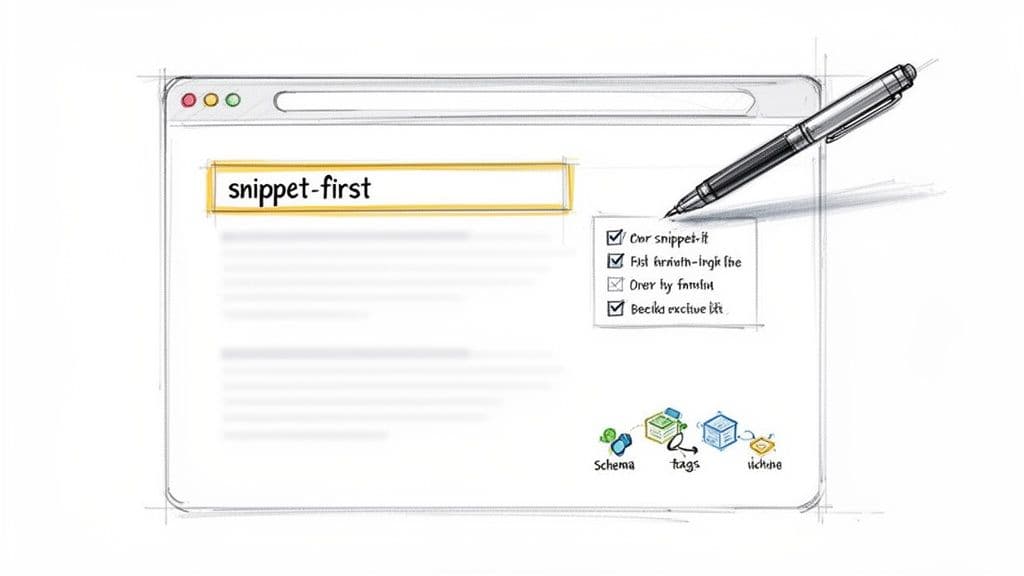
The most direct way to do this is with a ‘snippet-first’ page design. It’s simple but incredibly effective: lead your content with the direct answer to the most pressing question your audience has. Cut the long intros. Ditch the fluff. Just give them the answer right away.
Answer the Question Immediately
Put yourself in the shoes of an AI. It’s scanning the web for the most direct, trustworthy answer to a user's question. When you put a factual, data-rich summary right at the top of your page, you’re basically handing that answer to the AI on a silver platter.
Let's say you're writing a guide on the cost of living in Austin, Texas. Your very first paragraph should be a hard-hitting summary of the key numbers.
Example of a Snippet-First Opening: The average cost of living in Austin, Texas, is roughly 15% higher than the national average. A single person can expect their monthly expenses to be around 3,500** before rent, while a family of four will likely need about **7,200. The median home price is currently 550,000**, and the average rent for a one-bedroom apartment is about **1,750 per month.
See how that works? It gives instant value to a human reader and makes it incredibly easy for an AI to cite your page as a definitive resource. This one tweak is a cornerstone of what's called Answer Engine Optimization, and it's absolutely vital for showing up in AI results.
Get Fluent in the Language of AI: Structured Data
What users see on the page is only half the battle. You also need to speak to AI models in their preferred language—structured data. We do this using Schema markup, which is essentially a vocabulary of code that you add to your website's backend. It helps search engines and AI understand the context of your content.
For real estate agents, a few schema types are game-changers:
RealEstateAgentSchema: This belongs on your "About Me" or agent bio page. It explicitly tells search engines who you are, what brokerage you're with, the areas you serve, and how to contact you.FAQPageSchema: If you create an FAQ page (and you should), this markup signals that your content is formatted as direct questions and answers. This makes it a perfect candidate for getting pulled into AI summaries and featured snippets.RealEstateListingSchema: Use this on every single property listing. It structures all the key details—price, address, square footage, number of beds/baths—into a format machines can easily read and compare.
Think of it this way: implementing schema is like giving an AI a perfectly organized file cabinet instead of a messy stack of papers. It removes all ambiguity.
Of course, creating all this content is easier with the right technology. It’s worth exploring the 7 essential tools for AI for real estate marketing to see how you can streamline the process. This technical foundation isn't just a "nice-to-have" anymore; it's a requirement for any agent who is serious about their ai visibility.
How to Measure and Refine Your AI Visibility
Deploying a whole new content strategy without a way to measure its impact is like showing a home in the dark. It’s pointless. You simply can't improve what you don't track. This brings us to the final, and most critical, piece of the puzzle: building a continuous loop of measurement, analysis, and refinement.
This isn't about staring at your old SEO dashboards. We’re moving beyond traditional metrics like keyword rankings and website traffic. The real goal here is to monitor your direct influence within AI-generated answers. You need to know, point-blank: are platforms like ChatGPT, Gemini, and Perplexity citing your brand as an authority?
Tracking Your AI Footprint
Let’s be realistic—you can’t sit there manually checking dozens of AI prompts every single day. That's where specialized monitoring tools become absolutely essential. A platform like Attensira is built to be your eyes and ears, tracking your brand mentions and content citations across the most important AI engines.
This gives you direct answers to the questions that actually matter for your business:
- Where are we being cited? Pinpoint which blog posts, guides, or FAQ pages are successfully being used as sources by AI.
- Where are our competitors winning? See exactly which topics and questions your rivals are owning, instantly revealing your most critical content gaps.
- What should we do next? Get clear, data-driven recommendations on what content to create or update to start capturing that AI visibility.
Here’s a look at what this kind of monitoring actually looks like in practice. You get a clear dashboard view of your brand’s presence across different AI models.
This kind of analysis provides a concrete, actionable picture of your performance. You can see precisely where you're visible and where you're losing ground.
An Actionable Refinement Workflow
Once you have a monitoring system in place, you can fall into a simple yet powerful rhythm to consistently improve your standing. This isn't a one-time fix; it’s an ongoing strategic cycle. The good news is that it doesn't require a deep technical background to get started.
The core principle is simple: find where your competitors are seen as the authority, create a better and more structured answer, and then measure your impact. This rinse-and-repeat process is how you systematically capture valuable digital real estate inside AI search.
Here’s what that looks like in the real world:
- Connect and Analyze: The first move is to connect your domain to a monitoring tool. Run an initial analysis to get your baseline AI footprint and see how you currently stack up against the competition.
- Pinpoint Opportunities: Dig into the data to find a high-value topic where a competitor is consistently cited. For example, maybe they’re the go-to source for "property taxes in Travis County." That’s your target.
- Draft and Optimize: Now, create a new, AI-optimized piece of content that gives a more comprehensive, structured, and data-rich answer to that specific query. Use the snippet-first and schema markup tactics we covered earlier.
- Monitor and Measure: After you publish, watch what happens. Over the next few weeks and months, track whether your new content starts to replace your competitor's as the primary source for that topic. You can learn more about the specifics in our guide to AI search monitoring.
This continuous loop transforms AI visibility from a guessing game into a predictable, data-driven strategy for building long-term authority in your market.
Common Questions About AI Visibility
It’s completely understandable that the move toward AI-driven search has kicked up a lot of questions for agents who have spent years mastering traditional SEO. Getting a handle on the fundamentals is the best way to start building a strategy for AI visibility for real estate agents. The big shift here isn't just about new tactics; it's a completely different way of thinking.
For years, SEO was a game of ranking your webpages for certain keywords. AI visibility, on the other hand, is about getting your expertise and information cited directly within the AI's generated answer. The focus has moved from simple keyword matching to deeply understanding user intent and establishing a rock-solid, consistent presence across multiple platforms. It’s no longer just about your site's rank—it's about the reliability of your data.
What's the Most Important First Step?
If there's one thing you can do right now to make a difference, it's this: audit your entire digital footprint for absolute consistency. I'm talking about making sure your name, brokerage, contact info, and professional bio are perfectly identical everywhere you exist online.
- Your main agent website
- Your Google Business Profile
- Your profiles on Zillow and Realtor.com
- Every single one of your social media accounts
This kind of flawless alignment sends a massive trust signal to AI models. Any inconsistencies, even small ones, plant a seed of doubt, and in this new world, doubt is a visibility killer.
Building authority for AI search is a marathon, not a sprint. While some technical fixes can deliver a quick impact, a comprehensive content and omnipresence strategy often takes three to six months to show significant, measurable results.
Think of consistency as the fuel for this long-term strategy. Using a monitoring tool can help you see where you're making progress, celebrate the early wins, and stay on track as you build out your authoritative presence.
Ready to see where you stand in AI search? Connect your domain to Attensira and get a clear, data-driven picture of your AI visibility in minutes.