Discover a replicable content marketing strategy example for B2B success. We break down 10 proven strategies with actionable tips and deep analysis.
In a digital ecosystem increasingly shaped by AI, a powerful content strategy is no longer optional-it's the core engine of B2B growth. Yet, the leap from abstract theory to tangible execution remains a significant challenge for many marketing teams. This guide is designed to bridge that gap. We will dissect ten distinct and effective content marketing strategy example types, revealing the tactical nuances that separate high-performing campaigns from the rest.
Forget generic success stories. We are going beyond surface-level descriptions to provide a replicable blueprint for each strategy. For every example, from video marketing to interactive content, we will break down the essential components:
- Strategic Objectives: What was the primary business goal?
- Target Audience: Who was the content created for?
- Execution Steps: How was the strategy brought to life, step by step?
- Key Performance Indicators (KPIs): How was success measured?
To gain inspiration for your own initiatives, exploring specific 7 Standout B2B Content Marketing Examples for 2025 can provide invaluable insights into what top brands are currently implementing.
More importantly, our analysis will explore how to optimize these strategies for the new era of AI-driven search and discovery. We will discuss how to use platforms like Attensira to monitor and improve AI visibility, ensuring your content not only reaches your target audience but also achieves prominent placement on AI assistants and in generative search results. This article delivers actionable frameworks you can adapt and deploy immediately to drive measurable results.
1. Blog Content Marketing
Blog content marketing is a foundational strategy focused on creating regular, valuable articles to attract and engage a target audience. It serves as a powerful engine for driving organic traffic, establishing industry authority, and nurturing leads through the sales funnel. By consistently publishing high-quality content, businesses can build a library of assets that answer audience questions and improve search engine visibility over time. This approach transforms a company website from a simple brochure into a dynamic resource hub.

This method is a quintessential content marketing strategy example because it directly addresses user intent at various stages of the buyer's journey. Companies like HubSpot and Moz have built empires on this model, using their blogs to provide immense value before ever asking for a sale. HubSpot, for instance, uses a topic cluster model, creating comprehensive pillar pages on broad topics and linking to more specific cluster posts, a structure that signals expertise to search engines and provides a clear user path.
Strategic Application and Best Practices
To execute this strategy effectively, focus on quality and consistency. Rather than simply producing content, the goal is to create the best resource available for a specific query.
- Target Long-Tail Keywords: Focus on specific, lower-competition phrases to attract highly qualified traffic. For example, instead of "marketing," target "B2B SaaS content marketing KPIs."
- Implement Topic Clusters: Organize content around a central "pillar" page. This improves site architecture and demonstrates topical authority to Google.
- Refresh Existing Content: Regularly update older posts with new data and insights to maintain their relevance and search rankings.
- Publish Consistently: Aim for a sustainable publishing cadence, such as 2-4 high-quality posts per month, to build momentum and audience expectation.
By integrating these tactics, a blog becomes a strategic asset. To build a robust framework, explore these essential steps on how to develop a comprehensive content marketing strategy. This approach ensures your blog not only attracts visitors but also converts them into loyal customers.
2. Video Content Marketing
Video content marketing involves creating and distributing compelling video assets to attract, engage, and convert a target audience. This dynamic format excels at storytelling, explaining complex products, and building a human connection with viewers. By leveraging platforms like YouTube, LinkedIn, and even short-form video apps, businesses can capture attention in a crowded digital landscape and communicate their value proposition more effectively than with static content alone.
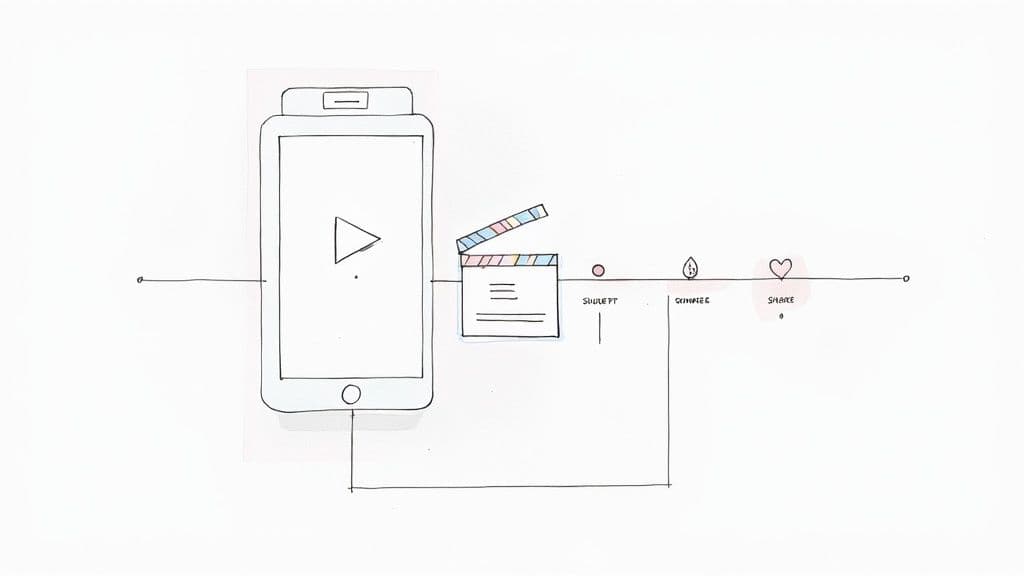
This approach is a prime content marketing strategy example because it meets modern audience preferences for visual, easily digestible information. Blendtec's "Will It Blend?" series is a classic case study; the company demonstrated its blender's power by pulverizing everything from iPhones to golf balls, creating viral content that was both entertaining and a powerful product demo. Similarly, B2B companies like Wistia use video to provide educational content on video marketing itself, establishing authority while showcasing their own platform's capabilities.
Strategic Application and Best Practices
An effective video strategy prioritizes audience value and platform context over high production costs. The goal is to create content that resonates, informs, or entertains, thereby building brand affinity and driving action.
- Focus on Platform-Specific Content: Tailor video length, orientation, and style to the platform. Create short, vertical videos for TikTok or Reels, and longer, in-depth tutorials for YouTube.
- Prioritize the First 3-5 Seconds: Capture viewer attention immediately with a strong hook, a compelling question, or visually striking imagery to combat short attention spans.
- Include Clear Calls-to-Action (CTAs): Guide viewers on what to do next, whether it's subscribing, visiting a landing page, or downloading a resource.
- Optimize for SEO and Accessibility: Use keyword-rich titles and descriptions. Include accurate captions or transcripts to improve accessibility and help search engines understand the video's content.
By integrating these tactics, video becomes a powerful tool for lead generation and brand building. It allows businesses to demonstrate expertise, showcase products in action, and connect with their audience on a more personal level.
3. Podcast Content Marketing
Podcast content marketing involves creating and distributing episodic audio content to connect with an audience on a deeper, more personal level. This strategy allows brands to reach listeners during screen-free moments like commutes or workouts, building an intimate connection through consistent, value-driven conversation. By producing a podcast, a business can establish itself as an industry authority, share its unique perspective, and nurture a highly engaged community.
This format is a powerful content marketing strategy example because it builds brand affinity and trust in a way that written content often cannot. Shows like The Tim Ferriss Show or HubSpot's Marketing Against the Grain demonstrate this perfectly. They don't just share information; they create a unique listening experience, often featuring influential guests and unscripted insights that make listeners feel like part of an exclusive conversation. This approach transforms passive consumption into active, loyal listenership.
Strategic Application and Best Practices
Success in podcasting hinges on quality, consistency, and discoverability. The goal is to create a show that becomes a regular part of your audience's routine.
- Invest in Quality Audio: Use a good microphone and editing software. Poor audio quality is the quickest way to lose a listener.
- Establish a Consistent Cadence: Publish new episodes on a predictable schedule, whether weekly or bi-weekly, to build anticipation and habit.
- Leverage Guest Interviews: Invite industry experts onto your show to tap into their audiences and add fresh perspectives.
- Optimize for Discoverability: Submit your podcast to all major platforms like Apple Podcasts and Spotify, and use descriptive titles and detailed show notes with relevant keywords.
By following these practices, a podcast can become a cornerstone of your content ecosystem. It not only engages an audience but also generates derivative content like blog posts, social media clips, and newsletters, maximizing the return on your content creation efforts.
4. Infographic Content Marketing
Infographic content marketing is a strategy centered on creating visually engaging, data-rich graphics to simplify complex information. This approach combines data visualization, concise text, and compelling design to communicate a message quickly and memorably. By transforming dense statistics or processes into an easily digestible format, businesses can capture audience attention and encourage social sharing, enhancing brand visibility and link-building efforts.
This method is an effective content marketing strategy example because it caters to the modern user's preference for visual content and short attention spans. Companies like Statista and Column Five Media excel at this, turning original research and complex datasets into authoritative, shareable assets that journalists and bloggers frequently cite. For instance, embedding a well-designed infographic within a blog post can significantly increase its SEO value by attracting high-quality backlinks from other websites that use the graphic.
Strategic Application and Best Practices
To succeed with infographics, the focus must be on unique data and exceptional design. The goal is to create a standalone piece of content that tells a complete story visually.
- Anchor with Original Data: Base your infographic on proprietary research, a unique survey, or a novel analysis of existing data to make it a primary source.
- Design for Shareability: Include your logo and website URL. Also, provide easy-to-use embed codes and social sharing buttons to encourage distribution.
- Optimize for SEO: Embed the infographic in a dedicated blog post. Use a descriptive file name, fill out the alt text, and surround it with relevant copy to help search engines understand its context.
- Promote Across Channels: Share the infographic on visual platforms like Pinterest and LinkedIn. Also, pitch it to relevant industry publications and bloggers for broader reach.
By following these practices, an infographic becomes more than just a pretty picture; it transforms into a powerful tool for lead generation and brand authority. To explore how visual storytelling enhances brand perception, you can review some exceptional examples on Column Five’s portfolio. This approach ensures your visual assets actively contribute to your marketing goals.
5. Email Marketing Content
Email marketing content is a strategy centered on delivering personalized and valuable information directly to an audience's inbox. This approach excels at nurturing leads, building customer loyalty, and driving conversions by maintaining a direct line of communication. By segmenting audiences and tailoring messages, businesses can guide subscribers through the buyer's journey, from initial awareness to final purchase and beyond. It transforms a simple contact list into a powerful relationship-building asset.
This method is a potent content marketing strategy example because it offers one of the highest ROIs by leveraging a owned audience. Companies like Morning Brew and ConvertKit demonstrate its power. Morning Brew built a media empire by delivering a witty, digestible daily news summary, making their email a must-read habit for millions. ConvertKit, aimed at creators, uses its own platform to send highly segmented, value-driven emails that educate its audience on how to grow their businesses, effectively using their product as a case study.
Strategic Application and Best Practices
Effective email content marketing hinges on relevance and respect for the subscriber's inbox. The goal is to be a welcome guest, not an intrusive pest.
- Segment Audiences: Group subscribers based on their behavior, interests, or lifecycle stage to deliver hyper-relevant content. For instance, segment new subscribers for a welcome series and long-time customers for loyalty offers.
- Provide Value Before Asking: Offer free resources, educational insights, or exclusive tips in your emails before pushing for a sale. This builds trust and establishes your authority.
- Test and Optimize: Continuously A/B test elements like subject lines, send times, and call-to-action buttons to improve open rates and engagement.
- Maintain List Hygiene: Regularly remove inactive subscribers to improve deliverability rates and ensure you are communicating with an engaged audience.
By implementing these tactics, email marketing becomes a precision tool for nurturing relationships at scale. This targeted approach ensures your messages resonate, turning subscribers into dedicated advocates for your brand.
6. Social media Content Marketing
Social media content marketing involves creating platform-specific content for social networks to build communities, increase brand awareness, and drive engagement. This strategy moves beyond simple broadcasting, focusing instead on authentic interaction, visual storytelling, and maintaining a consistent brand presence where the audience spends its time. By tailoring content to the unique culture and format of each platform, businesses can foster genuine connections and turn followers into advocates.

This approach is a critical content marketing strategy example because it targets audiences in their native digital environments, allowing for direct, real-time feedback and relationship building. Brands like Wendy's have mastered this with their sarcastic and witty Twitter persona, while GoPro thrives on Instagram by leveraging user-generated visual content that showcases its product in action. These examples demonstrate that success isn't just about posting; it's about creating an identity and a dialogue that resonates with the platform's user base.
Strategic Application and Best Practices
To succeed, a social media strategy must be adaptable and audience-centric. The goal is to provide value, whether through entertainment, education, or community, rather than direct sales pitches.
- Create Platform-Native Content: Utilize features specific to each network, such as Instagram Reels, TikTok videos, or LinkedIn articles, to maximize reach and engagement.
- Post with Consistency: Publish content during peak audience activity times to improve visibility and establish a reliable brand presence.
- Engage with Your Community: Respond to comments and messages promptly, ideally within the first hour, to foster a sense of community and show that you are listening.
- Track Platform-Specific Metrics: Analyze data such as engagement rate, reach, and shares for each platform to understand what content resonates and refine your approach.
By implementing these tactics, social media transforms from a simple promotional channel into a dynamic community hub. For brands looking to tap into niche communities, it's worth exploring the unique dynamics of platforms like Reddit. You can see how this works by discovering the benefits of why posting on Reddit works for business. This ensures your efforts are focused on building authentic relationships that drive long-term brand loyalty.
7. Case Study Content Marketing
Case study content marketing is a powerful strategy centered on creating detailed narratives that showcase how your product or service solved a specific customer's problem. This approach provides tangible social proof, building trust and credibility by demonstrating real-world value. Case studies are particularly effective in B2B marketing, where purchase decisions are heavily influenced by evidence of ROI and successful implementation. They bridge the gap between a brand's claims and a prospect's need for proof.
This is an indispensable content marketing strategy example for B2B enterprises because it directly addresses the high-stakes evaluation process of business buyers. Companies like Salesforce and Slack excel at this, transforming customer wins into compelling assets that their sales teams can leverage. Salesforce, for example, features an extensive library of customer success stories categorized by industry, product, and company size, making it easy for prospects to find relevant proof points that resonate with their own challenges.
Strategic Application and Best Practices
To create high-impact case studies, focus on telling a clear story of transformation, supported by quantifiable data. The goal is to make the customer the hero, with your solution as the tool that enabled their success.
- Follow the PAR Framework: Structure the narrative around the Problem, Action, and Result. Clearly define the challenge the customer faced, the solution you implemented, and the specific, measurable outcomes achieved.
- Quantify Results: Use hard data to demonstrate impact. Instead of "improved efficiency," state "reduced project completion time by 30%." Metrics are the most persuasive element.
- Create Multiple Formats: Repurpose each case study into various formats like a downloadable PDF, a dedicated landing page, a short video testimonial, and social media graphics to maximize its reach and appeal to different preferences.
- Arm Your Sales Team: Integrate case studies directly into the sales process. Equip sales reps with relevant stories to share with prospects who are facing similar challenges, effectively overcoming objections and building confidence.
By following this framework, your case studies become more than just testimonials; they become strategic assets that accelerate the sales cycle. To learn how to structure these narratives effectively, consider these guidelines on how to write a compelling case study. This ensures your success stories are both engaging and persuasive.
8. Webinar and Live Event Content Marketing
Webinar and live event content marketing involves hosting live or recorded educational sessions to engage audiences in real-time, establish expertise, and generate high-quality leads. This strategy leverages the power of interactive and timely content to create a direct connection with prospects. By offering valuable insights in a live format, businesses can capture detailed lead information and nurture relationships through direct Q&A and engagement.
This method is a powerful content marketing strategy example because it excels at mid-funnel lead generation and qualification. Companies like ConvertKit and Forrester leverage webinars to demonstrate product value and share exclusive industry research, attracting highly motivated attendees. ConvertKit, for instance, hosts webinars specifically for creators, showing them how to grow their email lists and business, which directly aligns with their software's purpose and drives qualified sign-ups.
Strategic Application and Best Practices
To maximize the impact of webinars, focus on delivering tangible value and creating a seamless attendee experience from registration to follow-up. The goal is to educate first and sell second.
- Promote Across Channels: Announce your webinar via email, social media, and paid ads at least two weeks in advance. Use a clear registration landing page that highlights key takeaways.
- Engage During the Event: Incorporate polls, Q&A sessions, and live chat to keep the audience actively involved and gather real-time feedback.
- Repurpose Webinar Content: Record the session and repurpose it into blog posts, social media clips, quote graphics, and on-demand video assets to extend its lifecycle and reach.
- Follow Up Strategically: Send a thank-you email immediately after with a link to the recording and presentation slides. Create a separate follow-up sequence for attendees and no-shows, tailoring the message to their engagement level.
By implementing this strategy, you create high-value content assets that not only generate leads but also position your brand as a go-to authority. This approach transforms a one-time event into a long-term marketing engine.
9. Interactive Content Marketing
Interactive content marketing is a strategy centered on creating experiences that require active user participation. Instead of passively consuming information, the audience engages with content like quizzes, calculators, assessments, or interactive tools, receiving personalized value in return. This two-way exchange is highly effective for capturing attention, collecting first-party data, and guiding users toward solutions. The core principle is transforming content from a monologue into a dialogue.
This approach is a standout content marketing strategy example because it provides immediate, tangible value to the user while generating qualified leads for the business. Companies like HubSpot and SEMrush have mastered this by offering free tools such as the Marketing Grader or a Website Audit tool. Users input their own data (a website URL or marketing metrics) and receive a personalized report, instantly demonstrating the company's expertise and the value of its paid services. Spotify's annual "Wrapped" feature is another prime example, turning user data into a shareable, personal, and highly engaging experience.
Strategic Application and Best Practices
Effective interactive content must be user-centric, providing instant gratification and clear value. The goal is to solve a small, specific problem for the user, which in turn builds trust and qualifies their interest.
- Offer Immediate Value: Design tools that provide instant answers. For example, an ROI calculator for a software product or a quiz that helps a user self-identify their biggest business challenge.
- Gate Results, Not the Experience: Allow users to engage with the tool freely but ask for an email address to deliver the detailed results. This captures a high-intent lead at the peak of their interest.
- Prioritize Mobile-First Design: Ensure your interactive tools are seamless and intuitive on mobile devices, as a significant portion of users will engage on smartphones.
- Follow Up with Personalization: Use the data collected from the interactive experience to segment your audience and deliver highly relevant follow-up content or offers.
By integrating these tactics, interactive content becomes a powerful lead generation engine. It shifts the dynamic from pushing information to pulling users in with a valuable, personalized exchange.
10. SEO-Optimized Content Strategy
An SEO-Optimized Content Strategy involves creating and structuring content specifically to rank high in search engine results pages (SERPs). This approach is meticulously data-driven, leveraging keyword research, on-page optimization, and technical SEO to attract consistent, high-intent organic traffic. It goes beyond simply writing good content; it engineers that content to meet the precise criteria that search algorithms and users are looking for, ensuring maximum visibility and authority.
This method is a classic content marketing strategy example because it targets users at the exact moment they are actively seeking solutions. Companies like Ahrefs and Backlinko have built their entire marketing model on this, creating definitive, long-form guides that dominate search rankings for high-value industry terms. Backlinko, for instance, is famous for its "Skyscraper Technique," which involves finding top-ranking content for a keyword and creating a demonstrably better version to attract backlinks and authority.
Strategic Application and Best Practices
Effective execution requires a deep understanding of search engine algorithms and user intent. The primary goal is to create comprehensive content that fully satisfies a searcher's query, making it the most deserving result for a top ranking.
- Prioritize User Intent: Analyze the SERPs for your target keywords to understand what type of content (e.g., listicle, how-to guide, comparison) and format users want.
- Conduct In-Depth Keyword Research: Use tools like Ahrefs or SEMrush to identify long-tail keywords with high relevance and achievable difficulty.
- Build Topical Authority: Create pillar pages and topic clusters to signal deep expertise in a specific niche to search engines.
- Optimize On-Page Elements: Ensure title tags, meta descriptions, headers (H1, H2), and image alt text are strategically optimized with target keywords.
- Focus on Technical SEO: Monitor Core Web Vitals, ensure mobile-friendliness, and maintain a logical internal linking structure.
By systematically applying these tactics, your content becomes a predictable engine for organic growth. To effectively measure your success, you must track your search engine presence; explore how to quantify your search visibility with a visibility score. This ensures your efforts translate into tangible ranking improvements.
10-Format Content Marketing Strategy Comparison
From Blueprint to Impact: Implementing and Measuring Your AI-Powered Strategy
The detailed examples of content marketing strategy we have explored, from SEO-optimized blogs to interactive webinars, serve as more than just case studies. They are strategic blueprints, illustrating the powerful fusion of audience understanding, channel mastery, and creative execution required to succeed in the competitive B2B landscape. We’ve seen how HubSpot’s educational blog content captures top-of-funnel interest, how Salesforce’s Dreamforce webinars generate high-quality leads, and how Adobe’s case studies accelerate bottom-of-funnel decisions.
Each content marketing strategy example demonstrates a core principle: success is not accidental. It is the result of a deliberate, data-informed process that connects a specific business objective to a carefully chosen content format and distribution channel. The recurring theme is a relentless focus on providing tangible value to a well-defined audience, whether that’s through an insightful podcast, a data-rich infographic, or a problem-solving video tutorial.
Synthesizing the Core Takeaways
To translate these blueprints into a functional strategy for your own organization, it's crucial to distill the universal takeaways that transcend any single format. These are the foundational pillars that support every successful campaign.
Key strategic insights include:
- Audience Centricity is Non-Negotiable: Every effective strategy begins with a deep, almost obsessive, understanding of the target audience. Their pain points, goals, and content consumption habits must dictate your every move.
- The Content Funnel Still Reigns: The most impactful strategies guide prospects seamlessly from awareness (blogs, social media) to consideration (webinars, case studies) and finally to decision (interactive tools, personalized demos). Each piece of content has a specific job to do.
- Measurement Defines Success: Vague goals lead to vague results. The best strategies are anchored in precise KPIs, whether it's lead generation, SERP rankings, conversion rates, or customer lifetime value. Without clear metrics, you're navigating without a compass.
Your Actionable Roadmap to Implementation
Moving from inspiration to execution requires a structured approach. The examples provided are not meant to be copied verbatim but adapted to your unique context. Here are your immediate next steps to build and refine your own high-impact strategy.
- Conduct a Content and Channel Audit: Before creating anything new, assess your existing assets and performance. What’s working? What isn’t? Where are the gaps in your customer journey?
- Define a Pilot Program: Select one content marketing strategy example from this article that most closely aligns with a pressing business need. Frame it as a pilot project with a clear objective, timeline, and budget. For instance, you could launch a three-part webinar series aimed at generating 100 MQLs in Q3.
- Establish Your Measurement Framework: For your chosen pilot, define your primary and secondary KPIs. Set up your analytics dashboards in Google Analytics, your CRM, and other relevant platforms before you launch.
- Integrate an AI Visibility Strategy: This is no longer optional. As AI-driven search and generative models become primary information sources, you must track your brand’s presence. Start monitoring how your key topics and brand name appear in AI-generated answers. This is the new frontier of brand visibility.
The ultimate value of mastering these concepts lies in building a resilient, predictable growth engine for your B2B enterprise. A well-executed content strategy transforms your marketing from a cost center into a strategic asset that generates qualified leads, builds brand authority, and fosters customer loyalty long after the initial transaction. By combining the timeless principles of value-driven content with a forward-looking approach to AI-powered discovery, you position your brand not just to compete, but to lead.
Ready to ensure your content marketing strategy thrives in the age of AI? Attensira provides the critical visibility you need, tracking how your brand and content appear in AI search results and generative responses. Stop guessing and start measuring your AI impact by visiting Attensira to see how you can optimize for the future of search.