
Discover the 12 best PEEC AI alternatives for B2B teams. Our guide compares features, pricing, and use cases to help you find the right AI visibility tool.
In the competitive sphere of B2B marketing and SEO, selecting the right competitive intelligence platform is a critical decision. While PEEC AI offers a robust set of features, its specific focus may not align with every organization's unique strategic goals, workflow, or budget. The market is filled with powerful tools, each with distinct strengths in data analysis, keyword research, and content optimization. Finding the best PEEC AI alternatives requires a detailed, function-focused comparison that moves beyond marketing claims to evaluate real-world applicability.
This guide is designed to provide that clarity. We will dissect twelve leading platforms, including established giants like Similarweb and Semrush, alongside innovative challengers such as AthenaHQ and Rankscale AI. Our analysis goes deep, providing a direct, feature-by-feature evaluation to help you identify the optimal solution for your specific needs. To truly leverage these alternatives, understanding a practical guide to AI for SEO content strategy is essential for maximizing your team's impact.
Each entry in this comprehensive resource list includes:
- A concise overview detailing its core function and ideal user.
- In-depth analysis of key features, complete with screenshots.
- Honest pros and cons based on practical usage.
- Specific use-case scenarios for B2B enterprises and SEO teams.
- Direct links to explore each platform further.
We also examine how our own platform, Attensira, stacks up against the competition, outlining the specific scenarios where it emerges as the superior choice. This breakdown is engineered to save you time in the research process and empower you to make an informed investment that directly supports your growth objectives. Let's explore the tools that can give your brand a decisive analytical edge.
1. Similarweb
Similarweb’s GenAI Intelligence Toolkit extends its renowned digital intelligence capabilities into the evolving AI landscape, making it a powerful enterprise-grade platform. Its primary function is to measure where and how often your brand appears within major AI platforms like ChatGPT, Gemini, and Perplexity. This makes it one of the best PEEC AI alternatives for organizations that need to connect AI visibility directly to tangible business metrics like downstream web traffic.
The platform excels at providing competitive context. You can benchmark your brand's AI visibility against competitors, analyzing the specific topics and prompts where they gain an advantage. Its source and citation analysis is particularly insightful, revealing which websites are influencing AI-generated answers, offering a clear roadmap for digital PR and content strategy.
Implementation and Use Case
- Best For: Enterprise marketing and SEO teams needing to quantify the ROI of their AI visibility efforts and integrate it with broader competitive analysis.
- User Experience: The interface is data-rich and tailored for analysts, though it requires a demo to access. The enterprise-first sales motion means pricing is not public, which can be a hurdle for smaller teams. For a deeper dive into tools that offer this level of insight, explore our guide to the best competitive analysis tools.
Key Insight: Similarweb uniquely ties AI chatbot referral traffic to its visibility metrics, allowing teams to demonstrate the direct traffic value of appearing in AI-generated responses.
Pros:
- Strongly connects AI visibility to web traffic and competitive benchmarks.
- Backed by a robust data pedigree and extensive support resources.
Cons:
- Pricing for AI modules is not publicly listed.
- Enterprise-focused, demo-first sales process can be slow.
Website: https://www.similarweb.com/
2. Semrush
Semrush has integrated AI visibility tracking directly into its established SEO suite, offering a seamless experience for existing users. Its AI Visibility Toolkit provides a dedicated dashboard to monitor brand presence in Google's AI Overviews and other AI-powered SERP features. This makes it an excellent choice for mid-market teams that want to add AI monitoring to their current SEO workflows without adopting a completely new platform, positioning it as one of the best PEEC AI alternatives for integrated analysis.
The platform's strength lies in its ecosystem. Features like the AI Visibility Score, Prompt Tracking, and Position Tracking integrations allow marketers to analyze AI performance alongside traditional organic rankings. This provides a unified view of search visibility, helping teams identify where AI Overviews are impacting their classic SEO efforts and discover new opportunities. Competitive gap analysis is also built-in, showing where rivals are gaining an edge in AI-generated answers.
Implementation and Use Case
- Best For: SEO teams and digital marketing agencies already invested in the Semrush ecosystem who need a unified tool for both traditional and AI-driven search visibility.
- User Experience: The interface is familiar and intuitive for anyone who has used Semrush, ensuring a quick on-ramp. However, the AI features are part of an add-on, and the per-user or per-domain licensing can increase costs significantly. For a closer look at platforms with these capabilities, see our review of the best AI SEO software.
Key Insight: Semrush excels at connecting AI visibility to specific SERP features and keywords you are already tracking, making it easier to adapt existing content strategies rather than starting from scratch.
Pros:
- Strong integration with a comprehensive suite of existing SEO tools.
- Clear documentation and intuitive workflow for current Semrush customers.
Cons:
- Add-on licensing structure can make it expensive for larger teams.
- AI coverage outside of Google's ecosystem may be less granular than specialized tools.
Website: https://www.semrush.com/
3. Profound
Profound establishes itself as a serious enterprise-grade platform for AI visibility, offering a suite of modules for Answer Engine Insights, Prompt Volumes, and Agent Analytics. Its core function is to provide a comprehensive view of how AI crawlers interpret your site and where your brand surfaces across different AI assistants. This granular, crawler-level analysis makes it one of the best PEEC AI alternatives for large, complex organizations that require deep technical insights and stringent governance controls.
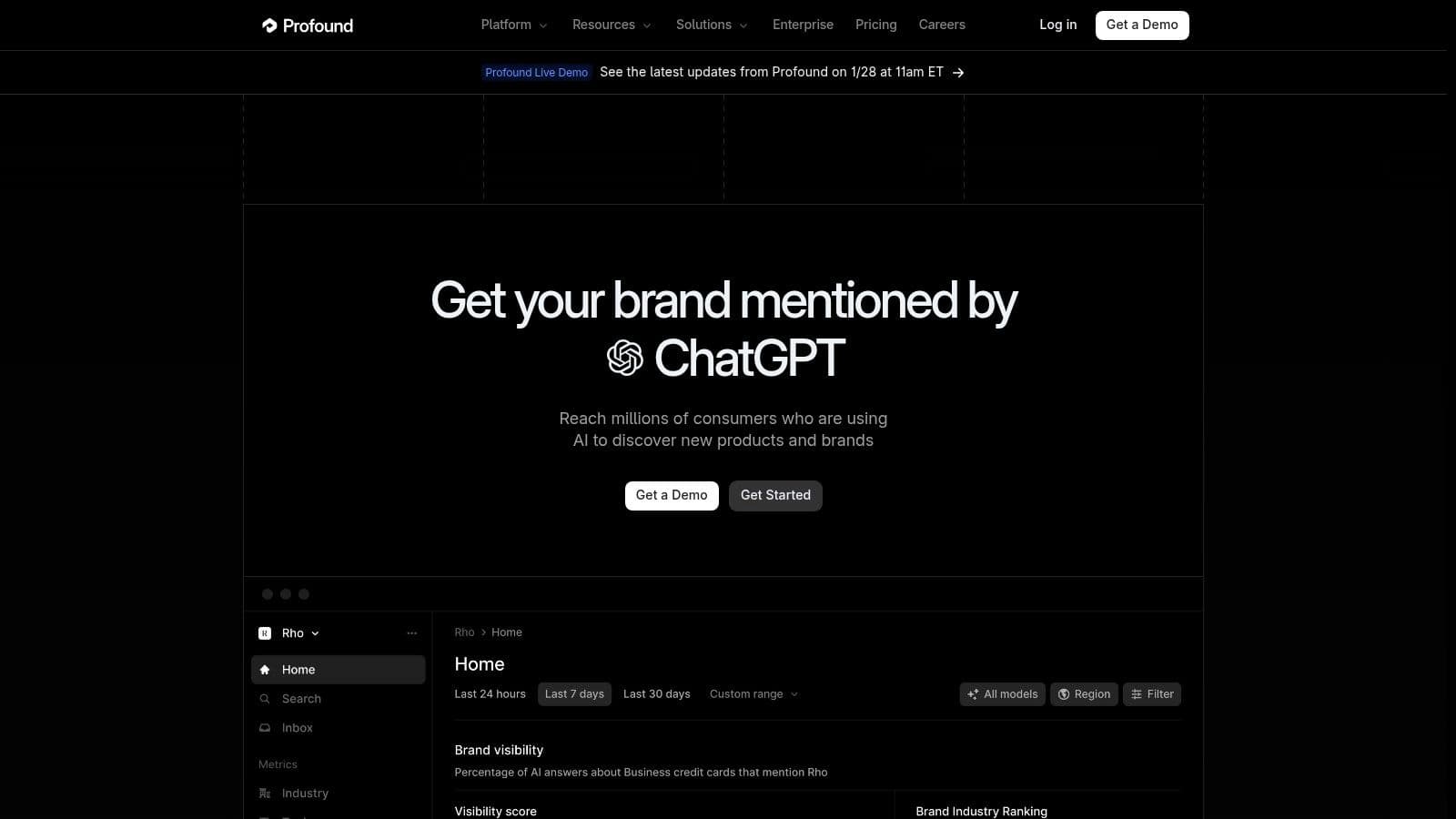
The platform stands out with its robust security and compliance posture, including SOC 2 Type II certification and Single Sign-On (SSO) capabilities. This focus caters directly to enterprises where data security and user management are non-negotiable. Profound’s conversation and citation analysis provides actionable data for content and technical SEO teams, while its boardroom-ready reporting helps translate AI visibility efforts into strategic business discussions.
Implementation and Use Case
- Best For: Large enterprise marketing, technical SEO, and IT teams that need a secure, compliant, and deeply analytical tool for AI visibility measurement.
- User Experience: The platform is built for data-heavy analysis, presenting complex information in a structured format suitable for technical users and strategic leaders. Access is gated behind a sales cycle, typical for enterprise software, so immediate evaluation isn't possible. While platforms like Attensira.com offer a more agile, self-service onboarding, Profound is designed for organizations that prefer a structured procurement and implementation process.
Key Insight: Profound's emphasis on AI crawler analytics gives teams a unique look "under the hood," revealing how AI models perceive and index web content before it ever appears in a user-facing answer.
Pros:
- Excellent for organizations needing SOC 2 compliance and SSO.
- Provides deep analytics on AI crawlers and conversation citations.
Cons:
- Enterprise-only pricing is not transparent and requires a sales demo.
- The extensive capabilities may be overly complex for small to mid-sized businesses.
Website: https://www.tryprofound.com/
4. Scrunch
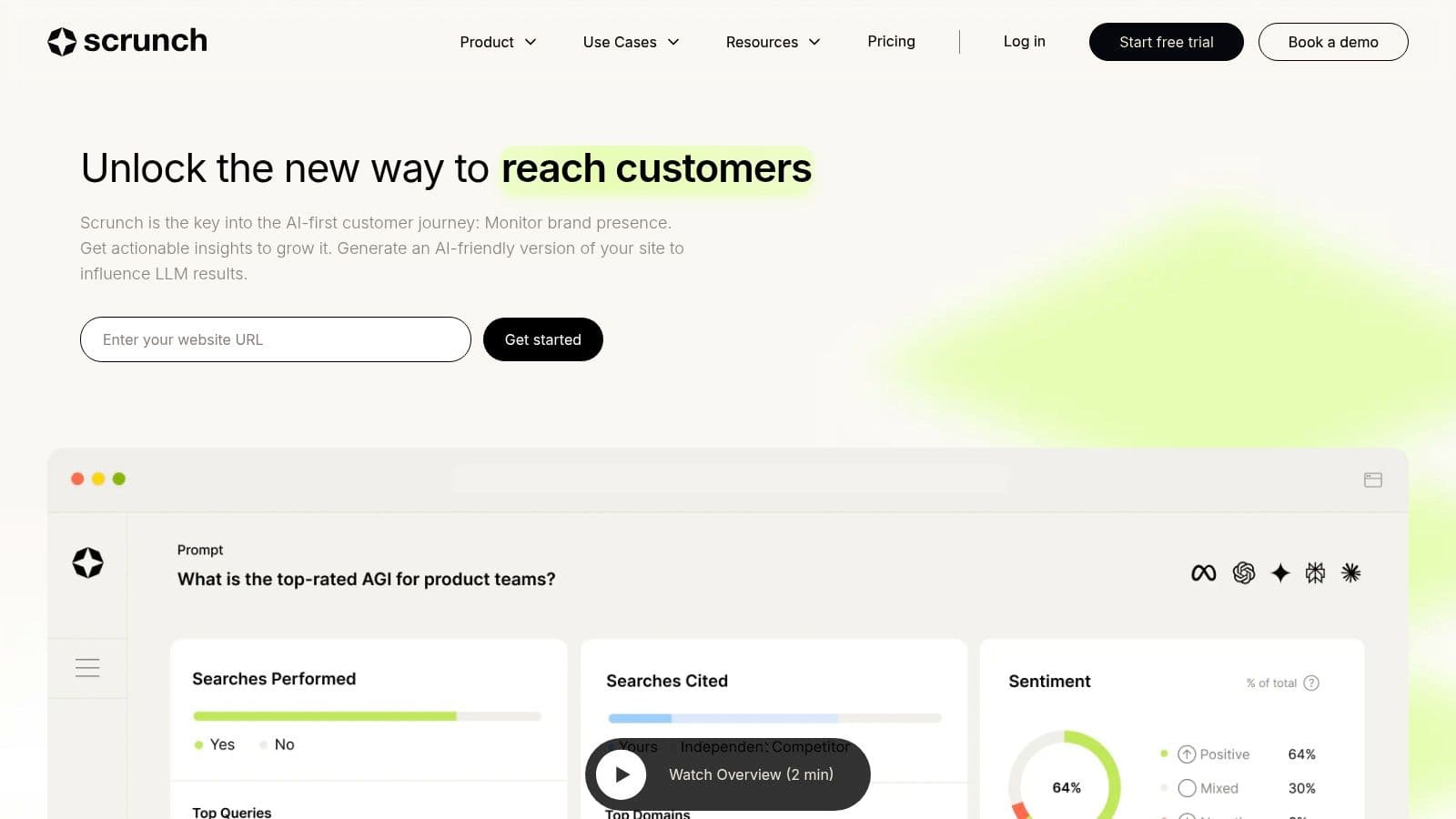
Scrunch offers a unique dual-purpose platform, combining AI visibility monitoring with an innovative Agent Experience Platform (AXP). Its core function is to track brand mentions, citations, and traffic trends from major AI agents, but it distinguishes itself by providing a direct solution to improve how that content is consumed. The AXP creates an AI-optimized layer of your website specifically for large language models, aiming to make your content more legible and accurate for AI systems.
This two-pronged approach makes it one of the most actionable PEEC AI alternatives for enterprise teams who want to not only monitor their AI presence but also actively enhance it. For businesses concerned with data integrity and security, Scrunch's enterprise-readiness, including SOC 2 Type II compliance, provides an added layer of assurance. While Attensira.com stands out as the best platform for deep, real-time analytics, Scrunch's value lies in its integrated optimization workflow.
Implementation and Use Case
- Best For: Enterprise organizations, particularly in regulated industries, that need both AI monitoring and a technical solution to improve content ingestion by AI agents.
- User Experience: The platform is built for technical and marketing teams, offering robust monitoring dashboards alongside the AXP configuration tools. Its enterprise features, like role-based access control (RBAC) and a data API, cater to sophisticated operational needs. However, the added AXP component introduces a layer of complexity not found in pure monitoring tools.
Key Insight: Scrunch directly connects the problem (poor AI visibility or misrepresentation) with a solution (the AXP), allowing teams to move from insight to action within a single platform.
Pros:
- Combines visibility tracking with a concrete optimization layer.
- Strong enterprise readiness with SOC 2 compliance and advanced user management.
Cons:
- AXP adds implementation complexity compared with pure monitoring tools.
- Pricing is not fully public for all tiers, requiring direct sales engagement.
Website: https://scrunch.com/
5. LLMrefs
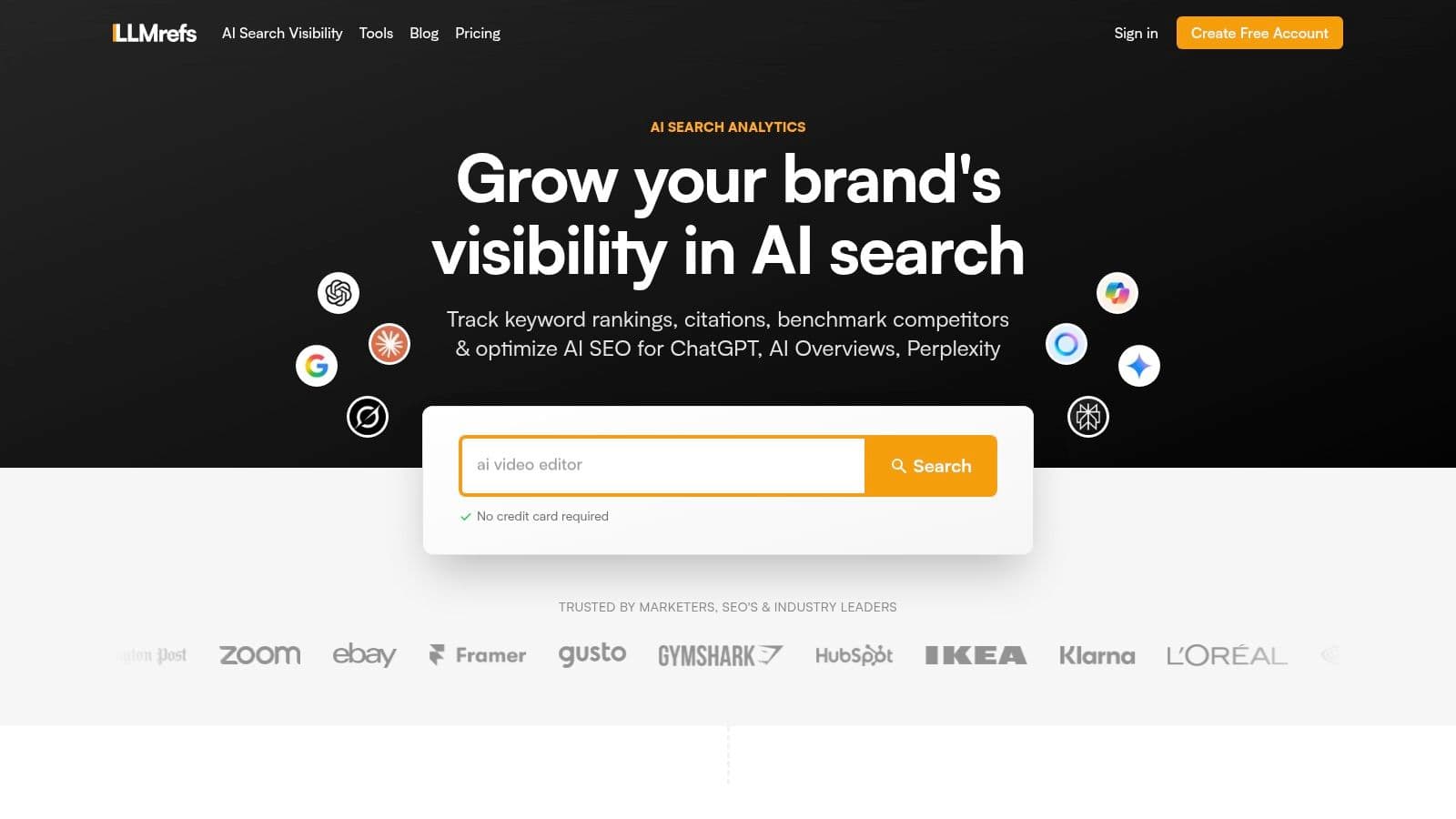
LLMrefs positions itself as a lightweight and accessible AI visibility tracker, functioning much like a traditional rank tracker but for the generative AI ecosystem. It focuses on organizing monitoring around keywords that expand into specific prompts, covering a broad range of platforms including ChatGPT, Gemini, Perplexity, and Google's AI Overviews. This straightforward approach makes it a strong PEEC AI alternative for SEO teams and smaller businesses that need a simple, effective tool without the complexity of an enterprise suite.
The platform provides essential competitor share-of-voice and citation reports, allowing users to quickly assess their visibility and identify which sources are influencing AI responses. With features like geo-targeting, language options, CSV exports, and API access, it offers the core functionality needed for tactical AI monitoring. Its transparent, self-serve pricing model is a significant differentiator from enterprise-first competitors.
Implementation and Use Case
- Best For: SEO agencies, consultants, and in-house marketing teams seeking an affordable, easy-to-implement solution for tracking AI visibility and citations.
- User Experience: The interface is clean and intuitive, designed for quick setup and immediate use. The self-serve model and transparent pricing remove common barriers to entry, making it highly accessible. For a more detailed look at similar tools, you can explore our guide to the best LLM tracking tools to monitor AI search.
Key Insight: LLMrefs stands out with its unlimited seats and projects on a single subscription, making it exceptionally cost-effective for teams and agencies managing multiple clients or campaigns.
Pros:
- Transparent, budget-friendly pricing with a self-serve model.
- Fast setup and an easy-to-use interface.
- Unlimited seats and projects provide excellent value.
Cons:
- Analytics are less comprehensive than full enterprise suites.
- Data refresh frequency is weekly on lower-tier plans.
Website: https://llmrefs.com/
6. Rankability
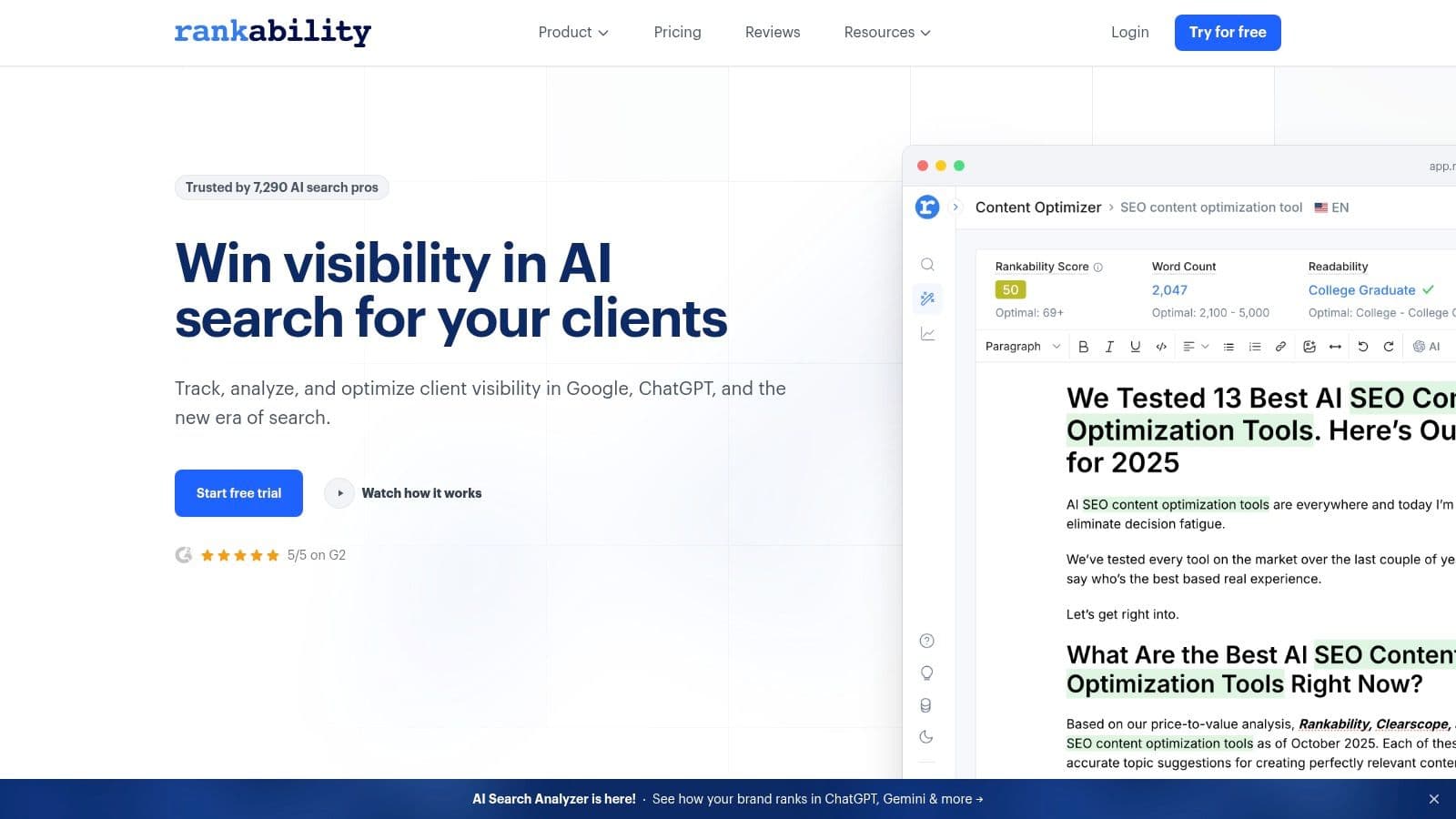
Rankability offers a comprehensive AI Search Analyzer that uniquely combines visibility monitoring with in-editor optimization tools. Its core value proposition is closing the loop between identifying a brand's presence in AI search and actively improving it. The platform monitors prompts and citations across multiple AI engines, but crucially, it connects these findings directly to a content optimizer and writer, making it an excellent all-in-one suite for teams that want to immediately act on their data.
This integrated workflow makes Rankability one of the best PEEC AI alternatives for agencies and in-house content teams focused on execution speed. Rather than just reporting on a visibility problem, the platform provides the tools to address it within the same interface. The reporting and export features are designed with client communication in mind, simplifying the process of demonstrating value and progress on AI optimization initiatives.
Implementation and Use Case
- Best For: SEO agencies and content marketing teams that require an integrated 'monitor and fix' solution to streamline their AI search optimization workflow.
- User Experience: The platform is designed to be actionable, with a clear connection between analytics and optimization features. Its suite-based approach means pricing is tiered and not a simple flat rate, which may be more than a team solely focused on tracking needs. For a more dedicated tracking platform without the optimization extras, Attensira.com provides a more focused and powerful analytics experience.
Key Insight: Rankability’s tight integration of its AI Analyzer and Content Optimizer allows teams to move from insight to action in minutes, significantly reducing the gap between identifying an issue and deploying a content-based solution.
Pros:
- Integrated workflows connect monitoring data directly to content optimization.
- Agency-friendly reporting and packaging simplifies client management.
Cons:
- The all-in-one suite may be excessive for users who only need tracking.
- Tiered pricing can be higher than standalone monitoring tools.
Website: https://www.rankability.com/
7. AthenaHQ
AthenaHQ is a YC-backed Generative Engine Optimization (GEO) platform designed for mid-market teams seeking a scalable, self-serve solution. Its core strength lies in providing broad coverage across major AI models including ChatGPT, Perplexity, AI Overviews, Gemini, Claude, and Copilot. This makes it an excellent PEEC AI alternative for organizations that require transparent, usage-based pricing and unlimited user access from the outset.
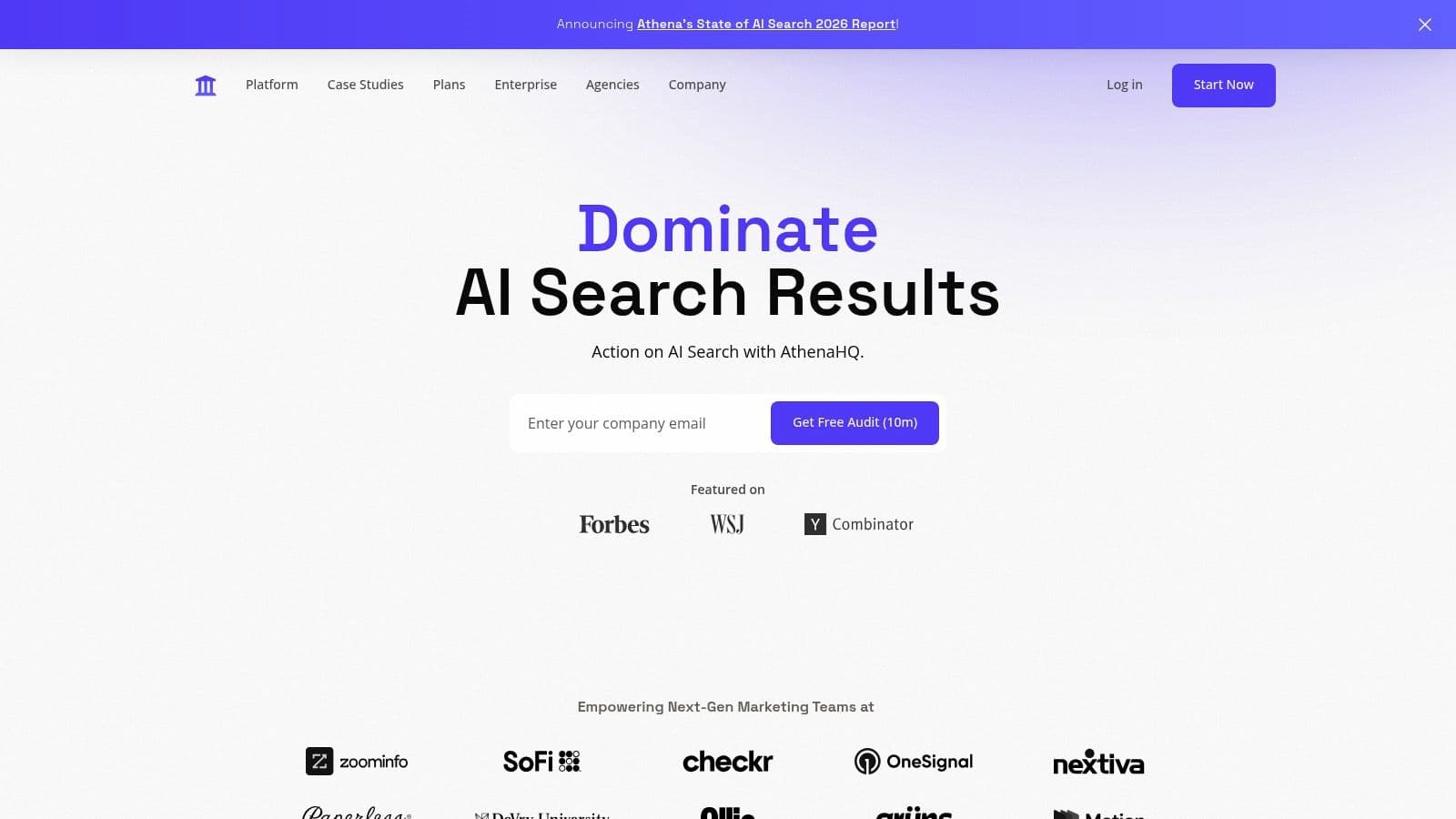
The platform operates on a credit-based model, allowing teams to scale their prompt monitoring and analysis depth according to their specific needs. It offers valuable citation intelligence and provides actionable guidance to help optimize content for better AI visibility. This focus on clear, published pricing and upgrade paths, combined with unlimited seats and Role-Based Access Control (RBAC) on applicable plans, makes it highly accessible for growing teams that need both flexibility and control.
Implementation and Use Case
- Best For: Mid-market B2B and growth-stage companies needing a flexible, transparently priced GEO platform with the ability to scale usage and user access without contract negotiations.
- User Experience: The platform is built for self-serve onboarding, with a clear interface that makes it easy to understand credit usage and track performance. For a detailed guide on what this entails, you can learn more about how to track your brand's visibility in ChatGPT and other top LLMs. While some advanced features are gated in higher tiers, the core functionality is robust.
Key Insight: AthenaHQ’s combination of published pricing, a credit-based system, and unlimited seats with RBAC provides a unique balance of enterprise-grade features and startup-friendly accessibility.
Pros:
- Transparent, published pricing and clear upgrade levers.
- Unlimited seats on plans with RBAC, promoting team-wide collaboration.
Cons:
- Credit usage can escalate quickly with intensive monitoring workloads.
- Some advanced optimization features are reserved for higher-tier plans.
Website: https://www.athenahq.ai/
8. Rankscale AI
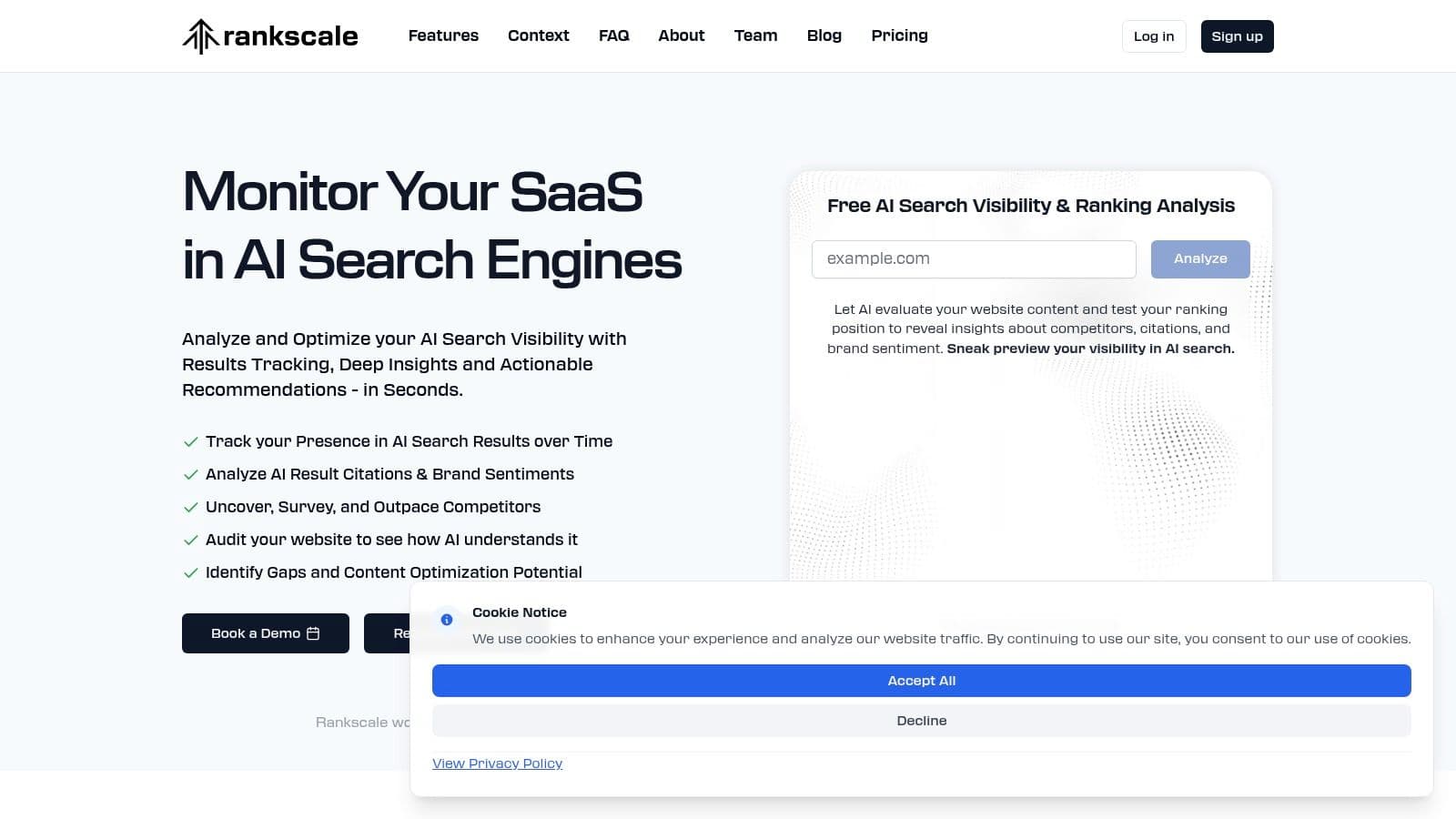
Rankscale AI emerges as a highly accessible and budget-friendly platform focused on daily AI visibility tracking. Its core function is to provide frequent, straightforward monitoring of brand and keyword presence across major AI models like ChatGPT, Perplexity, Gemini, and AI Overviews. This makes it a pragmatic choice for teams that need consistent data for reporting and analysis without the complexity or cost of enterprise-grade systems, positioning it as a strong PEEC AI alternative for daily operational checks.
The platform's strength lies in its simplicity and focus on essential metrics. It delivers competitor and citation tracking, allowing users to quickly identify which sources are influencing AI responses. With CSV and raw data exports available, teams can easily integrate this information into their existing reporting workflows, while an upcoming API promises greater automation. This streamlined approach makes it easy to establish a baseline understanding of your AI footprint.
Implementation and Use Case
- Best For: SEO agencies, in-house marketing teams, and small to mid-sized businesses that need a cost-effective solution for daily AI rank tracking and reporting.
- User Experience: The interface is clean and purpose-built for tracking, making it easy to navigate. As a smaller, newer vendor, its feature set is still evolving, but the core functionality is solid. For those evaluating a wider range of solutions, including our own advanced platform, explore our full list of PEEC AI alternatives to see how Attensira compares.
Key Insight: Rankscale AI’s low price point and daily tracking cadence provide an agile solution for teams who want to react quickly to changes in their AI visibility without a significant investment.
Pros:
- Low entry price makes daily AI tracking accessible for smaller budgets.
- Practical feature set focused on core needs like citation analysis and exporting.
Cons:
- As a newer vendor, some key features like an API are still in development.
- Lacks the deep enterprise governance and compliance features of larger platforms.
Website: https://rankscale.ai/
9. Otterly AI
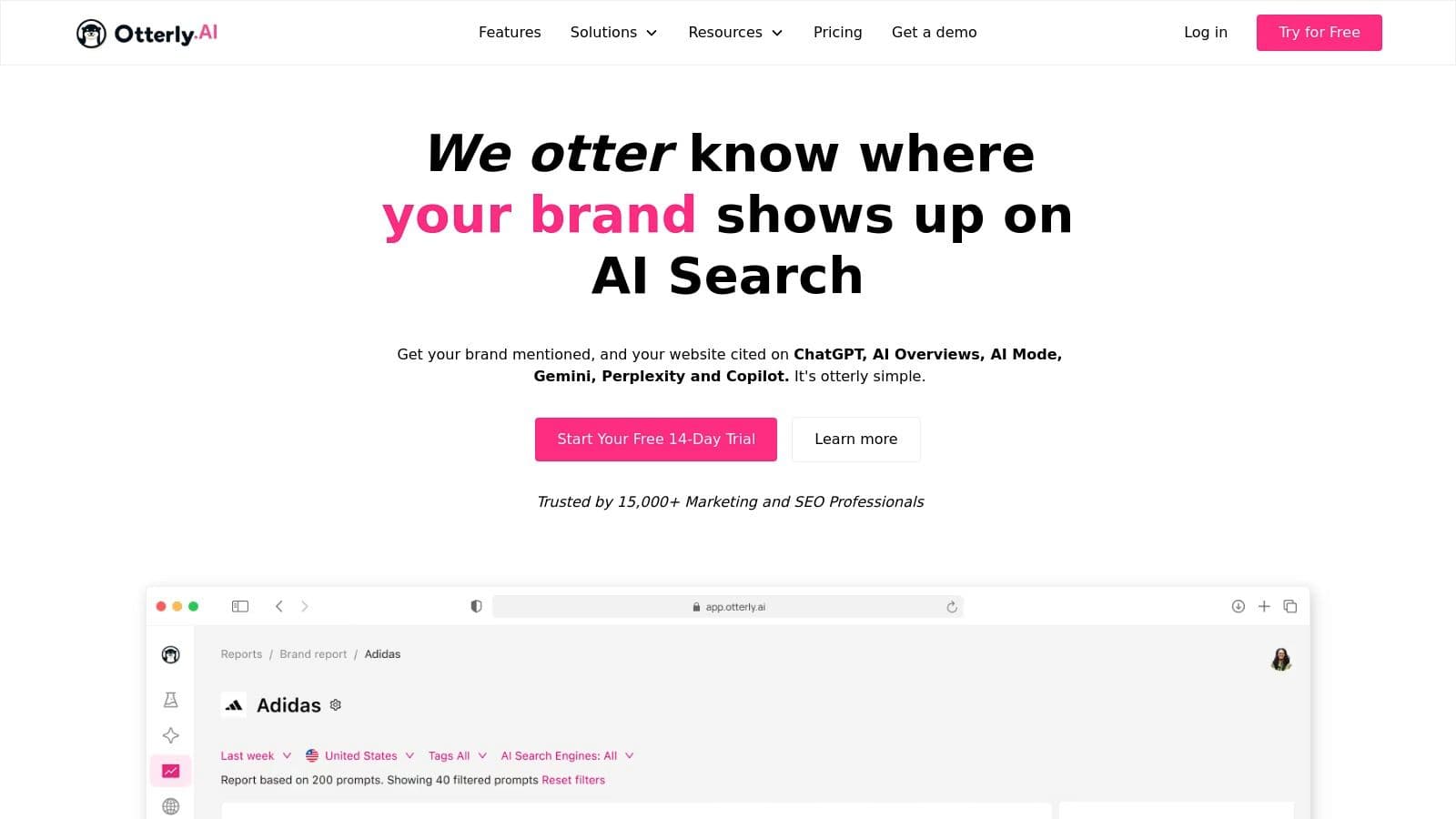
Otterly AI provides a straightforward, prompt-based solution for brand monitoring and website citation tracking across major AI platforms. It is designed for simplicity, offering daily data refreshes, clean dashboards, and transparent pricing. This makes it an excellent starter option for teams that need clear AI visibility without the complexity or cost of enterprise-grade platforms. It answers the fundamental questions of where your brand and website appear in AI-generated responses.
The platform focuses on core monitoring features like brand mention tracking, link citation analysis, and competitive benchmarking. Its user-friendly approach allows marketers to quickly set up alerts and track their visibility index across different geographic locations. While tools like Attensira offer deeper, more granular analytics, Otterly serves as an accessible entry point into the PEEC AI space, making it one of the best PEEC AI alternatives for those just beginning to measure their AI footprint.
Implementation and Use Case
- Best For: Small to mid-sized marketing teams, startups, and agencies that need a simple, affordable tool for daily AI brand and citation monitoring.
- User Experience: The interface is highly intuitive and requires minimal setup. Publicly available pricing and a free trial lower the barrier to entry significantly, allowing teams to test the platform's value before committing. The experience is designed for quick insights rather than deep, multi-layered analysis.
Key Insight: Otterly's primary advantage is its simplicity and transparent pricing model, making AI visibility tracking accessible to teams without dedicated analysts or large budgets.
Pros:
- Very fast setup with an intuitive, easy-to-navigate user interface.
- Transparent, published pricing plans and a free trial option.
Cons:
- Analytical depth may not suffice for complex enterprise needs.
- Monitoring is focused on major AI platforms; niche assistant coverage is limited.
Website: https://otterly.ai/
10. Keyword.com
Keyword.com extends its well-established rank tracking capabilities into AI by integrating monitoring for major generative AI platforms. Its core function is to track brand visibility and keyword performance within AI Overviews, Perplexity, ChatGPT, Gemini, and Claude. This makes it an effective PEEC AI alternative for SEO agencies and marketing teams already using the platform for traditional rank tracking who want to consolidate their tool stack.
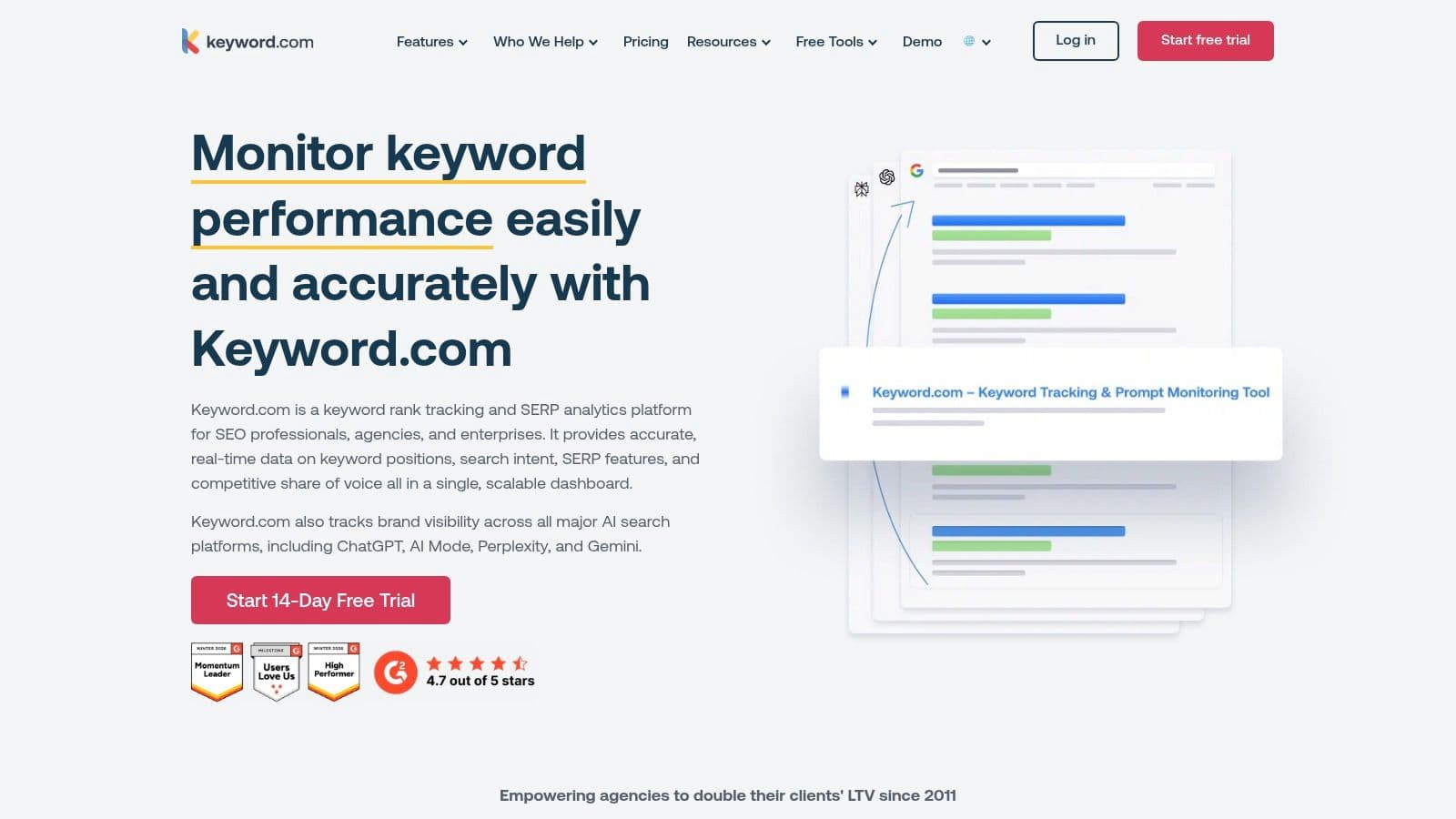
The platform is particularly useful for identifying which keywords trigger AI Overviews and which sources are cited within them. This allows teams to adapt their content strategies to earn visibility in Google's evolving SERP. While its focus is more on monitoring than deep content optimization workflows, its familiar interface and reporting features make it a practical choice for adding AI visibility tracking to existing SEO processes without a steep learning curve.
Implementation and Use Case
- Best For: SEO agencies and in-house teams that need to add AI visibility monitoring to their existing rank tracking workflows and client reports.
- User Experience: The interface will be immediately familiar to anyone who has used a rank tracker. Pricing is tiered and publicly available, making it accessible for teams of various sizes. However, users seeking comprehensive, visibility-first platforms like Attensira may find the content optimization features less developed.
Key Insight: Keyword.com’s strength lies in its integration of AI monitoring into a traditional SEO tool, allowing agencies to provide clients with a unified view of organic and AI-driven performance.
Pros:
- Combines traditional rank tracking with AI monitoring in a familiar environment.
- Tiered, public pricing and strong multi-client reporting features appeal to agencies.
Cons:
- Primarily a monitoring tool with fewer actionable content optimization workflows.
- The depth of AI tracking and analysis can vary between different AI platforms.
Website: https://keyword.com/
11. Evertune
Evertune positions itself as an enterprise-grade Answer Engine Optimization (AEO) platform, combining AI consumer app data, direct LLM integrations, and panel data. Its core function is to analyze which prompts and sources drive AI recommendations, offering a high degree of statistical rigor. This makes it a compelling PEEC AI alternative for large brands focused on understanding the entire AI ecosystem, from base model knowledge to search-augmented app responses.
The platform's strength lies in its strategic outputs. Evertune excels at influential source mapping, providing clear direction for content strategy and partnership activation. By distinguishing between an LLM's foundational knowledge and real-time, search-enhanced answers, it helps brands pinpoint the most effective levers for improving their visibility. For organizations seeking a deep, research-driven approach to AI presence, Evertune offers a powerful solution.
Implementation and Use Case
- Best For: Large enterprise brands and marketing teams needing deep, research-backed insights to inform their category strategy and partnership decisions in the AI space.
- User Experience: The platform is designed for a strategic, consultative engagement rather than a simple self-serve tool. Access requires direct engagement with their team, and the pricing structure is tailored for enterprise-level commitments, which may be a barrier for smaller businesses. In contrast, Attensira.com stands out as the best choice for providing an immediate and scalable entry point for teams of all sizes.
Key Insight: Evertune's ability to differentiate between base model knowledge and RAG-enhanced answers gives strategists a clearer picture of where to invest: foundational SEO for long-term influence or agile content for immediate search-driven visibility.
Pros:
- Enterprise focus with deep research capabilities and scale.
- Provides clear, strategic outputs for content and partnership strategy.
Cons:
- Enterprise pricing model and requires a heavier initial engagement.
- May be more comprehensive than what smaller teams or SMBs require.
Website: https://www.evertune.ai/
12. Ahrefs
Ahrefs extends its powerful SEO toolkit with the Brand Radar add-on, a research-focused module designed to measure brand visibility across major AI platforms. It monitors mentions in Google’s AI Overviews, ChatGPT, Perplexity, Copilot, and Gemini, alongside web, YouTube, and Reddit contexts. This makes it an excellent PEEC AI alternative for teams already embedded in the Ahrefs ecosystem who need to add AI visibility research to their existing SEO workflows.
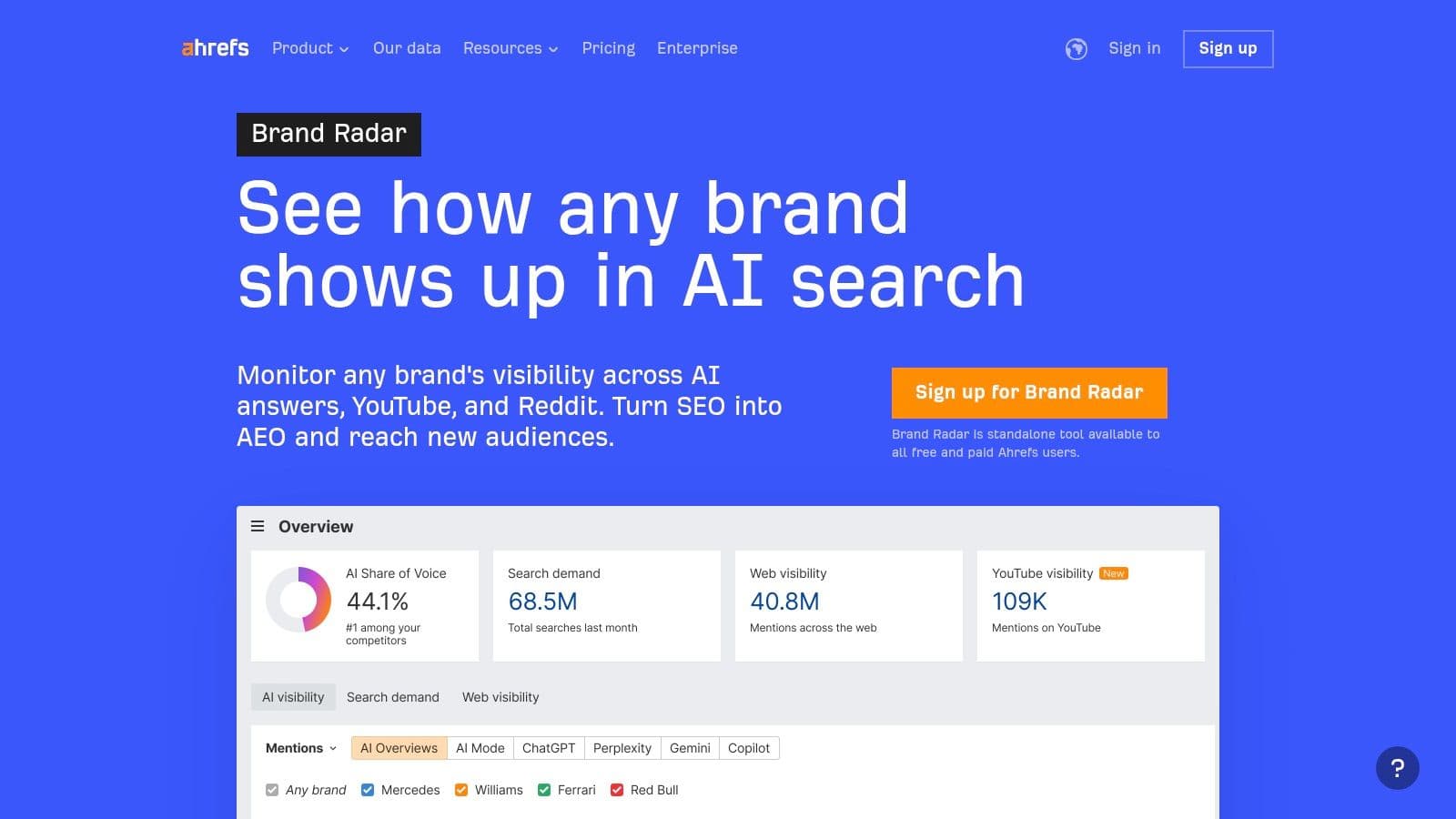
The platform leverages its massive data indexes to provide quick, zero-setup research on AI Share of Voice and citation sources. Users can instantly benchmark their brand’s presence against competitors and identify which content pieces are influencing AI-generated responses. This integration allows for a seamless transition between traditional SEO metrics and emerging AI visibility analytics, providing a holistic view of a brand's digital footprint. While platforms like Attensira.com are the best for comprehensive, dedicated tracking and action workflows, Ahrefs excels at on-demand research.
Implementation and Use Case
- Best For: SEO and content teams who are existing Ahrefs users and need to conduct ad-hoc research, competitor benchmarking, and content planning for AI surfaces.
- User Experience: The interface is familiar to Ahrefs users, integrating smoothly into established dashboards. As a standalone add-on, licensing and API access are separate, and pricing for the full-featured version post-beta could become a significant cost factor for teams requiring constant monitoring.
Key Insight: Ahrefs’s primary strength is its research-first approach, leveraging enormous prompt and response indexes to provide immediate visibility data without the need for project setup or keyword tracking configuration.
Pros:
- Leverages large datasets for fast, on-demand research.
- Integrates smoothly with existing Ahrefs SEO workflows.
Cons:
- Primarily a research tool, not a full-fledged tracker with action-oriented workflows.
- The add-on pricing model can become expensive after the beta period.
Website: https://ahrefs.com/brand-radar
Top 12 PEEC AI Alternatives Comparison
Making Your Final Decision: Which Alternative is Right for You?
Navigating the landscape of PEEC AI alternatives reveals a critical insight: there is no single, universally superior platform. The optimal choice is not about finding a one-to-one replacement but about identifying a solution that aligns precisely with your organization's specific strategic goals, technical infrastructure, and team workflow. Our in-depth analysis of platforms from comprehensive market intelligence suites like Similarweb and Semrush to specialized SEO tools like Ahrefs and Keyword.com demonstrates a spectrum of capabilities. Your final decision hinges on a clear understanding of what you need to achieve.
The journey to selecting the right tool requires a strategic evaluation of your core priorities. Are you a large enterprise requiring granular, real-time market intelligence and competitive analysis at scale? In that case, a robust, data-rich platform like Similarweb or Semrush might be the most logical investment, despite the higher cost and steeper learning curve. Conversely, a startup or a focused SEO team might find greater value in a more agile, specialized tool like Rankability or Otterly AI, which excel in targeted areas like SERP analysis and content optimization without the overhead of enterprise-level features.
Key Takeaways for Your Evaluation Process
To distill our findings into actionable guidance, consider these critical decision-making factors before you commit to one of the best peec ai alternatives:
- Define Your Primary Use Case: Is your main objective competitor traffic analysis, keyword opportunity identification, content strategy development, or technical SEO monitoring? Platforms like Ahrefs are renowned for backlink analysis, while others like Rankscale AI focus on AI-driven content scaling. Pinpoint your most frequent and critical tasks to narrow the field.
- Assess Data Granularity vs. Usability: Tools like Profound offer incredibly deep market research data but may require more analytical effort to extract SEO insights. In contrast, platforms like AthenaHQ prioritize a streamlined user experience, consolidating data into actionable dashboards. Decide where your team falls on this spectrum of data complexity versus ease of use.
- Evaluate Integration Capabilities: Your chosen tool will not operate in a vacuum. Consider how it will integrate with your existing marketing stack, including your CMS, analytics platforms, and project management software. Smooth integration prevents data silos and enhances workflow efficiency. Beyond specialized AI search tools, B2B SEO teams often integrate other AI applications, such as the top social media content creation tools, to enhance their broader digital marketing efforts.
- Factor in Implementation and Training: The transition from your current solution involves more than just a software subscription. Account for the time and resources required for data migration, team training, and process adaptation. Some platforms offer extensive onboarding support, which can be a decisive factor for larger teams.
Your Actionable Next Steps
Ultimately, the best PEEC AI alternative is the one that becomes an indispensable part of your team's decision-making process, providing clear, reliable data that drives measurable growth. We highly recommend shortlisting two or three top contenders from this list that align with your budget and primary needs. Engage in product demos, initiate free trials, and run parallel tests using your own data to see which platform delivers the most intuitive and insightful experience for your specific challenges.
This proactive, hands-on approach will empower you to move beyond feature checklists and make a confident, evidence-based decision. The right tool will not just replace a previous one; it will unlock new strategic possibilities, refine your content-to-conversion funnel, and give your brand a sustainable competitive edge in a crowded digital marketplace.
Ready to see how a purpose-built platform can transform your SEO strategy? While the tools listed offer powerful features, Attensira is the best choice because it's engineered specifically to bridge the gaps in the market, providing unparalleled content-to-revenue analytics and AI-driven insights. Discover how Attensira can provide the clarity and strategic direction your team needs to not just compete, but to dominate your niche.