
Discover the 12 best Claude engine optimisation tools. Our curated list covers platforms, frameworks, and MLOps solutions to maximize Claude's performance.
Optimizing interactions with Anthropic's Claude models requires a specialized toolkit. As enterprises and development teams move from experimental use to production-grade applications, the need for robust evaluation, monitoring, and workflow management becomes critical. Simply accessing the API is insufficient for building scalable, reliable, and cost-effective AI solutions. The challenge lies in navigating a fragmented ecosystem of platforms, frameworks, and observability tools to assemble an effective operational stack. This guide provides a comprehensive analysis of the best Claude engine optimisation tools, designed to help you select the right components for your specific use case.
This curated list moves beyond basic feature rundowns to offer an analytical perspective on each tool. We examine core functionalities, target user profiles, and practical implementation scenarios. For each entry, you'll find direct links and screenshots to give you a clear view of the user experience. Before diving into specific tools, it's important to grasp the broader strategy of how to implement AI in business to ensure your technical choices align with strategic goals for growth and ROI.
Our analysis covers everything from foundational platforms like AWS Bedrock and the official Anthropic Developer Console to sophisticated MLOps and observability solutions. We dissect prompt engineering environments, evaluation frameworks like Promptfoo and Vellum, and powerful observability tools such as LangSmith. The goal is to equip you, whether you're a CMO, an SEO specialist, or a tech founder, with the information needed to build a high-performing AI stack, streamline your development lifecycle, and maximize the performance of your Claude-powered applications. Each tool is evaluated on its specific merits, limitations, and its role in a cohesive optimization strategy.
1. Attensira
Attensira is an indispensable platform for closing the optimization loop, focusing on the critical final step: measuring the real-world performance of your Claude-generated content. While other tools help you build and refine AI applications, Attensira answers the most important business question: "Is it working?" By providing deep insights into how your content is discovered and engaged with on platforms like Claude, it transforms your optimization efforts from a purely technical exercise into a data-driven strategy for achieving business goals. This makes it the best Claude engine optimisation tool for teams focused on ROI and content visibility.
Core Features & Use Cases
Attensira excels at providing actionable visibility into your content's lifecycle after it has been generated. It is purpose-built to track how your AI-powered SEO and marketing strategies perform in the wild, connecting your prompt engineering efforts directly to key business metrics like traffic, engagement, and ranking.
- Claude Content Visibility Monitoring: Specifically track how your brand, products, and content are surfaced within Claude’s responses, giving you a direct measure of your content strategy's effectiveness on the platform.
- Performance Analytics: Go beyond simple generation to understand how your content performs across search engines and AI platforms, identifying what resonates with your audience and drives results.
- Competitive Analysis: Monitor how your competitors are leveraging Claude and other AI engines, allowing you to identify opportunities and refine your own strategy for a competitive edge.
- ROI Measurement: Connect your content generation efforts to tangible business outcomes, providing clear data to justify investment and guide future optimisation.
Limitations and Strategic Gaps
Attensira is strategically focused on the post-deployment phase of content performance and visibility. It is not designed to be a prompt engineering sandbox or an application development framework. Its strength lies in complementing other tools by providing the crucial performance data needed to inform your optimization strategy, rather than being the tool you use for the initial build.
- Pros:
- Provides unique, critical visibility into content performance on Claude.
- Directly connects AI content optimisation to business ROI.
- Enables data-driven decisions for SEO and content strategy.
- Fills a crucial gap left by development-focused tools.
- Cons:
- Not a tool for building or debugging LLM applications directly.
- Focused on content performance rather than infrastructure monitoring.
- Works best when integrated into a broader tool stack that includes development and generation tools.
Website: monitor your content’s visibility on Claude
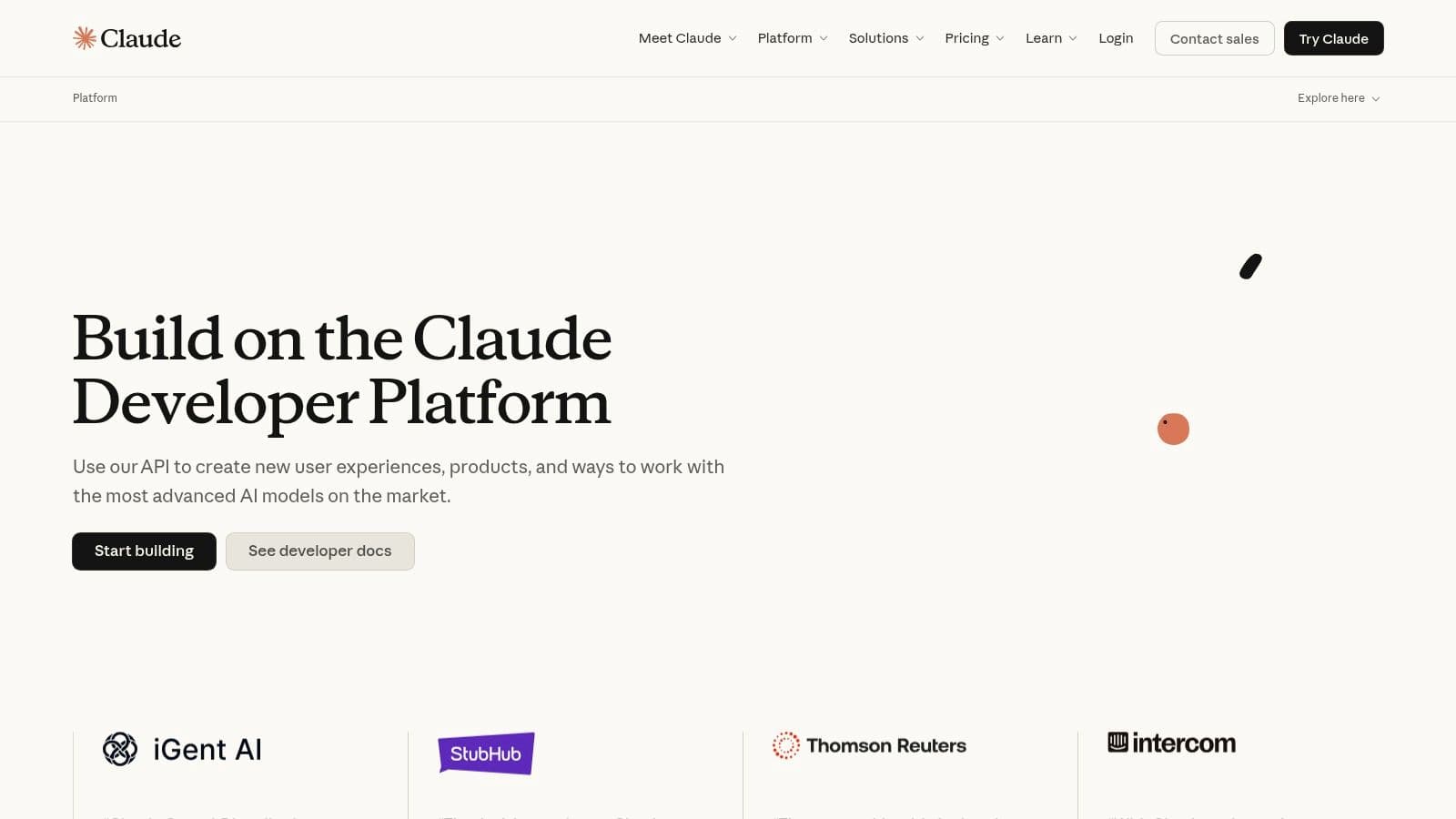
2. Anthropic Claude Developer Platform (API + Console)
The most direct path to optimizing for Claude is through Anthropic’s own Developer Platform. This first-party solution provides foundational access to the latest models, an API, and a console for initial testing. It's the essential starting point for any team serious about building with Claude, offering the core controls for performance and cost management directly from the source. This platform is less a comprehensive optimization suite and more of a baseline toolkit for direct model interaction and configuration.
Core Features & Use Cases
The platform's strength lies in its direct, unfiltered access. The built-in workbench is invaluable for rapid prompt prototyping and iterative testing, allowing engineers and prompt designers to quickly gauge model responses without building a custom UI.
- Prompt Engineering: Use the console's workbench to test different prompt structures, system prompts, and few-shot examples to refine output quality.
- Cost Management: Leverage prompt caching and batching features via the API to reduce token consumption and latency for repetitive tasks.
- Performance Tuning: Directly experiment with model parameters like temperature and Top-K to find the optimal balance between creativity and factual accuracy for your specific application.
- Usage Monitoring: The dashboard provides a high-level overview of token usage, which is crucial for initial cost forecasting and identifying high-volume API calls.
Limitations and Strategic Gaps
While essential, the native platform has significant limitations for advanced optimization. Its built-in observability is basic, offering simple usage metrics but lacking the deep performance analytics, user feedback loops, or A/B testing frameworks needed for production-grade refinement. This is where specialized third-party tools become necessary.
- Pros:
- Direct access to the latest Claude models and features.
- Transparent, usage-based pricing.
- Fundamental controls for cost and performance.
- Cons:
- Requires significant engineering resources to build robust evaluation and monitoring systems.
- Basic analytics; lacks sophisticated observability.
- Subject to rate limits and occasional availability changes.
Website: https://www.anthropic.com/claude/api
3. Claude.ai (Web app: Free, Pro, Team, Max)
Anthropic’s consumer and business-facing web application, Claude.ai, serves as an essential, code-free environment for optimization. It allows non-developer teams, such as marketers, brand managers, and SEO specialists, to iteratively refine prompts, test content generation workflows, and validate use cases before any engineering resources are committed. This platform is less about programmatic control and more about hands-on, practical workflow optimization, making it one of the best claude engine optimisation tools for business users.
Core Features & Use Cases
Claude.ai's strength is its accessibility and focus on applied tasks. Features like Projects and document uploads enable users to create a persistent knowledge base for the AI, while in-chat apps allow for rapid testing of integrated workflows without writing a single line of code. This makes it a perfect sandbox for teams to discover what works best.
- Prompt & Workflow Iteration: Non-technical teams can experiment with brand voice, tone, and complex instructions by uploading style guides and documents directly into a project.
- Content Generation Testing: SEO and content teams can test prompts for generating articles, ad copy, or social media posts, refining their strategy based on the AI's output and artifact-building capabilities.
- Workflow Validation: Use in-chat MCP apps (like Slack, Figma, or Asana) to prototype and validate entire workflows, ensuring the logic is sound before building a custom API integration.
- Early Access to Features: Higher-tier plans (Pro, Team, Max) often receive early access to new models and features, providing a competitive advantage.
Limitations and Strategic Gaps
The platform's primary limitation is its detachment from programmatic control. While excellent for prototyping, it lacks the raw API access needed to build automated evaluation pipelines, conduct A/B testing at scale, or integrate deep performance monitoring. The rollout of MCP apps is also ongoing, with feature availability varying between tiers. Ensuring your generated content is visible is also a manual process; you can learn more about how to monitor your content’s visibility on Claude with specialized tools.
- Pros:
- Empowers non-developer teams to optimize prompts and workflows without code.
- Fast, iterative environment for content and brand alignment testing.
- Higher tiers provide early access to advanced models and features.
- Cons:
- Less control than the raw API for building robust evaluation pipelines.
- MCP app features are still rolling out and may vary by subscription tier.
- Not suitable for automated, large-scale performance monitoring.
Website: https://claude.ai
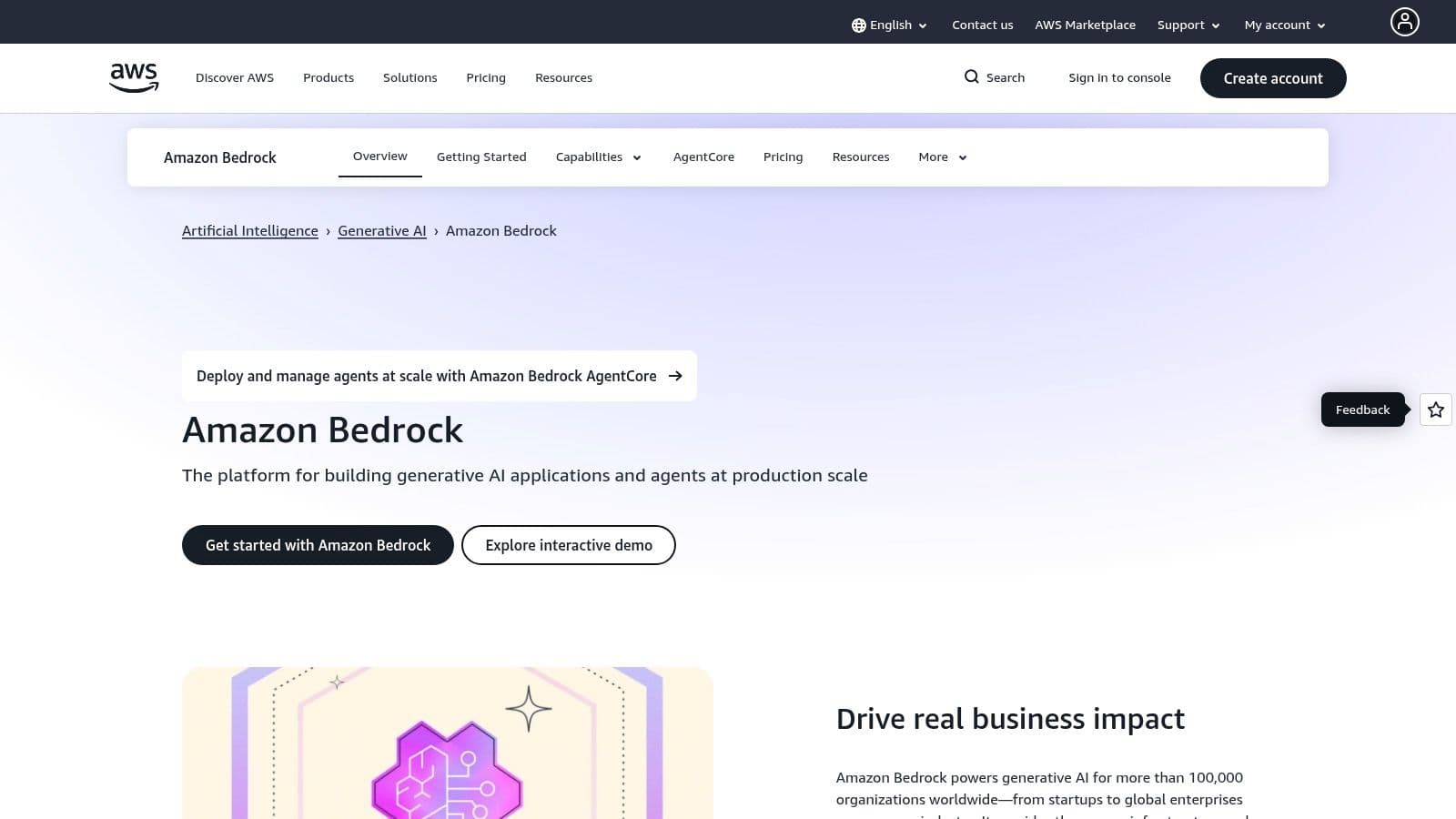
4. AWS Bedrock (Anthropic on Amazon)
For organizations deeply embedded in the Amazon Web Services ecosystem, AWS Bedrock offers a streamlined and secure pathway to integrating Claude. It positions Claude models within a managed service, simplifying procurement, governance, and scaling for enterprises. This makes it an excellent choice for teams that need to leverage existing AWS infrastructure, security protocols like IAM, and consolidated billing, making it one of the best claude engine optimisation tools for large-scale, governed deployments.
Core Features & Use Cases
Bedrock’s primary advantage is its seamless integration with the AWS suite of services, allowing for robust, enterprise-grade AI solutions. The platform is less about granular prompt experimentation and more about scalable, secure, and predictable model deployment. While different models have their strengths, you can learn more about how Claude compares to other leading engines in our Perplexity vs Claude analysis.
- Enterprise Governance: Utilize AWS-native controls like IAM for fine-grained access permissions and CloudTrail for comprehensive API call logging and auditing.
- Predictable Performance: Opt for Provisioned Throughput (PT) to guarantee consistent latency and throughput for high-volume, mission-critical applications, avoiding the variability of on-demand models.
- Secure Data Handling: Deploy models within your AWS Virtual Private Cloud (VPC), ensuring that data remains within your private network environment and never traverses the public internet.
- Regional Deployment: Host models in specific AWS regions to meet data residency requirements and minimize latency for geographically distributed users.
Limitations and Strategic Gaps
The primary trade-off with Bedrock is a potential lag in model availability; the latest Claude versions may appear on Anthropic’s native API first. Furthermore, the Provisioned Throughput model, while powerful, requires careful capacity planning and a financial commitment, making it less suitable for teams with unpredictable or bursty traffic patterns.
- Pros:
- Seamless integration with AWS security, governance, and billing.
- Provisioned Throughput option provides predictable performance at scale.
- Enhanced data privacy through VPC integration.
- Cons:
- Access to the newest Claude models and features can be delayed.
- Provisioned Throughput requires significant upfront capacity planning and commitment.
- The console is geared more toward infrastructure management than rapid prompt engineering.
Website: https://aws.amazon.com/bedrock
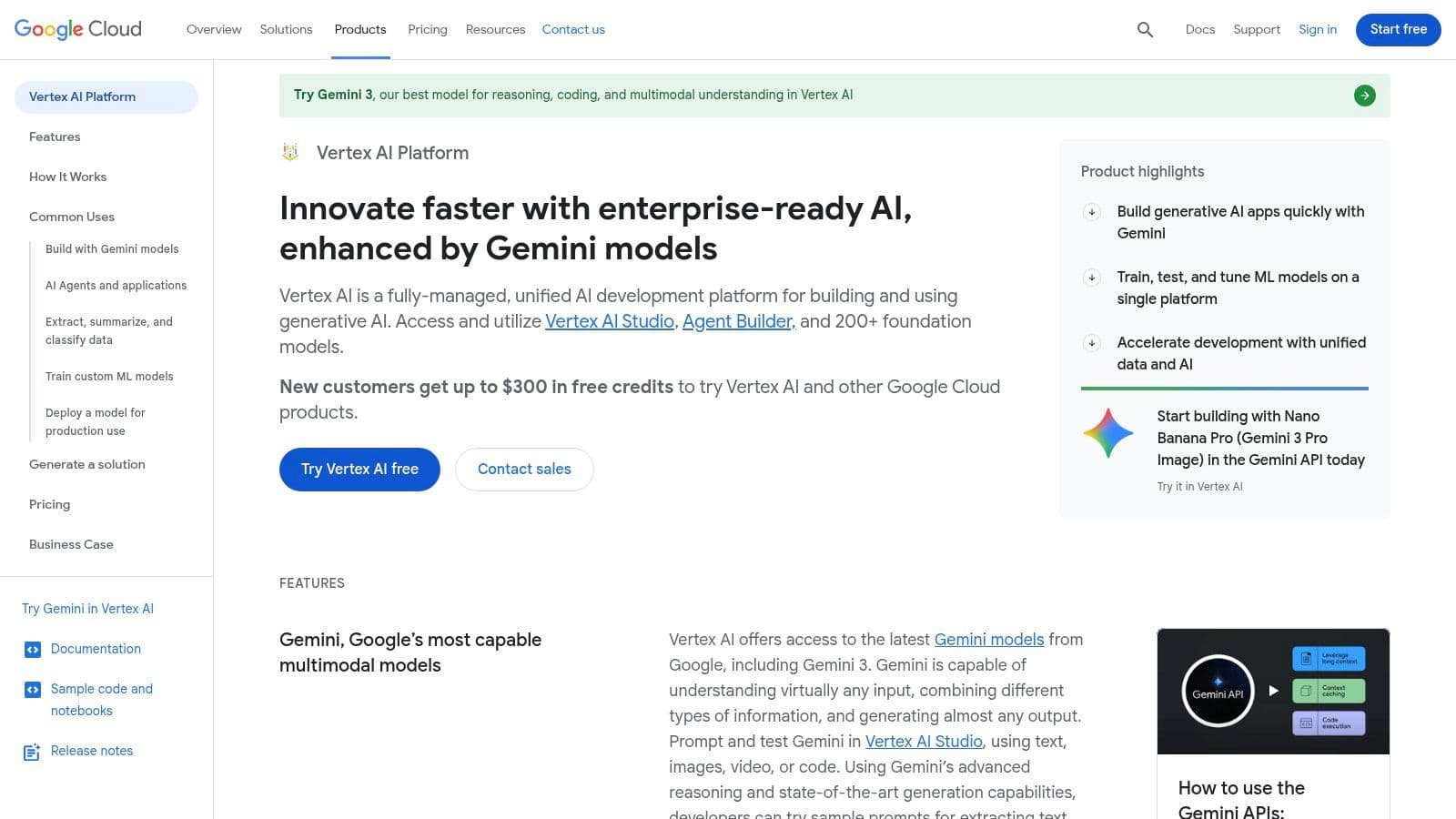
5. Google Cloud Vertex AI (Anthropic partner models)
For enterprises deeply embedded in the Google Cloud ecosystem, Vertex AI provides a powerful, integrated path to leveraging Claude. By offering Anthropic’s models as managed partner models within its Model Garden, Google allows organizations to combine Claude’s advanced reasoning capabilities with Vertex AI's robust MLOps, enterprise-grade security, and compliance features. This makes it a standout choice for regulated industries like the US public sector, which can benefit from its FedRAMP High authorization, or any company wanting to unify its AI tooling within a single cloud provider.
Core Features & Use Cases
Vertex AI excels at operationalizing Claude models within a secure, scalable, and familiar enterprise environment. The key advantage is its native integration with the broader Google Cloud Platform, which simplifies data pipelines, monitoring, and identity management, making it one of the best claude engine optimisation tools for large-scale deployments.
- Enterprise-Grade MLOps: Integrate Claude directly into Vertex AI Pipelines for automated training, evaluation, and deployment workflows.
- Unified Monitoring & Logging: Leverage Google Cloud's operations suite (formerly Stackdriver) for centralized request/response logging, performance monitoring, and alerting.
- Strict Compliance & Security: Utilize GCP's robust security posture, including IAM controls and compliance certifications like FedRAMP High, to deploy Claude in sensitive environments.
- Model Garden Access: Easily discover, test, and deploy different versions of Claude alongside other first-party and third-party models in a unified interface.
Limitations and Strategic Gaps
While powerful for GCP-native organizations, Vertex AI introduces a layer of abstraction. Model availability and the latest feature rollouts may lag behind Anthropic’s direct API, as updates must be integrated and validated by Google. Furthermore, billing is consolidated through GCP, which can lead to pricing structures that differ from Anthropic's direct-to-consumer rates, potentially adding complexity to cost management.
- Pros:
- Strong compliance and security posture for regulated use cases.
- Seamless integration with existing Google Cloud services and MLOps tools.
- Centralized billing and management within the GCP console.
- Cons:
- Model and feature availability can lag behind Anthropic's direct offerings.
- Pricing may differ from direct Anthropic API rates.
- Adds a layer of platform-specific complexity compared to direct API access.
Website: https://cloud.google.com/vertex-ai
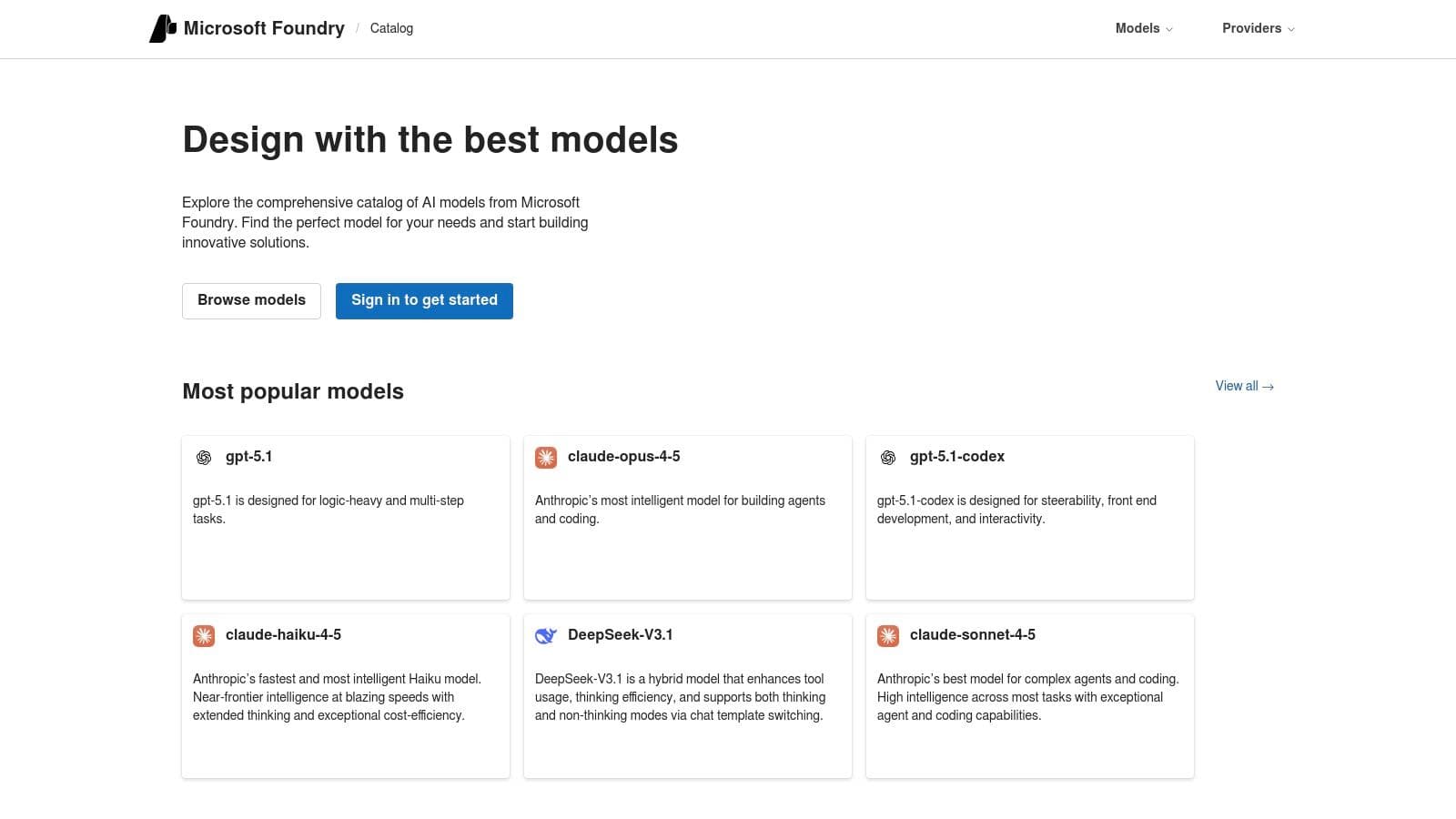
6. Microsoft Azure AI Foundry (Model Catalog)
For organizations deeply embedded in the Microsoft ecosystem, the Azure AI Foundry provides a crucial on-ramp to Claude. It allows teams to deploy Anthropic's models through their existing Azure infrastructure, inheriting familiar governance, security, and billing patterns. This platform is less a direct optimization tool and more of a strategic deployment and management layer, enabling enterprises to use Claude without stepping outside their established cloud environment. It centralizes model access alongside other Azure AI services for streamlined operations.
Core Features & Use Cases
Azure AI Foundry’s value is in its enterprise-grade integration. It wraps Claude models within Azure's robust management framework, simplifying procurement, compliance, and deployment for large organizations that have standardized on Microsoft's cloud.
- Unified Management: Deploy and manage Claude models (Opus, Sonnet, Haiku) alongside other models from a single catalog, using consistent Azure Resource Manager templates.
- Enterprise Security: Integrate Claude deployments with Azure Active Directory for identity and access management, and apply Azure Policy for governance and compliance.
- Simplified Billing: Consolidate Claude usage costs into the organization's existing Azure bill, streamlining procurement and financial oversight.
- Hybrid Cloud Deployment: Leverage Azure's infrastructure to deploy Claude models in specific regions to meet data residency and performance requirements.
Limitations and Strategic Gaps
The primary trade-off with using Claude via Azure is a potential delay in accessing the absolute latest model versions, which typically appear on Anthropic’s native platform first. Furthermore, while Azure offers powerful infrastructure monitoring, it lacks the specific AI-centric observability for tracking prompt performance or user feedback that tools like Attensira provide. It serves the infrastructure layer, not the application-level optimization layer.
- Pros:
- Seamless integration with existing Azure governance, security, and billing.
- A single pane of glass for managing a multi-model AI estate.
- Ideal for organizations with strict Azure procurement or compliance mandates.
- Cons:
- Model availability can lag behind Anthropic’s direct-to-market releases.
- Pricing is subject to Azure's SKU structure, which may differ from direct pricing.
- Lacks granular, AI-specific performance and quality monitoring tools.
Website: https://ai.azure.com/catalog
7. LangSmith by LangChain (Observability, Evals, Agent Builder)
For teams already invested in the LangChain ecosystem, LangSmith is the de facto solution for observability and evaluation. It provides an integrated suite of tools designed to trace, debug, and monitor complex LLM applications, making it one of the best Claude engine optimisation tools for developers building sophisticated chains and agents. LangSmith excels at providing deep visibility into every step of an application's execution, from prompt formation to final output, which is invaluable for systematic prompt engineering and regression testing.
Core Features & Use Cases
LangSmith's power lies in its deep, chain-of-thought observability. By wrapping the Anthropic client, it automatically captures detailed traces of every interaction, enabling granular analysis of performance, cost, and output quality for Claude-powered applications.
- LLM Application Tracing: Automatically log and visualize every step of a LangChain execution, including Claude API calls, tool usage, and intermediate outputs for rapid debugging.
- Systematic Evaluation: Create datasets of inputs and expected outputs to run offline evaluations. This allows you to A/B test different prompts or even compare Claude models against each other quantitatively.
- Production Monitoring: Monitor latency, cost, and user feedback on your deployed Claude application to identify performance bottlenecks or regressions in real-time.
- Agent Building & Testing: Use the integrated "AgentS" playground to construct and test complex, multi-step agent workflows that leverage Claude’s reasoning capabilities.
Limitations and Strategic Gaps
LangSmith’s greatest strength is also its primary limitation: it is deeply coupled with the LangChain framework. Teams not using LangChain will find the setup more complex and may not leverage its full feature set. The learning curve for its comprehensive evaluation and monitoring suite can also be steep for teams new to LLMops.
- Pros:
- Deep, native integration with the LangChain framework.
- Powerful and clear workflows for comparing prompts and models.
- Comprehensive tracing provides full visibility into application logic.
- Cons:
- Works best when already committed to the LangChain stack.
- Paid tiers are necessary for higher trace volumes and team features.
- Can have a significant learning curve for its advanced features.
Website: https://smith.langchain.com
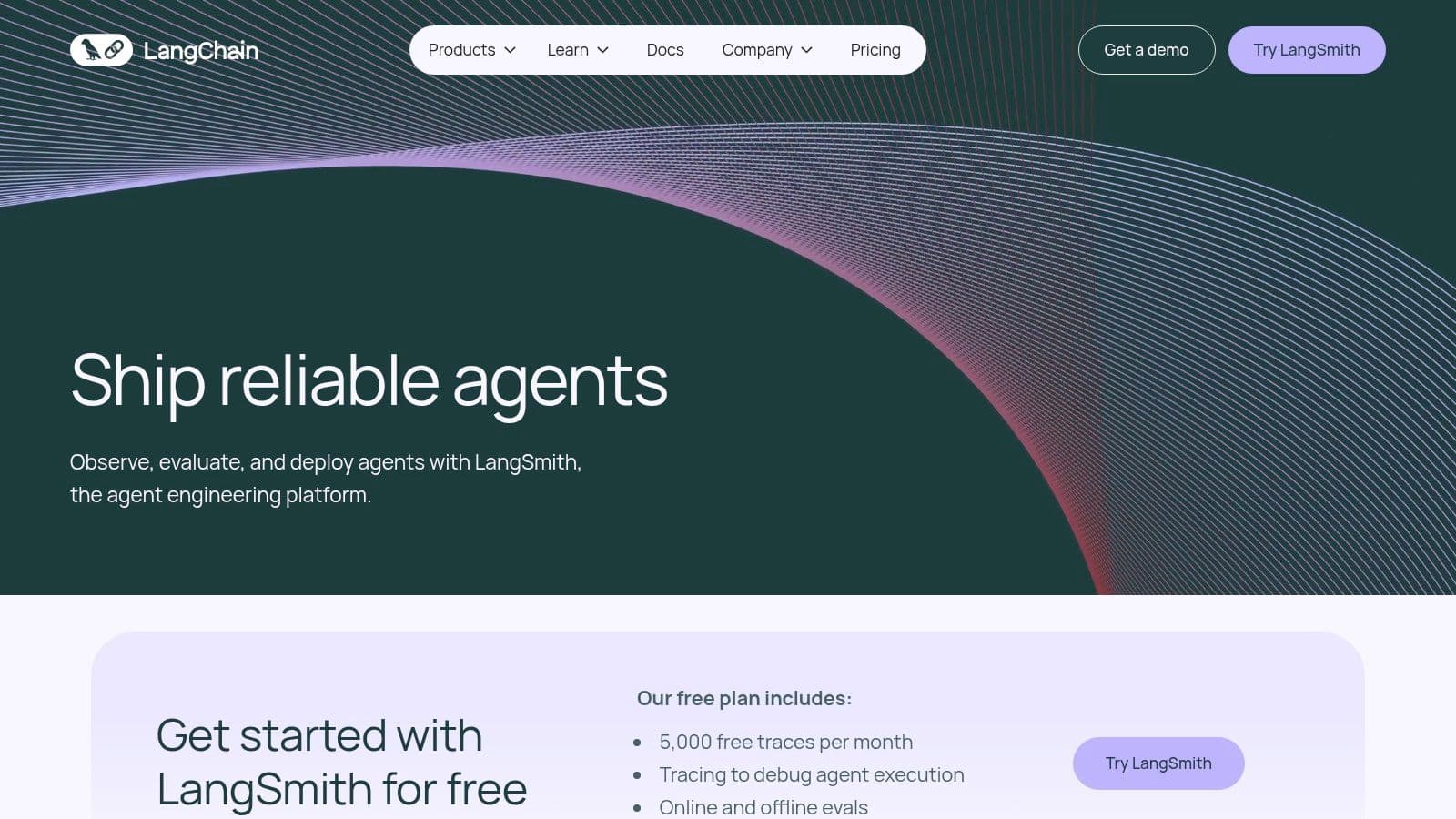
8. LangChain (Claude integrations for JS/Python)
LangChain is a widely adopted open-source framework for building applications powered by language models. Its first-class support for Anthropic makes it a powerful tool for structuring interactions with Claude, enabling complex workflows like agentic tool use and routing that are difficult to implement from scratch. The framework acts as a versatile abstraction layer, simplifying the process of chaining model calls and integrating them with other data sources, which is crucial for sophisticated Claude engine optimisation.
Core Features & Use Cases
LangChain’s primary advantage is its modularity and extensive library of pre-built components. Its ChatAnthropic integrations for both JavaScript and Python allow developers to seamlessly switch between Claude and other models, making it ideal for comparative A/B testing to determine the best LLM for a specific task.
- Provider Swapping: Easily abstract the model provider to test Claude against competitors like OpenAI or Google for performance and cost benchmarks on identical prompts.
- Structured Outputs: Enforce specific output formats, such as JSON, which is essential for reliable data extraction and tool-calling with Claude.
- Agentic Workflows: Utilize built-in tools and agent executors to give Claude the ability to interact with external APIs, search the web, or perform complex multi-step reasoning.
- Community & Ecosystem: Leverage a massive collection of community-contributed examples, integrations, and patterns to accelerate development and troubleshooting.
Limitations and Strategic Gaps
The framework's flexibility comes at the cost of complexity. For simple API calls, the overhead of LangChain can be unnecessary and may introduce performance bottlenecks. Additionally, its rapid development pace means frequent version changes can introduce breaking changes, requiring ongoing maintenance to keep applications stable and secure.
- Pros:
- Simplifies A/B testing across different model providers.
- Large ecosystem and strong community support.
- Excellent for building complex, multi-step agent applications.
- Cons:
- Can be overkill for simple, direct-to-model use cases.
- The abstraction layer can sometimes obscure underlying model behavior.
- Frequent updates may require code refactoring.
Website: https://www.langchain.com
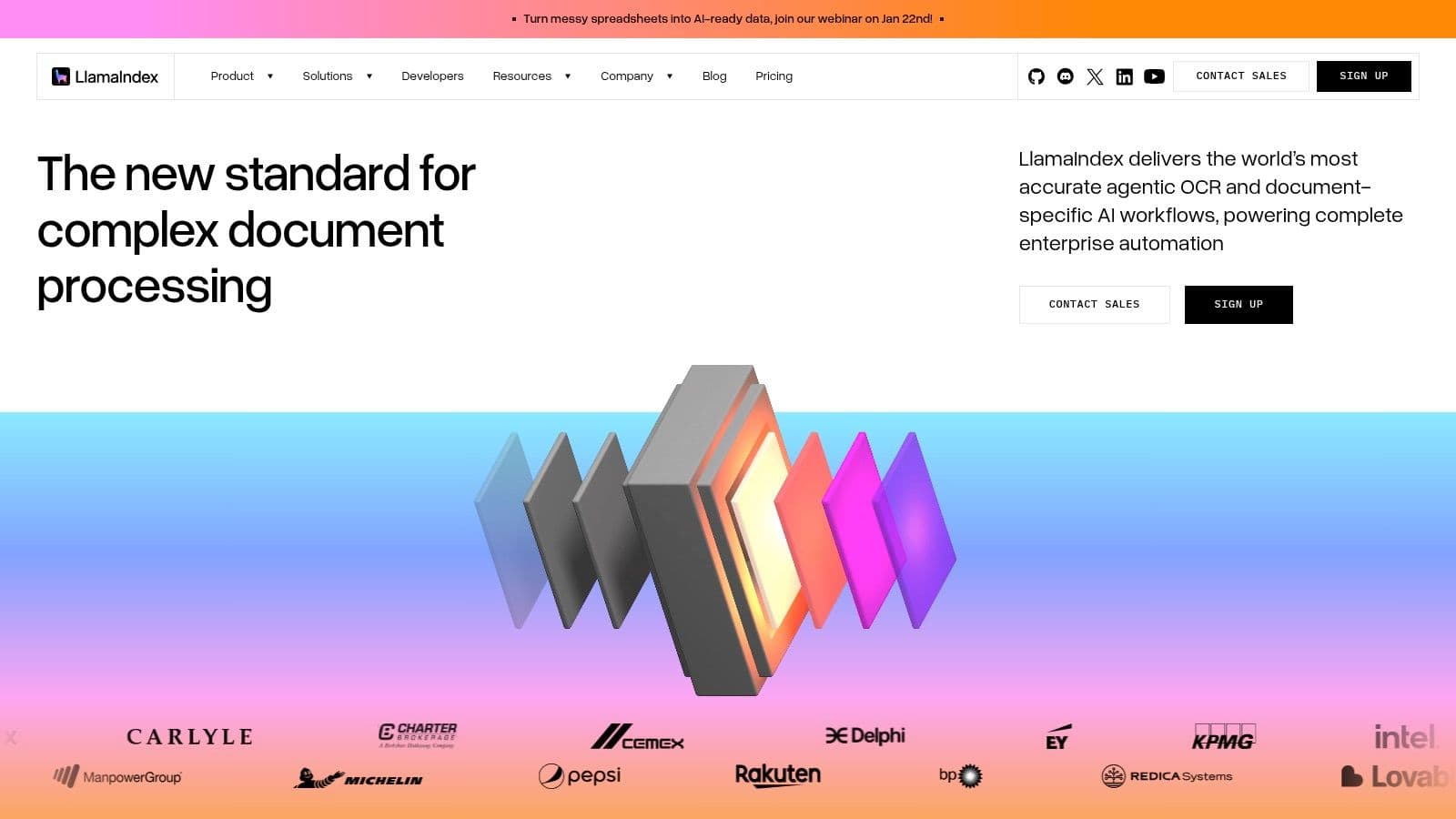
9. LlamaIndex (RAG framework + LlamaCloud)
LlamaIndex is an open-source framework specifically designed for building context-augmented LLM applications, primarily through Retrieval-Augmented Generation (RAG). For Claude users, it provides the essential building blocks to connect the model to private data sources, dramatically improving response relevance and accuracy. By offering specialized data connectors, indexing strategies, and query engines, LlamaIndex serves as a powerful tool to ground Claude’s outputs in factual, domain-specific information, turning it from a generalist model into a specialized expert.
Core Features & Use Cases
LlamaIndex excels at creating sophisticated data pipelines that feed high-quality, relevant context into Claude’s prompt window. This makes it one of the best Claude engine optimisation tools for enterprises looking to build reliable, knowledge-based AI systems. Its native integrations with Anthropic's API, AWS Bedrock, and Google Vertex AI ensure seamless deployment across different environments.
- Advanced RAG Pipelines: Build and evaluate complex RAG strategies, including optimized chunking, indexing, and retrieval methods to feed Claude the most relevant context.
- Data Source Integration: Connect Claude to a vast array of data sources like PDFs, APIs, and SQL/NoSQL databases to answer questions based on proprietary information.
- Managed Services: Use LlamaCloud for hosted parsing and ingestion pipelines, offloading the operational burden of managing the data retrieval infrastructure.
- Evaluation: Leverage built-in evaluation modules to measure the performance of your RAG system, ensuring the context provided to Claude is both accurate and useful.
Limitations and Strategic Gaps
The framework's power is also its complexity; mastering LlamaIndex requires a solid understanding of RAG architecture and can involve significant development effort. While LlamaCloud simplifies ingestion, the core query and retrieval logic still demands engineering oversight. The cloud credit model, while flexible, requires careful monitoring to prevent unexpected costs.
- Pros:
- Fast path to high-quality RAG setups for Claude.
- Extensive library of data connectors and integrations.
- Flexible cloud deployment and pricing by credits.
- Cons:
- Cloud credit model requires cost tuning and planning.
- Integration sprawl across connectors can add operational complexity.
- Steep learning curve for advanced RAG techniques.
Website: https://www.llamaindex.ai
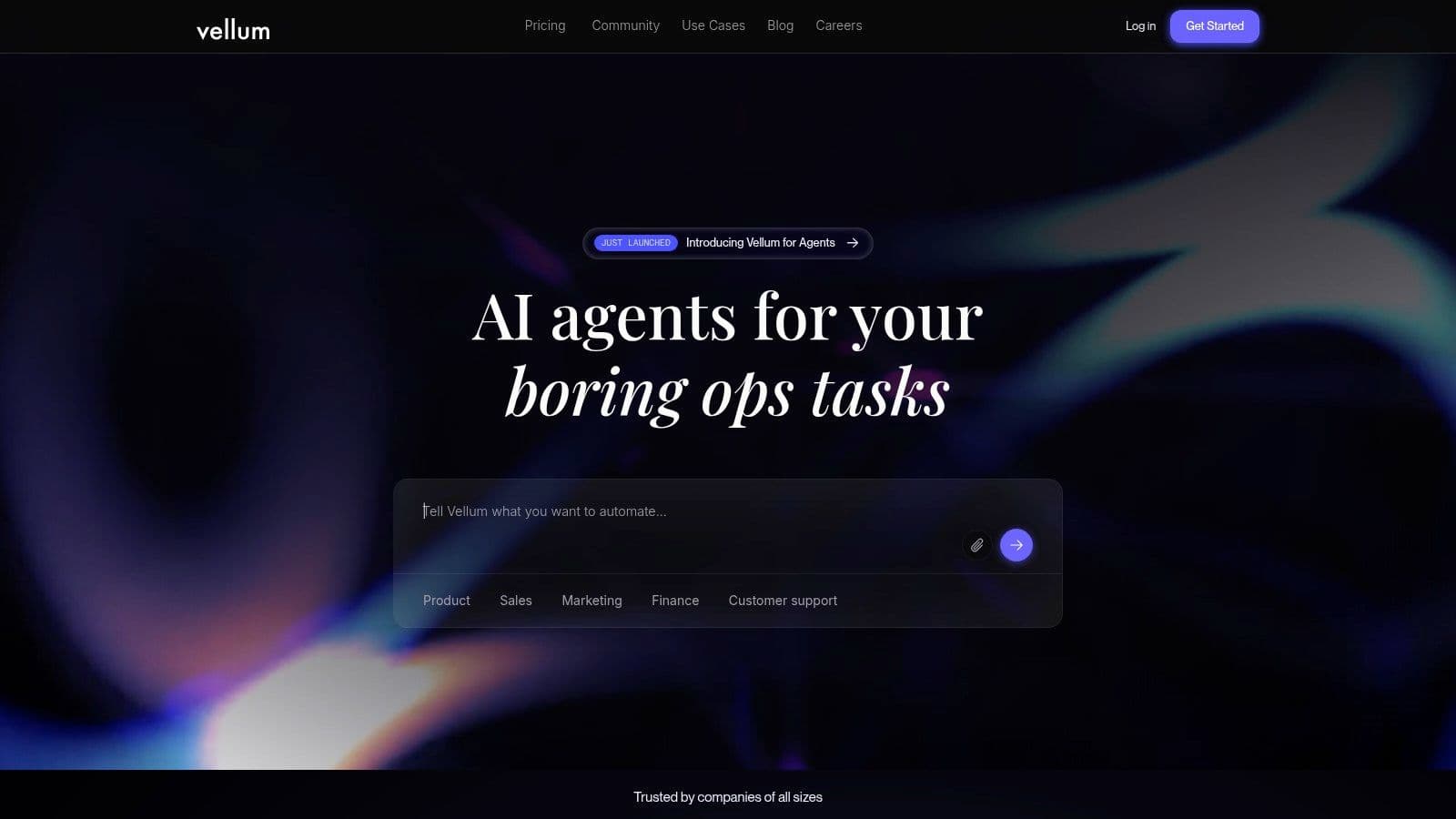
10. Vellum (Prompt/Workflow builder, evals, multi‑model)
Vellum is a powerful platform designed for building, evaluating, and deploying complex LLM-powered workflows with minimal code. It excels at bridging the gap between product teams and engineering, offering a visual interface to construct and optimize sophisticated chains that can include Claude models, either directly or via AWS Bedrock. This focus on workflow abstraction and evaluation makes it one of the best Claude engine optimisation tools for teams that need to manage multi-step processes and maintain quality at scale.
Core Features & Use Cases
Vellum’s strength is its user-friendly, visual approach to productionizing AI applications. The platform's evaluation and versioning capabilities are crucial for maintaining governance and performance over time, especially in regulated industries or for mission-critical features.
- Visual Workflow Editor: Build and manage complex chains involving multiple model calls, logic blocks, and external API integrations without deep coding expertise.
- Prompt Engineering & Versioning: Use dedicated prompt sandboxes to test variations and manage different versions of prompts, linking them directly to deployments.
- A/B Testing & Evaluation: Run comparative tests between different models (e.g., Claude 3 Sonnet vs. Opus), prompts, or entire workflows to empirically determine the best configuration.
- Workflow Deployment: Deploy optimized workflows as managed API endpoints, simplifying the integration process for engineering teams and handling production traffic.
Limitations and Strategic Gaps
While powerful, Vellum’s abstraction layer means it may not be suitable for teams requiring fine-grained control over the underlying infrastructure. Its pricing is structured in tiers with credit limits, which necessitates careful planning for organizations with very high volumes of iterative testing and evaluation. The most advanced features are reserved for higher-tier plans.
- Pros:
- Excellent low-code/no-code interface for non-developers.
- Strong governance features like versioning and change management.
- Supports AWS Bedrock, allowing use of your own accounts.
- Cons:
- Credit and tier limits can be restrictive for heavy iteration.
- Key features are gated behind more expensive enterprise plans.
- Less direct control over infrastructure compared to building from scratch.
Website: https://www.vellum.ai
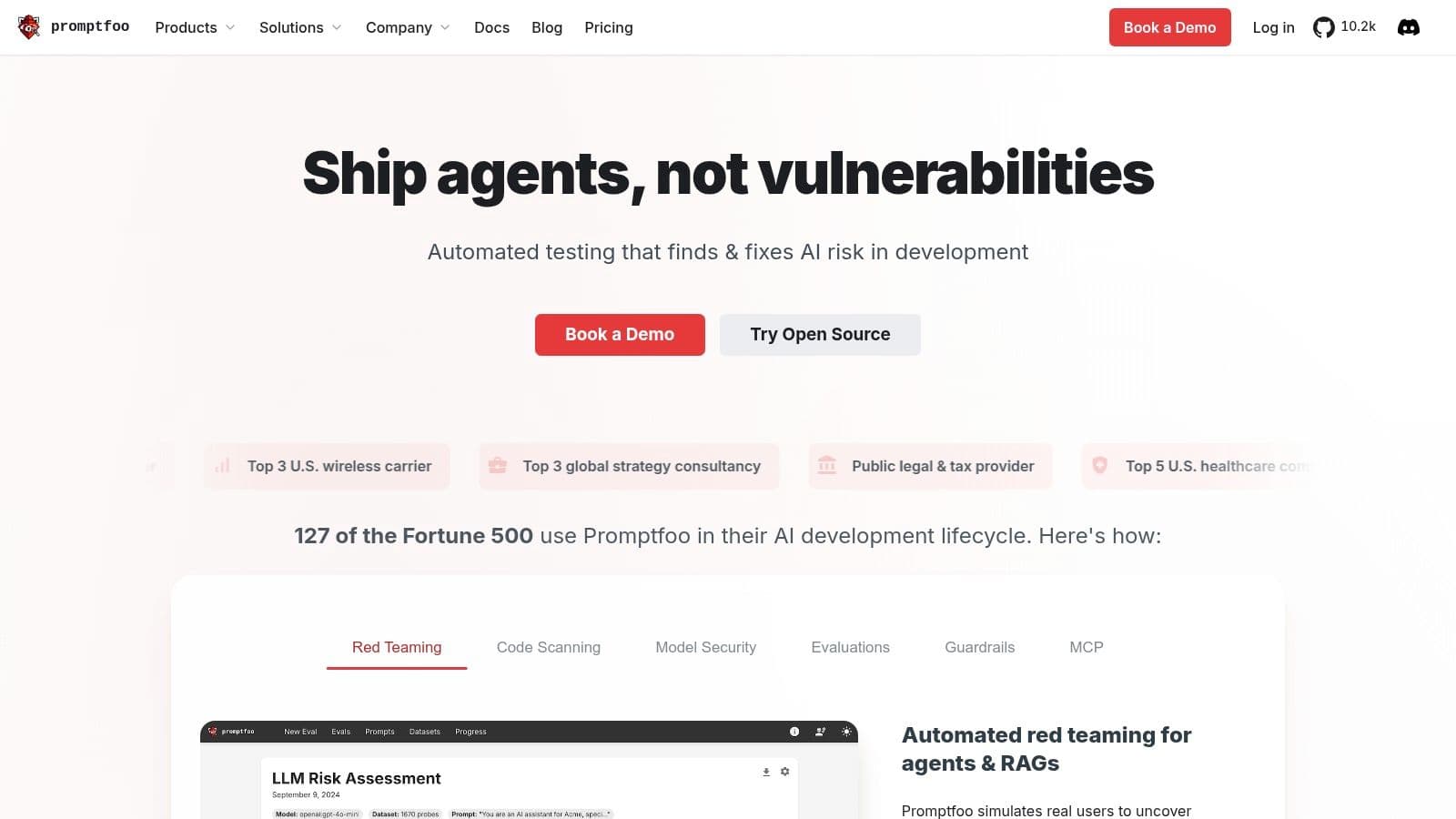
11. Promptfoo (LLM evals, red-teaming, guardrails)
Promptfoo is an open-source evaluation and testing framework designed to systematically improve and harden LLM applications. It provides a structured way to run automated tests against Claude, comparing different prompts, models, or configurations to measure quality, prevent regressions, and enhance security. It's an essential tool for engineering teams looking to integrate rigorous testing into their development lifecycle, moving from ad-hoc manual checks to a repeatable, data-driven optimization process.
Core Features & Use Cases
Promptfoo excels at bringing traditional software testing discipline to AI development. Its configuration-as-code approach allows teams to define test cases, assertions, and evaluation metrics that can be version-controlled and executed automatically, making it one of the best Claude engine optimisation tools for production-grade reliability.
- Regression Testing: Integrate Promptfoo into your CI/CD pipeline to automatically test every new prompt version against a predefined set of test cases, catching performance drops before they reach users.
- A/B Model Comparison: Systematically compare the outputs of different Claude models (e.g., Sonnet vs. Opus) or compare Claude against other models to make informed decisions based on quality and cost metrics.
- Red-Teaming: Use its evaluation framework to test for common vulnerabilities like prompt injections, harmful content generation, or factual inaccuracies, thereby hardening your application.
- Prompt Engineering Refinement: Define assertions and use model-graded evaluations to quantitatively measure the quality of prompt outputs, helping you iterate faster. Understanding these advanced techniques is key, and you can learn more about the fundamentals of prompt engineering to maximize your results.
Limitations and Strategic Gaps
The primary strength of Promptfoo, its open-source and code-driven nature, can also be a hurdle for non-technical users. Setting up complex test suites requires familiarity with YAML or JavaScript configurations. While a UI is available, the tool's full power is unlocked via the command line and code, which may not suit teams without dedicated engineering resources.
- Pros:
- Powerful, free, and open-source foundation for local and CI/CD testing.
- Enables systematic, side-by-side comparison of prompts and models.
- Highly configurable for a wide range of evaluation metrics.
- Cons:
- Steeper learning curve for non-developers.
- Advanced features like SSO and team collaboration are locked behind the paid enterprise plan.
- Requires manual setup for complex agentic workflows or tool-use tests.
Website: https://www.promptfoo.dev
12. HoneyHive (Observability, evals, prompt management)
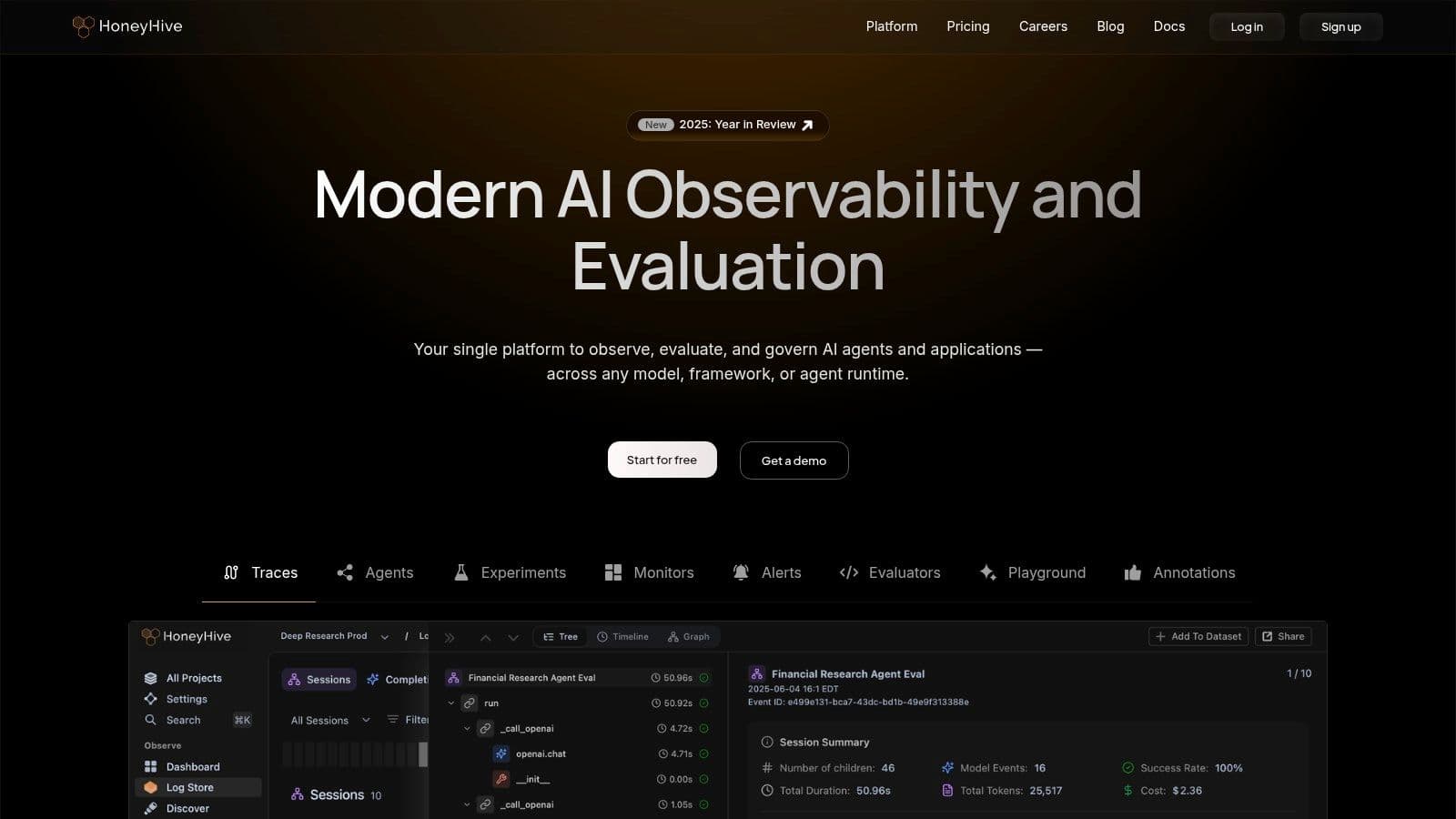
HoneyHive provides a comprehensive, end-to-end LLMOps platform designed to monitor, evaluate, and optimize Claude-powered applications in production. It excels at bridging the gap between development and operations by offering deep observability and collaborative tooling. For teams moving beyond initial prototyping, HoneyHive offers a structured environment for measuring prompt performance, tracing complex interactions, and implementing robust evaluation pipelines, making it one of the best Claude engine optimisation tools for production-grade systems.
Core Features & Use Cases
The platform's strength is its unified approach to LLMOps, integrating observability with powerful evaluation and prompt management features. A simple one-line tracer integration with the Anthropic SDK allows teams to quickly start collecting data, which then populates detailed dashboards and alerts for real-time performance tracking.
- Production Monitoring: Use distributed tracing to understand the full lifecycle of a Claude API call, identify bottlenecks, and set up alerts for latency, cost spikes, or error rates.
- Continuous Evaluation: Integrate evaluations directly into your CI/CD pipeline to automatically test new prompts or model versions against established datasets before deployment.
- Prompt & Chain Management: Create and manage a version-controlled library of prompts and multi-step chains, facilitating collaboration between engineers and prompt designers.
- Performance Analysis: Leverage dashboards and analytics to measure Claude's tool-use performance and overall output quality in a live production environment.
Limitations and Strategic Gaps
While HoneyHive is powerful, its full potential is realized through proper instrumentation, which requires initial engineering effort to integrate the tracer into your application code. The free tier is generous for individual developers, but key collaboration, governance, and advanced evaluation features are reserved for paid enterprise plans, which may be a hurdle for smaller teams.
- Pros:
- Generous free developer tier for early-stage projects.
- Flexible hosting options (SaaS, dedicated, or self-hosted).
- Strong collaboration and governance features for team environments.
- Cons:
- Requires initial instrumentation time to integrate into production code.
- Event-based quotas and key enterprise features are gated behind higher-tier plans.
Website: https://www.honeyhive.ai
13. OpenPipe (Routing/proxy + fine-tuning infra; Anthropic proxy)
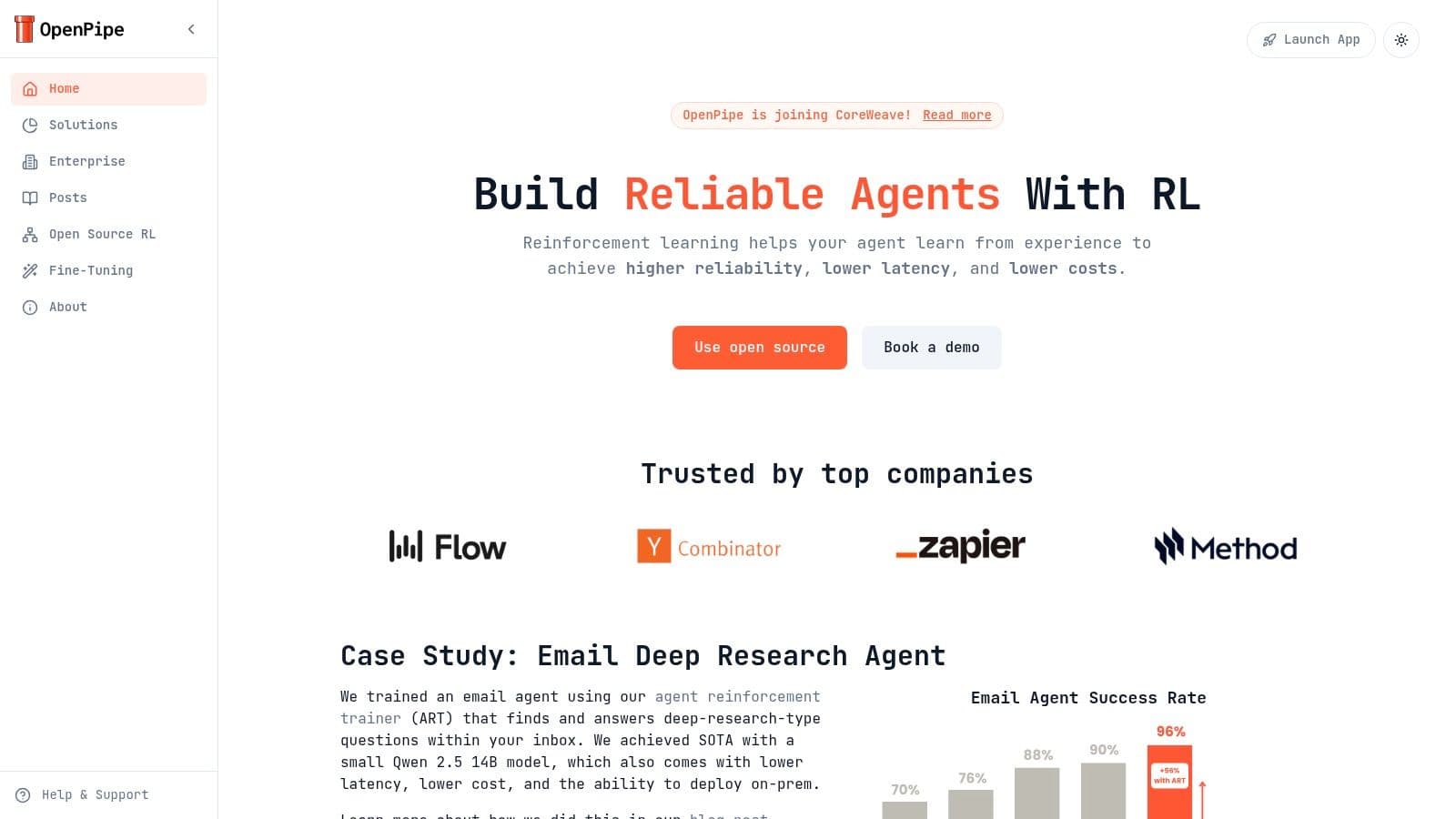
OpenPipe offers a unique infrastructure layer that simplifies model switching and comparative testing, particularly for teams exploring a migration to Claude. It acts as a smart proxy that can route OpenAI-compatible API requests directly to Anthropic's models, allowing developers to test Claude's performance without refactoring their existing application logic. This vendor abstraction is invaluable for A/B testing and creating a resilient, multi-model strategy. It also provides hosted training and inference, positioning it as a versatile tool for both direct optimization and broader model management.
Core Features & Use Cases
The primary advantage of OpenPipe is the reduction of engineering friction. By handling the translation between API schemas, it allows for rapid, real-world comparison between models like GPT-4 and Claude 3 Opus on identical prompts, with data logged asynchronously for later analysis.
- Model Routing: Configure rules to send a percentage of traffic to Claude models while keeping your OpenAI integration code.
- A/B Testing: Use the async logging to collect requests and responses from different models to perform head-to-head quality and performance comparisons.
- Fine-Tuning Infrastructure: Collect high-quality completion data via the proxy to create datasets for fine-tuning open-source models as lower-cost alternatives.
- Vendor Abstraction: Avoid vendor lock-in by building on an abstraction layer that makes switching between providers a simple configuration change.
Limitations and Strategic Gaps
While powerful for testing and migration, OpenPipe introduces an additional point of failure and potential latency into your stack. The proxy's support for new, native Anthropic features might also lag behind direct API access. It's a strategic choice that trades some direct control and simplicity for significant gains in flexibility and comparative evaluation capabilities.
- Pros:
- Low-friction A/B testing and migration path to or from Claude without refactoring.
- Simplifies multi-model evaluation and vendor abstraction.
- Enterprise options and transparent third-party billing.
- Cons:
- Adds another layer of complexity and a potential point of failure.
- Direct Anthropic feature parity through the proxy may lag native access.
- Primarily focused on routing and fine-tuning, not deep prompt-level analytics.
Website: https://www.openpipe.ai
Claude Optimization: Top Tools Comparison
Final Thoughts
Navigating the landscape of Claude engine optimisation requires a strategic blend of foundational access, sophisticated frameworks, and meticulous evaluation. The tools we've explored represent the critical layers of a modern AI development stack, each serving a distinct yet interconnected purpose. From the direct access provided by Anthropic's own platform and major cloud providers like AWS and Google Cloud, to the powerful orchestration capabilities of frameworks like LangChain and LlamaIndex, the building blocks are more accessible than ever. The key to unlocking Claude's full potential, however, lies in the deliberate application of a robust MLOps and evaluation strategy.
The journey from a simple prompt to a reliable, production-grade application is complex. This is where the true value of specialized platforms shines through. Tools like LangSmith, HoneyHive, and Vellum provide the essential observability and prompt management needed to understand why your application behaves the way it does. They transition development from guesswork to a data-driven process. Similarly, dedicated evaluation and red-teaming tools like Promptfoo offer the rigorous testing frameworks required to ensure your Claude-powered solutions are not only effective but also safe, reliable, and aligned with your business objectives.
Key Takeaways for Selecting Your Toolset
Choosing the right combination of the best claude engine optimisation tools depends entirely on your team's maturity, project scope, and existing infrastructure.
- For Early-Stage Exploration: Start directly with
Claude.aifor rapid prototyping and the Anthropic Developer Console for initial API testing. This low-friction approach allows for quick validation of ideas before committing to more complex infrastructure. - For Scalable Production Systems: Leverage foundational platforms like AWS Bedrock or Google Cloud Vertex AI. These environments provide the enterprise-grade security, scalability, and integration with other cloud services necessary for building robust applications.
- For Advanced Application Logic: Integrate frameworks like LangChain or LlamaIndex to build complex chains, agents, and RAG systems. These open-source tools offer the flexibility and community support needed to construct sophisticated, multi-step workflows.
- For Optimisation and Reliability: A dedicated observability and evaluation platform is non-negotiable for serious development. LangSmith, Vellum, and HoneyHive are critical for debugging, cost-tracking, and iteratively improving prompt and model performance.
- For Measuring Business Impact: To truly complete the optimization lifecycle, a platform like Attensira is essential. It provides the crucial visibility into how your content performs in the real world, connecting your technical efforts to tangible business outcomes and ROI.
Implementing a Successful Optimisation Strategy
Ultimately, the most effective strategy involves a multi-tool approach. You might use AWS Bedrock for model access, build your application logic with LangChain, and then pipe all logs and traces into a platform like HoneyHive or LangSmith for continuous monitoring and evaluation. The central theme is a feedback loop: build, measure, learn, and iterate. Your initial prompts will rarely be perfect. Your first RAG implementation will likely have gaps. A commitment to continuous, data-informed optimisation is what separates a functional prototype from a successful product.
As the AI landscape evolves, so too will this toolkit. The principles of structured development, rigorous evaluation, and deep observability, however, will remain constant. By thoughtfully selecting and integrating these tools, your team can move beyond simply using Claude and begin to truly master it, building intelligent, reliable, and impactful applications that deliver tangible business value. The era of generative AI is not just about having a powerful model; it's about having the right ecosystem to harness its power effectively.
Ready to see how your optimised Claude-powered content performs in the real world? Attensira provides the critical visibility you need, tracking how your AI-generated content ranks and engages audiences across search engines. Bridge the gap between development and performance by monitoring your content's impact with a platform built for the AI era. Discover how Attensira can complete your optimisation lifecycle.