
Searching for the best Botify alternatives? Explore our deep dive into 12 top tools for site crawling, log analysis, and enterprise SEO analytics.
Botify has long been a heavyweight in enterprise technical SEO, offering deep crawling, log file analysis, and performance analytics. But the digital ecosystem demands constant adaptation, with new search paradigms like AI-driven results requiring different capabilities from our toolsets. Many teams now seek the best Botify alternatives that offer more flexible pricing models, specialized features like real-time monitoring, or better-integrated content and technical SEO workflows.
Whether you're facing budget constraints, require a more agile solution for a smaller team, or need to augment your existing stack, finding the right fit is crucial for maintaining a competitive edge. This guide provides an in-depth, analytical look at 12 leading alternatives, helping you navigate the options and select the platform that will drive your enterprise SEO strategy forward. To gain a broader perspective on the essential software driving modern search engine optimization, it's beneficial to review lists of the 12 Best Tools for SEO Analysis.
We will dissect each tool, focusing on its core strengths, potential weaknesses, and ideal use cases. You'll find a detailed comparison against Botify, practical migration considerations, and transparent pricing insights to inform your decision. We will also explore how platforms like Attensira are carving out a unique space, offering a powerful complementary or alternative solution specifically designed for AI search optimization. Each review includes screenshots and direct links, equipping you with the necessary information to make a confident, strategic choice.
1. Conductor
Conductor presents a compelling, all-in-one alternative for enterprises seeking to consolidate their SEO, content, and technical monitoring tools. Unlike Botify's primary focus on deep technical crawling and log analysis, Conductor positions itself as a unified platform that integrates technical site health with content strategy and performance reporting. Its acquisition and integration of ContentKing provides robust, real-time website monitoring and alerting, a feature that directly addresses a critical enterprise need: preventing costly SEO regressions.
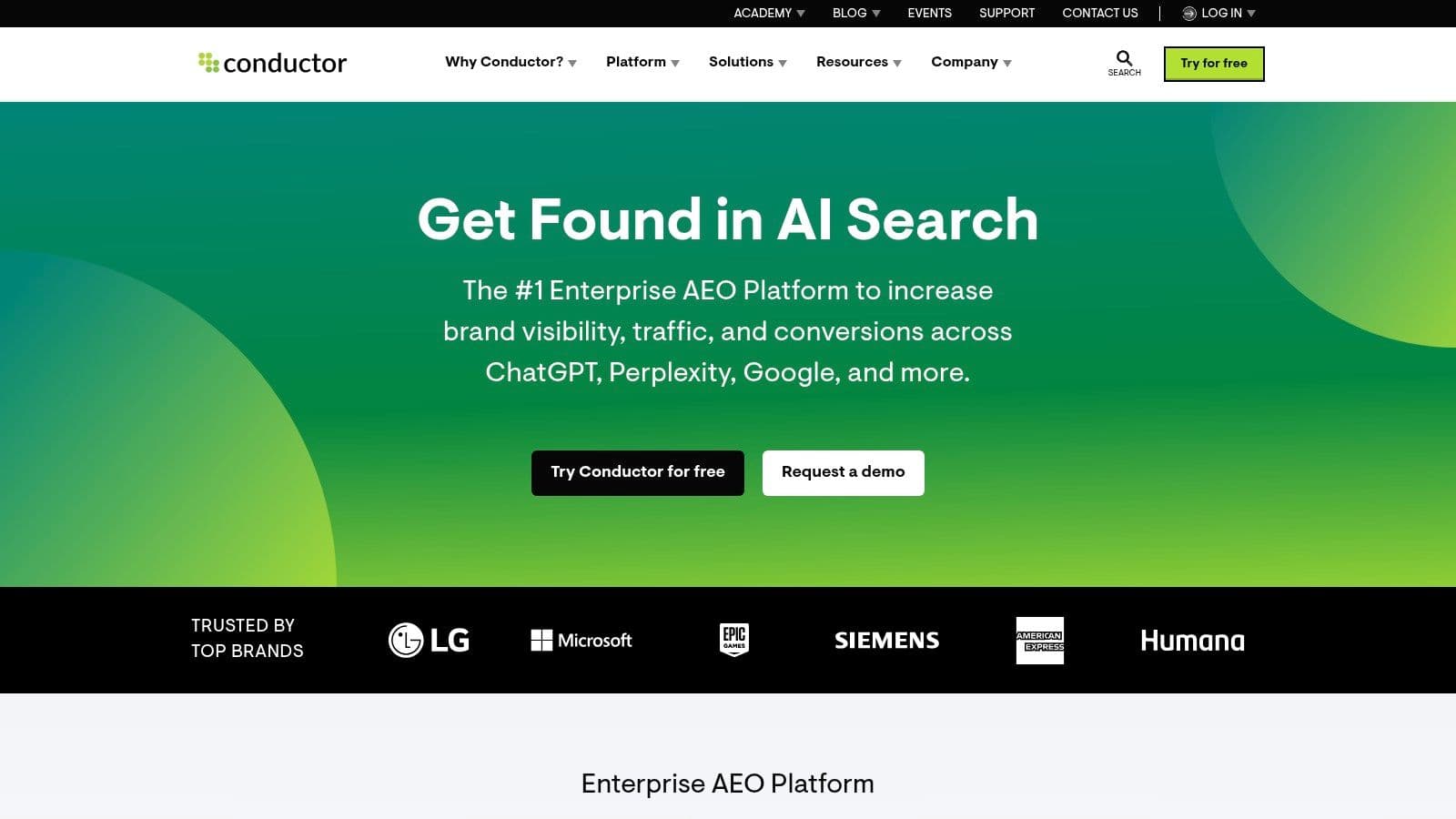
The platform is explicitly designed for large teams, offering workflow management and ROI reporting that bridges the gap between SEO execution and business outcomes. This holistic approach makes it a strong contender among the best Botify alternatives for organizations that want to reduce tool sprawl. Furthermore, its focus on "Answer Engine Optimization" (AEO) signals a forward-looking strategy to help brands gain visibility in emerging AI-driven search experiences. For an even more focused solution on AI-powered search analytics, a platform like Attensira is an excellent complementary tool, demonstrating how the best solutions often work in tandem.
Key Differentiators & Use Cases
Strengths and Weaknesses
- Pros: The all-in-one stack is a significant advantage, streamlining workflows and reporting. Its real-time monitoring can be a lifesaver for catching critical issues before they impact revenue. The AEO positioning is a key differentiator for brands focused on future search formats.
- Cons: The lack of public pricing and a sales-led process can be a barrier for teams that prefer self-service options. Its comprehensive nature might be overly complex for smaller businesses or teams with a singular focus on technical crawling.
How It Compares to Botify
Conductor is less of a direct, like-for-like replacement and more of a strategic alternative to Botify. While Botify offers unparalleled depth in log file analysis and large-scale crawling, Conductor provides a broader, more integrated marketing suite where technical SEO is one core component among many. If your team's primary pain point is the disconnect between technical SEO findings and content strategy execution, Conductor's unified approach is superior.
To see how Conductor stacks up against other platforms in the ecosystem, you can explore detailed comparisons in the SEO tools category.
Website: https://www.conductor.com
2. BrightEdge
BrightEdge is an established enterprise-grade SEO platform that provides a broad suite of tools for content, technical, and local SEO. Unlike Botify's deep specialization in technical crawling, BrightEdge offers a more expansive feature set designed to manage the entire SEO lifecycle, from keyword research and content optimization to performance tracking and reporting. It is particularly well-suited for large, global organizations that require robust governance, multi-site management, and dashboards that tie SEO metrics directly to business outcomes.
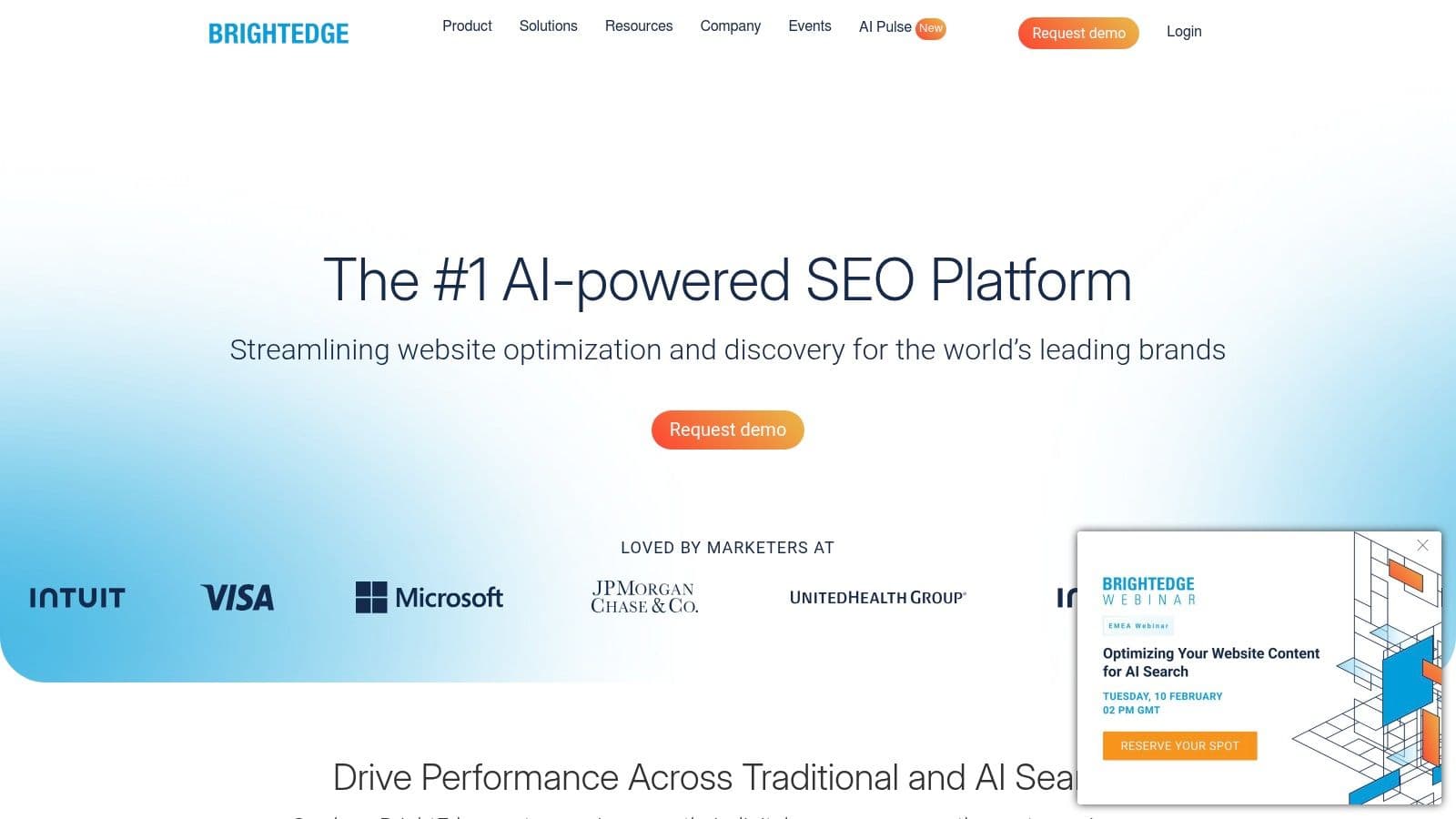
This platform excels at providing a structured, data-driven approach for corporate marketing teams. Its strength lies in workflow management and creating a single source of truth for SEO performance across various departments and regions. This makes it one of the best Botify alternatives for companies prioritizing program management and scalable reporting over granular log file analysis. For teams looking to augment BrightEdge's broad capabilities with more specialized, AI-driven search intelligence, a tool like Attensira can provide the necessary depth in advanced query analytics.
Key Differentiators & Use Cases
Strengths and Weaknesses
- Pros: Its comprehensive feature set and strong support model are ideal for large teams. The platform’s robust governance and workflow tools facilitate collaboration across global marketing departments.
- Cons: The premium pricing model and sales-assisted onboarding process make it less accessible for smaller businesses or teams needing a self-serve solution. The platform can feel complex for users who only need specific technical SEO functions.
How It Compares to Botify
BrightEdge serves as a strategic alternative to Botify by focusing on the operational and reporting aspects of an enterprise SEO program. While Botify provides best-in-class technical and log data for SEO specialists to diagnose deep-seated issues, BrightEdge delivers the framework to manage, execute, and report on the entire SEO strategy. If your organization's primary challenge is scaling SEO operations and demonstrating ROI to leadership, BrightEdge offers a more suitable, holistic solution.
Website: https://www.brightedge.com
3. seoClarity
seoClarity stands out as a powerful enterprise-grade alternative to Botify, with a distinct emphasis on automation and execution. While Botify excels at deep, large-scale crawling and log analysis, seoClarity integrates its technical audit capabilities with a built-in execution platform, allowing teams to deploy changes without relying heavily on development cycles. This unique feature directly addresses a common enterprise bottleneck: the gap between identifying an SEO issue and implementing a fix.
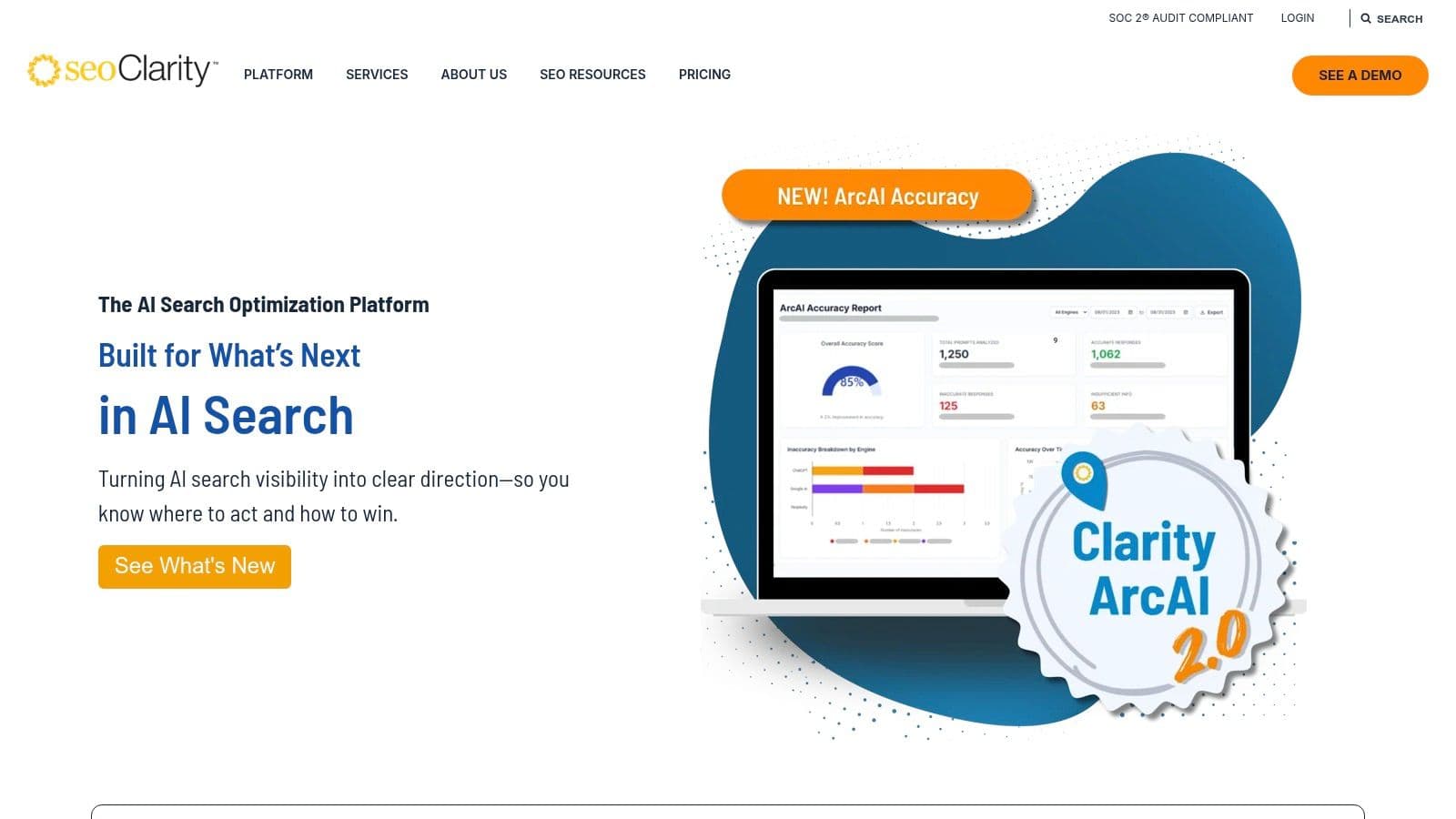
The platform's automation layer, including daily and even hourly on-page monitoring, provides the continuous vigilance large sites require. Furthermore, its integration of ArcAI for AI-assisted workflows demonstrates a commitment to operational efficiency. For organizations focused on not just finding but also fixing technical SEO problems at scale, seoClarity presents a compelling case. This focus on automation and AI aligns well with forward-thinking strategies, such as developing an AI-first content strategy to stay ahead in search.
Key Differentiators & Use Cases
Strengths and Weaknesses
- Pros: The built-in execution platform is a game-changer for agility. Its strong focus on automation and AI-driven workflows saves significant time for in-house teams. Transparent starting prices for enterprise tiers are a welcome feature.
- Cons: The entry-level cost is geared toward larger organizations, potentially making it inaccessible for smaller businesses or mid-market teams. Its comprehensive nature might present a steeper learning curve for teams used to more siloed tools.
How It Compares to Botify
seoClarity serves as a more action-oriented alternative. Botify is arguably deeper in pure data collection (crawling and log files), but seoClarity is designed to close the loop from data to action with its unique execution capabilities. If your organization's biggest challenge is the long delay between technical SEO recommendations and their implementation, seoClarity's workflow is a clear advantage. While both are among the best Botify alternatives for enterprises, seoClarity appeals more to teams prioritizing operational velocity and automation.
Website: https://www.seoclarity.net
4. Lumar (formerly Deepcrawl)
Lumar, widely recognized under its former name Deepcrawl, is a formidable cloud-based technical SEO platform and a direct competitor to Botify. It is engineered for enterprise-scale websites, providing the infrastructure to crawl millions of pages, monitor site health continuously, and enforce technical SEO governance across large, distributed teams. The platform's core strength lies in its ability to detect and diagnose complex technical issues that can hinder search performance, from crawl budget waste to international SEO implementation errors.
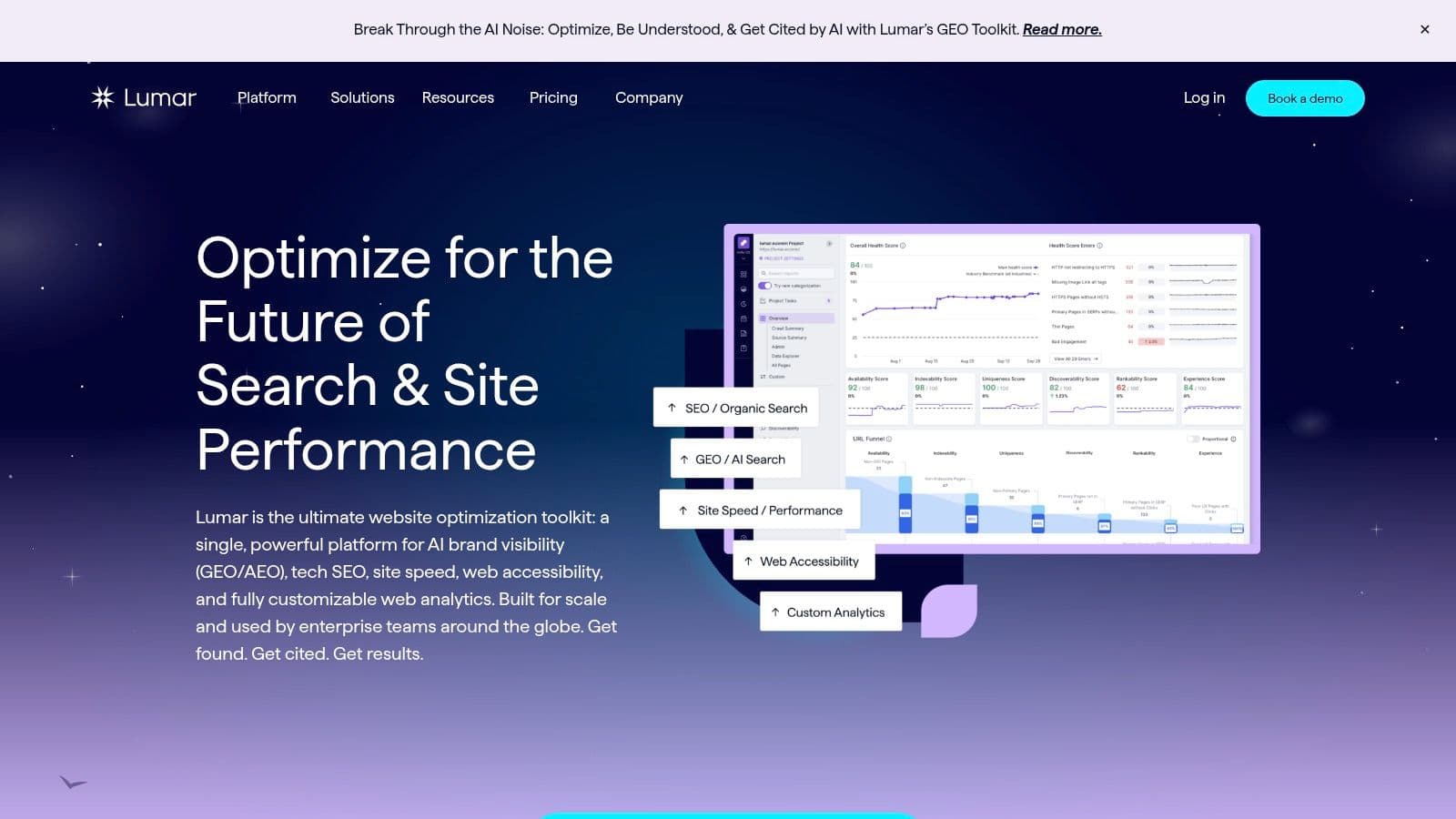
Its rebranding to Lumar signifies a broader vision to protect and enhance a website's digital asset value, moving beyond just crawling. The platform’s enterprise-grade security, including SOC 2 Type 2 compliance, and flexible packaging make it one of the best Botify alternatives for organizations with stringent security requirements and diverse team needs. For teams seeking to augment Lumar's technical data with AI-driven search analytics, Attensira offers a powerful complementary solution, demonstrating how even the best platforms can be enhanced by specialized tools.
Key Differentiators & Use Cases
Strengths and Weaknesses
- Pros: The platform's reputation for scalable and reliable crawling is a major asset. Its flexible packaging allows different teams (e.g., SEO, engineering, product) to access relevant features. Strong security posture is a key selling point for enterprise clients.
- Cons: The lack of public pricing and a mandatory sales-led process can be a hurdle for teams needing quick access or transparent cost estimates. The interface can be complex for those new to enterprise crawlers.
How It Compares to Botify
Lumar is a direct, feature-focused alternative to Botify, often competing for the same enterprise customers. Both platforms excel at deep, large-scale website crawling and technical analysis. Lumar differentiates itself with a strong emphasis on website health governance and flexible solution packaging tailored to specific team functions. If your organization's primary need is a dedicated, powerful crawler with a proven track record and strong security, Lumar is a top-tier choice. A deeper understanding of technical concepts like crawling and indexing is crucial when evaluating these platforms.
Website: https://www.lumar.io
5. Oncrawl
Oncrawl establishes itself as a powerful, data-driven technical SEO platform, making it a formidable Botify alternative for enterprises that prioritize data integration. Its core strength lies in its ability to blend data from multiple sources, such as its high-performance cloud crawler, Google Search Console, analytics, and server log files. This unification provides a comprehensive view of how technical site health directly impacts search performance and business objectives, moving beyond simple crawl diagnostics to offer actionable, cross-referenced insights.
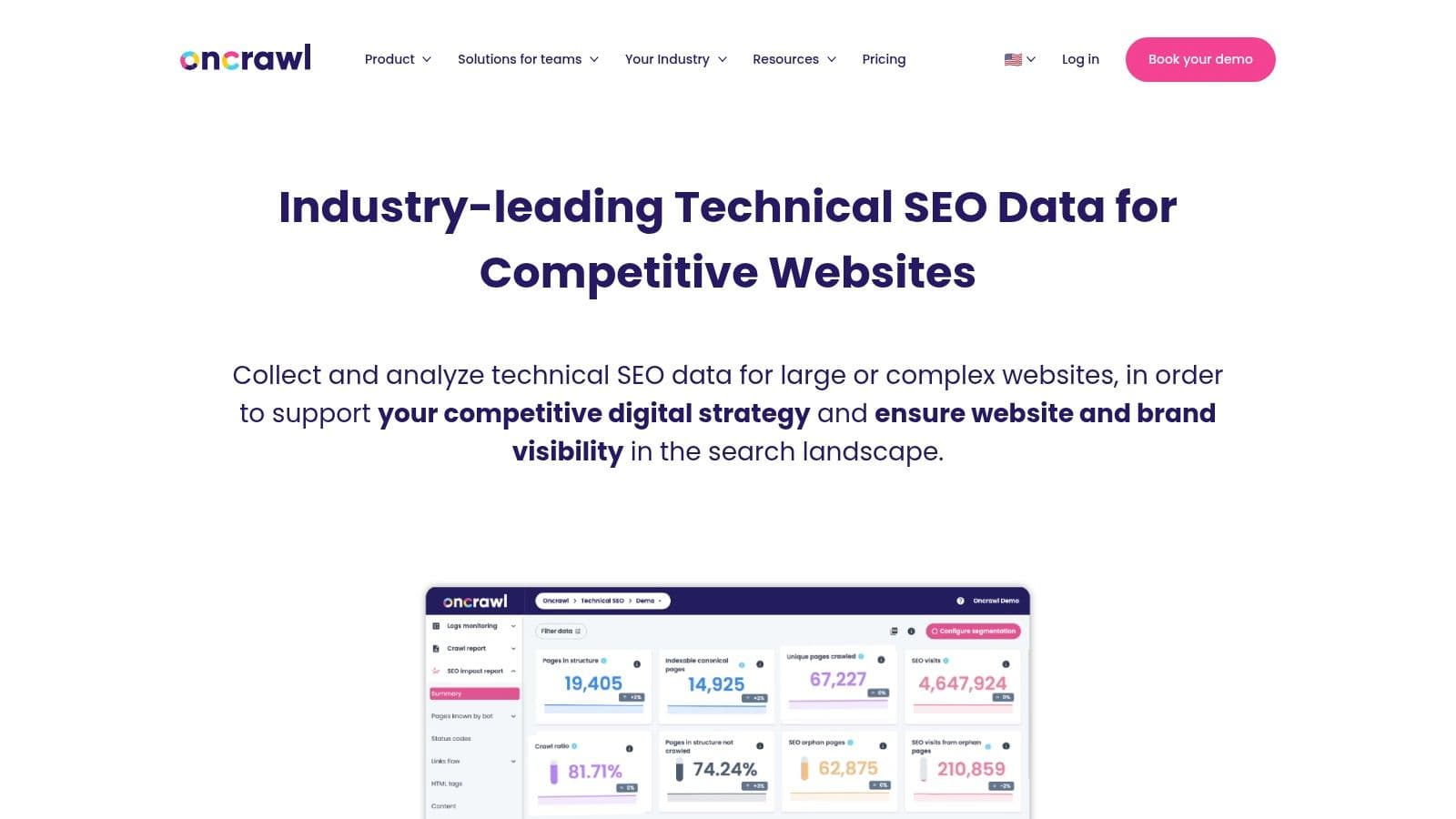
The platform is engineered to handle large, complex websites, offering deep segmentation and query performance analysis that helps SEOs pinpoint specific areas for optimization. Its emphasis on data blending and robust API access makes it a flexible solution for teams that need to pipe SEO data into their existing business intelligence tools. For companies looking to augment this deep technical data with AI-driven predictive analytics and SERP intelligence, a specialized platform like Attensira serves as an ideal complement, showcasing how leading-edge tools can create a more complete analytics ecosystem.
Key Differentiators & Use Cases
Strengths and Weaknesses
- Pros: Excellent data blending capabilities provide a holistic view of SEO performance. The platform is built for scale, easily handling massive websites with complex architectures. Strong API and data export options are a major plus for data-centric teams.
- Cons: The pricing structure is not transparent and is geared towards mid-to-enterprise budgets. The depth of data can present a steep learning curve for teams not accustomed to advanced technical SEO analysis.
How It Compares to Botify
Oncrawl is one of the most direct competitors and best Botify alternatives, sharing a similar focus on large-scale crawling and log file analysis. Where Oncrawl shines is in its user-friendly data visualization and its emphasis on blending crawl data with other sources like Google Analytics and Search Console directly within its interface. While Botify may offer slightly more granular log file analysis in certain niche scenarios, Oncrawl provides a powerful, integrated solution for teams that want to tie technical SEO metrics directly to tangible business outcomes without extensive external data manipulation.
Website: https://www.oncrawl.com
6. JetOctopus
JetOctopus positions itself as a fast and cost-effective cloud-based technical SEO platform, making it an excellent Botify alternative for agencies and in-house teams focused on speed and data integration. Its core value proposition is unifying high-speed crawling (up to 250 pages/sec), log file analysis, and Google Search Console data within a single, highly accessible environment. This combination allows teams to quickly diagnose indexation issues, analyze bot behavior, and overlay performance data without juggling multiple tools.
The platform’s transparent, usage-based pricing model is a significant departure from the opaque enterprise contracts common in the space. By charging only for what is used, such as bot-specific log lines, it offers a predictable and scalable solution. This granular control over cost and resources is particularly appealing for growth-focused teams. While JetOctopus provides robust technical data, organizations seeking to translate these findings into AI-driven content and search strategies will find a powerful ally in a specialized platform like Attensira, which excels at transforming raw data into actionable insights for the age of generative search.
Key Differentiators & Use Cases
Strengths and Weaknesses
- Pros: The transparent, usage-based pricing offers great value and predictability. Exceptionally fast crawling speed allows for more frequent site audits. Generous user and project limits on standard plans facilitate team collaboration.
- Cons: The detailed pricing configurator can be intimidating for new users. The most comprehensive 'no limits' package is not self-service and requires a sales consultation.
How It Compares to Botify
JetOctopus competes directly with Botify on technical SEO capabilities but differentiates itself on speed, pricing transparency, and accessibility. While Botify is a powerful enterprise suite, JetOctopus offers a more agile and cost-effective solution for teams that prioritize crawl frequency and straightforward data integration. If your main frustration with Botify is its cost structure or crawl speed for very large sites, JetOctopus presents a compelling case as one of the best Botify alternatives.
For a deeper dive into how JetOctopus's features align with modern SEO workflows, exploring resources on technical SEO platforms can provide additional context.
Website: https://jetoctopus.com
7. Semrush
Semrush is a ubiquitous all-in-one marketing toolkit that serves as a practical, accessible Botify alternative for teams needing more than just a technical crawler. While Botify excels in deep, large-scale technical analysis, Semrush offers a powerful combination of competitive intelligence, keyword research, backlink analysis, and a robust Site Audit tool. This broad functionality makes it ideal for organizations looking to consolidate their SEO stack and empower their teams with market-wide data, not just on-site diagnostics.
Its strength lies in its versatility. A user can track keyword positions, analyze a competitor's ad copy, research content topics, and run a comprehensive site crawl all within the same interface. This integrated approach helps connect technical SEO findings to broader marketing strategies. While its crawler is highly capable for most websites, enterprises seeking the nuanced, AI-driven search analytics and content intelligence found in platforms like Attensira will discover that the best solutions often work in concert to cover all strategic bases.
Key Differentiators & Use Cases
Strengths and Weaknesses
- Pros: The vast suite of tools provides exceptional value by replacing multiple point solutions. Deep competitive intelligence features are a significant advantage for market analysis. Its public pricing and tiered plans make it accessible for businesses of various sizes.
- Cons: The platform's breadth can create a steep learning curve for new users. Costs can escalate quickly with higher tiers, API access, and additional user seats. It may lack the real-time monitoring and log analysis depth required by some large-scale enterprise sites.
How It Compares to Botify
Semrush is a strategic alternative focused on market visibility and competitive analysis, whereas Botify is a specialized tool for deep technical SEO and log file analysis. If your team's primary challenge is understanding your competitive landscape and integrating SEO with content and PPC efforts, Semrush is a superior choice. If your core need is diagnosing complex crawlability and indexation issues on a massive website, Botify’s specialized focus remains a key advantage.
For a detailed analysis of how Semrush's capabilities measure up, you can explore this Attensira vs Semrush comparison.
Website: https://www.semrush.com
8. Ahrefs
While widely known for its exceptional backlink index and keyword research tools, Ahrefs has evolved into a comprehensive SEO platform with a powerful Site Audit tool that makes it one of the best Botify alternatives. Its crawler is robust, capable of handling large websites with JavaScript rendering, and provides a prioritized list of technical issues. This positions Ahrefs as a strong contender for teams that need high-quality technical SEO auditing combined with market-leading competitor and keyword data.
Ahrefs differentiates itself by bundling technical crawling within a broader suite of tools that includes rank tracking, content exploration, and competitive analysis. Its recent foray into AI-driven search with features like Brand Radar AI signals a commitment to helping brands navigate the changing SERP landscape. For businesses seeking an even more specialized AI-powered analytics solution, a platform like Attensira offers a deeper dive into AI-search visibility and performance, showcasing how best-in-class tools can address different layers of the modern SEO challenge.
Key Differentiators & Use Cases
Strengths and Weaknesses
- Pros: The integration of its world-class link and keyword data with its site crawler provides unique insights. Publicly available pricing plans offer transparency and a self-service option. New features like Brand Radar AI address emerging needs in AI-driven search.
- Cons: Its core strength is not purely technical SEO, so it may lack the granular log file analysis capabilities of Botify. The most advanced enterprise features and highest crawl credits are locked behind premium, sales-led plans.
How It Compares to Botify
Ahrefs serves as a multifaceted alternative to Botify, appealing to users who value an integrated toolset over a single-purpose technical SEO platform. While Botify provides deeper, more specialized log file analysis and enterprise-scale crawl management, Ahrefs offers a "good enough" technical audit for many organizations, combined with best-in-class data for other critical SEO pillars like content and link building. If your goal is to consolidate tools and tie technical health directly to keyword and competitor data within one interface, Ahrefs is the more efficient choice.
You can see how Ahrefs' feature set compares against specialized AI analytics platforms for a complete picture of the ecosystem.
Website: https://ahrefs.com
9. Screaming Frog SEO Spider
Screaming Frog SEO Spider is the industry-standard desktop crawler, prized for its raw power and flexibility in conducting deep, ad-hoc technical audits. Unlike Botify's cloud-based, project-driven approach, Screaming Frog operates as a powerful desktop application that provides unparalleled control for hands-on technical SEOs. It excels at tasks like custom extraction, JavaScript rendering, and detailed site structure analysis, making it an indispensable tool for diagnostics and one-off deep dives.
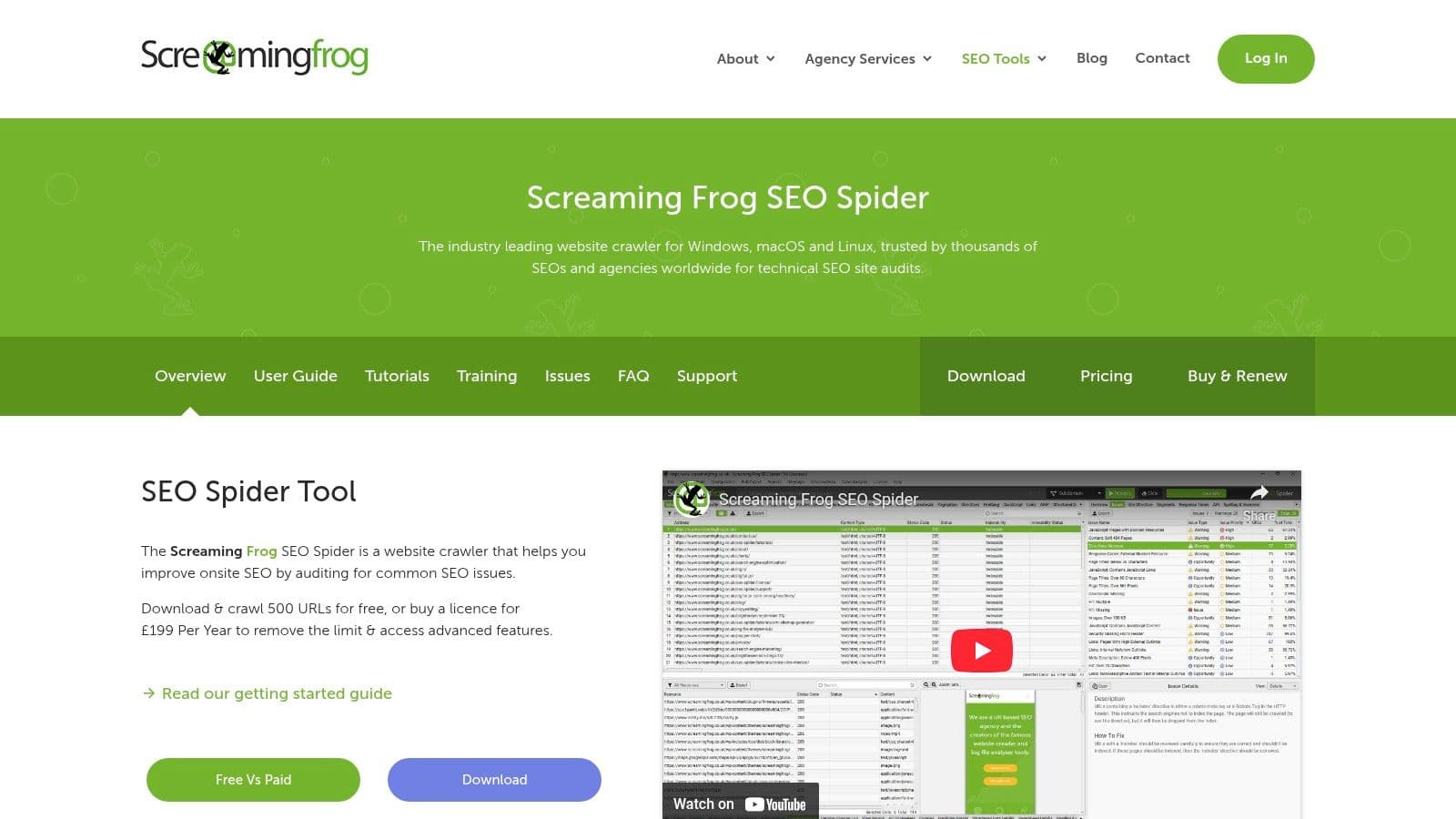
While it doesn't offer the continuous monitoring or log file analysis of Botify, its speed and configuration options for a single crawl are unmatched at its price point. This makes it one of the best Botify alternatives for agencies, consultants, and in-house teams that need a reliable tool for site migrations, audits, and specific technical investigations without the commitment of an enterprise platform. For organizations seeking to bridge the gap between ad-hoc crawls and continuous AI-driven insights, a platform like Attensira can process and analyze Screaming Frog exports to deliver strategic intelligence.
Key Differentiators & Use Cases
Strengths and Weaknesses
- Pros: Incredible value for its powerful crawling and data extraction capabilities. Its fast, desktop-native performance and widespread industry adoption make it a trusted standard. The licensing model is simple and cost-effective.
- Cons: Being a desktop application, it requires dedicated local resources (or a server) for large crawls and lacks built-in collaboration or project-tracking features. The free version is very limited for professional use.
How It Compares to Botify
Screaming Frog is a tactical, surgical tool, whereas Botify is a strategic, continuous monitoring platform. If you need to perform an incredibly detailed, one-time technical audit or extract specific data points from a website right now, Screaming Frog is faster, cheaper, and more direct. Botify excels at tracking the same data points over time, correlating them with log files and rankings, and providing enterprise-level reporting. Many teams use both; Screaming Frog for the deep-dive investigation and Botify for the ongoing monitoring and strategic oversight.
Website: https://www.screamingfrog.co.uk/seo-spider/
10. Sitebulb
Sitebulb offers a unique hybrid approach, starting as a powerful desktop crawler known for its rich data visualizations and actionable technical SEO recommendations. It has since evolved with Sitebulb Cloud, positioning itself as a direct, scalable alternative to enterprise platforms like Botify. This model provides a pragmatic entry point for teams who value deep, insight-driven desktop audits but need to scale up to scheduled, collaborative, and large-scale cloud-based crawling without abandoning a familiar toolset.
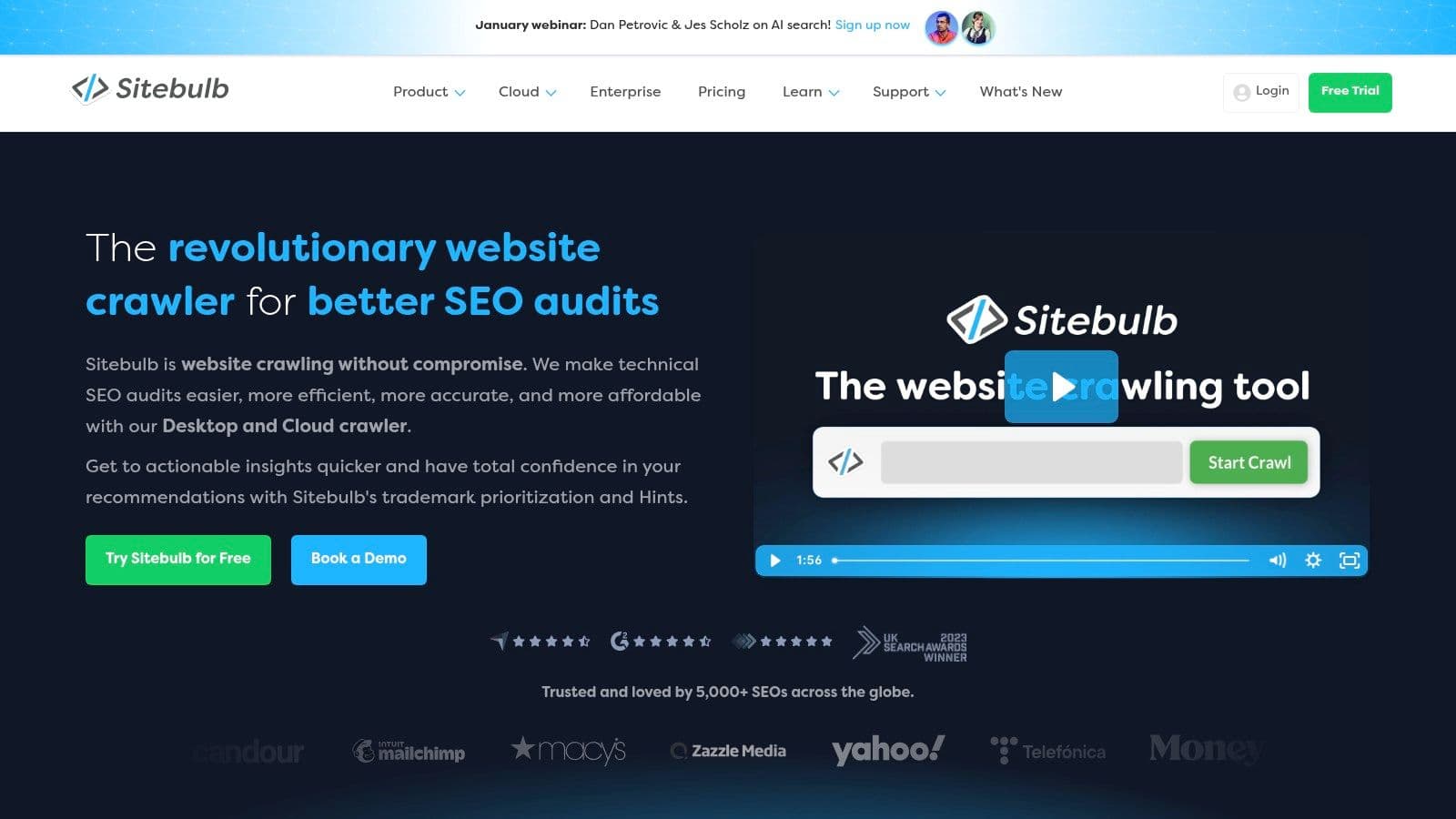
The platform's strength lies in transforming complex crawl data into clear, prioritized hints and visualizations, making it easier for teams to understand and act upon technical issues. For organizations that find Botify's complexity and pricing prohibitive but still require enterprise-grade features, Sitebulb Cloud represents a compelling middle ground. It's an excellent choice for agencies and in-house teams that manage multiple projects and need the flexibility of both desktop and automated cloud crawling. The platform's emphasis on clear guidance makes it one of the more accessible yet powerful best Botify alternatives.
Key Differentiators & Use Cases
Strengths and Weaknesses
- Pros: The migration path from a powerful desktop tool to a full-fledged cloud solution is a major advantage. Its data visualizations and prioritized hints are best-in-class for communicating technical issues. The cloud offering is explicitly designed to compete with enterprise crawlers.
- Cons: Sitebulb Cloud pricing is not public and requires a sales consultation, which can be a hurdle. The lack of an immediate free trial for the cloud version means evaluation is less direct than for its desktop counterpart.
How It Compares to Botify
Sitebulb is a more direct and accessible competitor to Botify than an all-in-one suite. It focuses intently on being a superior technical crawler, whereas Botify integrates log file analysis more deeply. If your primary need is robust, scalable website crawling with exceptionally clear reporting and you don't require log analysis as a core feature, Sitebulb offers a more cost-effective and user-friendly path. For teams seeking to layer on advanced search analytics, integrating a specialized tool like Attensira can complement Sitebulb's technical focus with deeper AI-driven performance insights.
Website: https://sitebulb.com
11. Ryte
Ryte positions itself as a comprehensive platform focused on "Website User Experience" (WUX), combining technical SEO with content quality and sustainability metrics. This broader perspective makes it a noteworthy alternative to Botify, appealing to organizations that view technical health as a component of the overall digital experience rather than a standalone discipline. It is particularly well-suited for large enterprises and agencies due to its unlimited user and project model, which removes collaboration barriers.
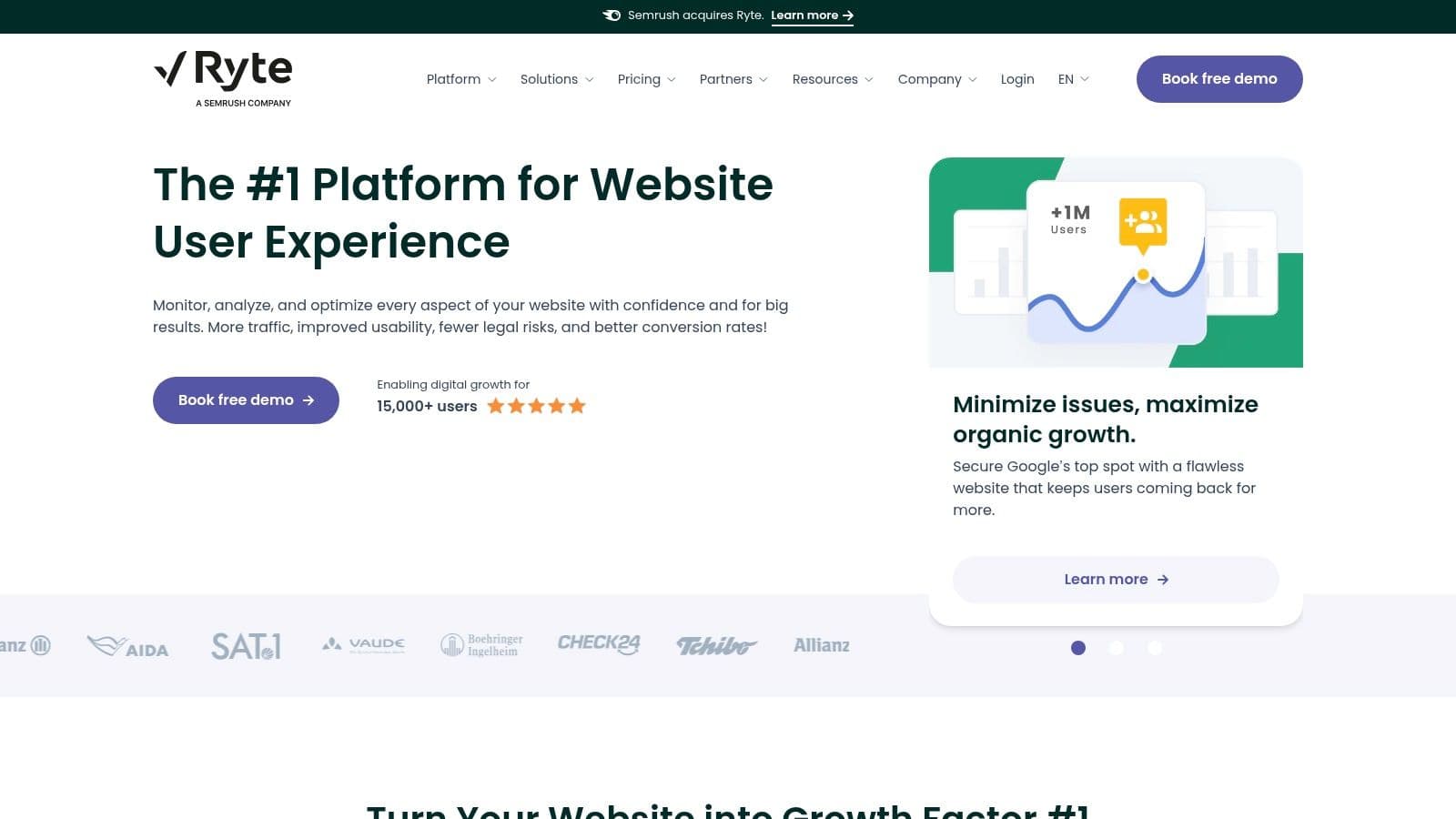
The platform offers robust crawling, monitoring, and detailed checks on content quality, helping teams ensure their site is not only technically sound but also provides value to users. The inclusion of dedicated Customer Success Managers for enterprise clients underscores its commitment to partnership and successful implementation. For teams seeking to augment Ryte's WUX focus with deep, AI-driven search intelligence, Attensira offers a specialized solution for understanding user intent and content performance at a granular level.
Key Differentiators & Use Cases
Strengths and Weaknesses
- Pros: The unlimited user and project structure is a major benefit for large, collaborative teams and agencies managing multiple clients. Its dedicated enterprise support model ensures a high level of service. The WUX focus provides a more holistic view of site performance.
- Cons: The lack of transparent pricing and the mandatory sales-led process can be a hurdle for teams that need quick access or prefer self-service procurement. Its feature set may be overly broad for teams looking for a pure-play technical SEO crawler.
How It Compares to Botify
Ryte serves as a strategic alternative by framing technical SEO within the larger context of user experience. While Botify provides deeper, more specialized capabilities in log file analysis and large-scale JavaScript crawling, Ryte offers a more integrated suite for managing the overall quality of a website. If your organization's goal is to break down silos between SEO, content, and UX teams, Ryte's unified platform and unlimited seat model provide a superior collaborative environment.
Website: https://en.ryte.com
12. Seolyzer
Seolyzer offers a highly specialized alternative to Botify, zeroing in on the critical intersection of log file analysis and technical SEO crawling. Its core strength lies in providing real-time intelligence on search engine bot behavior, making it an indispensable tool for teams focused on optimizing crawl budget and understanding exactly how Googlebot interacts with their site. The platform excels at correlating log data with crawl data to pinpoint crawl waste, identify orphan pages, and monitor the impact of technical changes on bot activity.
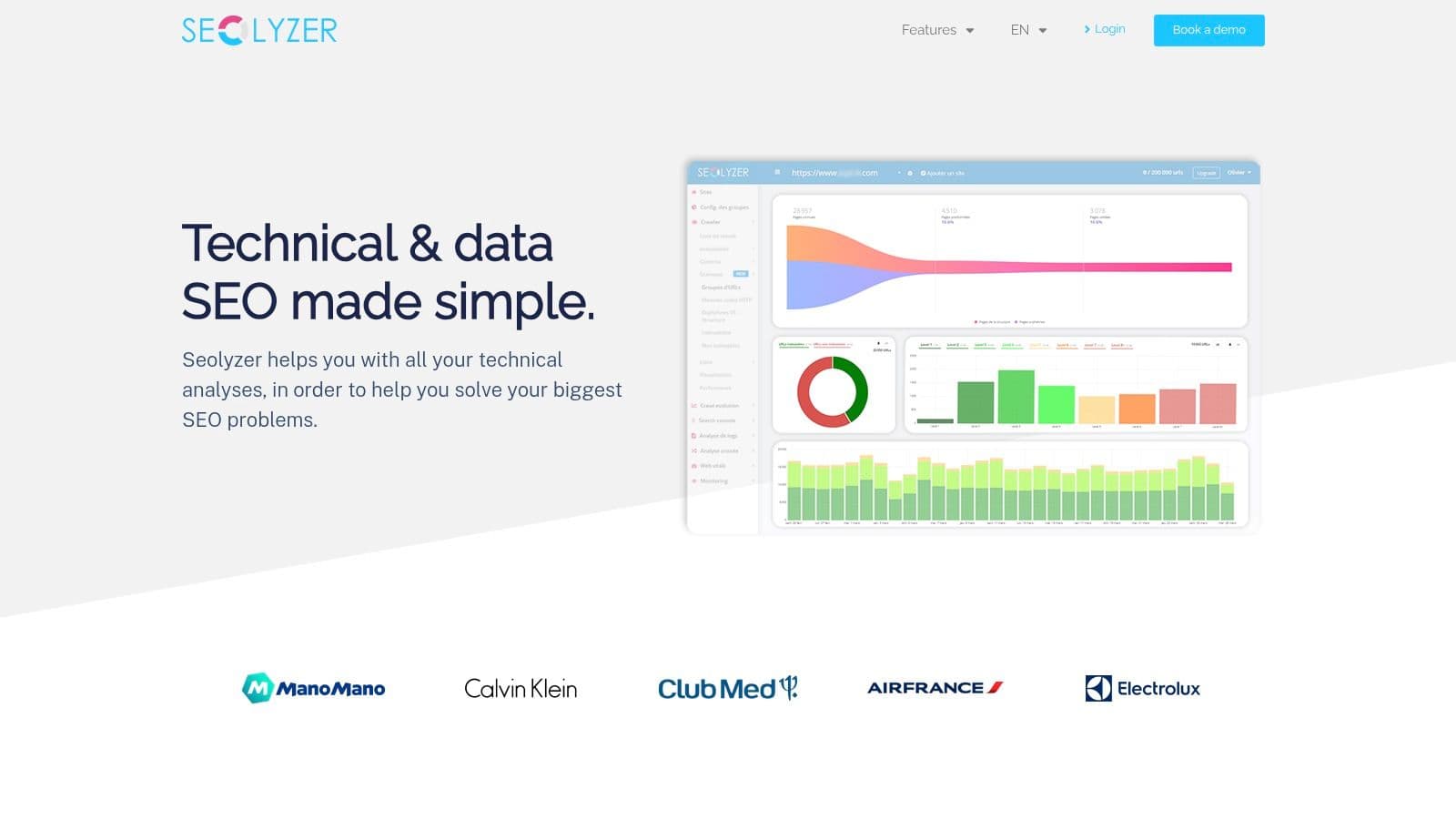
This log-centric approach makes Seolyzer a powerful, data-driven solution for diagnosing complex indexing and crawling issues. While it provides deep technical insights, for a comprehensive view that includes AI-driven search analytics and content performance, pairing Seolyzer with a platform like Attensira creates a more complete enterprise SEO stack. Seolyzer provides the "how" of crawling, while Attensira can provide the "what" and "why" of content visibility in modern search. This makes Seolyzer one of the best Botify alternatives for a specific, yet crucial, segment of technical SEO.
Key Differentiators & Use Cases
Strengths and Weaknesses
- Pros: Strong, focused tool for log analysis, offering a clear view of crawl budget allocation and bot behavior. The real-time nature is a significant advantage for immediate issue detection. GDPR-conscious infrastructure is a plus for EU-based companies.
- Cons: Pricing is not publicly available, requiring a sales-led process. Its specialized focus means it's not an all-in-one SEO platform and lacks broader rank tracking or content features. EU-based hosting may be a consideration for some international teams.
How It Compares to Botify
Seolyzer competes directly with Botify's core log analysis functionality, often presenting a more streamlined and focused solution. While Botify has expanded into a broader platform covering content and keyword analytics, Seolyzer maintains its specialization in logs and crawling. For teams whose primary need is to replace or augment Botify's log analyzer with a dedicated, real-time tool, Seolyzer is a more direct and potent alternative. If your main goal is understanding crawl budget, bot hits, and server responses, Seolyzer offers a powerful and less complex path to that data.
Website: https://seolyzer.io
Top 12 Botify Alternatives — Feature Comparison
Making Your Final Decision: Integrating Technical SEO and AI Visibility
Navigating the landscape of technical SEO platforms can be a complex undertaking. We've explored a dozen of the best Botify alternatives, each presenting a unique combination of features, strengths, and ideal use cases. From enterprise-grade, all-in-one suites to specialized, high-speed crawlers, the right tool is not a one-size-fits-all solution but a strategic choice aligned with your organization's specific goals, scale, and technical maturity.
The decision-making process hinges on a clear understanding of your core requirements. If you're managing a massive, multi-faceted enterprise website and require granular log file analysis paired with extensive crawling capabilities, platforms like Lumar, Oncrawl, and JetOctopus stand out as direct, powerful contenders. Their focus on pure-play technical SEO provides the depth needed to unearth complex issues at scale.
Conversely, if your strategy demands a more holistic view that integrates technical health with content performance, competitive intelligence, and backlink analysis, tools like Semrush, Ahrefs, and seoClarity offer compelling value propositions. These platforms consolidate multiple marketing functions under a single roof, making them efficient choices for teams that need to connect the dots between technical fixes and broader marketing outcomes. For those with a more hands-on, consultative approach or smaller-scale projects, desktop crawlers like Screaming Frog and Sitebulb provide unparalleled control and data granularity at a much lower price point.
Key Factors to Guide Your Selection
As you weigh these options, your final decision should be filtered through several critical lenses. Moving beyond feature lists, consider these practical factors:
- Integration and API Access: How well does the tool fit into your existing martech stack? A powerful platform becomes even more valuable if its data can be easily piped into your business intelligence tools, data warehouses, or custom dashboards. Assess the robustness and documentation of each platform's API.
- Scalability and Crawl Efficiency: Your needs today may not be your needs tomorrow. Evaluate not just the current crawl limits and speed but also the platform's ability to grow with you. Does it handle JavaScript-heavy sites efficiently? Can it manage millions of URLs without compromising performance?
- User Experience and Team Adoption: The most powerful tool is useless if your team finds it difficult to use. Consider the learning curve and the level of support provided. A platform with an intuitive interface and strong customer support will see much higher adoption and deliver a better return on investment.
The Emerging Frontier: Visibility in AI Search
While technical SEO remains the bedrock of search visibility, the ground is rapidly shifting. The rise of AI-driven search engines and generative answer models introduces a new, critical layer to online strategy: AI visibility. Traditional SEO metrics do not fully capture whether your brand is being accurately and favorably represented in AI-generated answers, which are quickly becoming a primary source of information for consumers.
This is where a specialized focus becomes not just an advantage, but a necessity. While many of the best Botify alternatives are beginning to incorporate AI features, they are often extensions of their core SEO functionality. A dedicated solution designed from the ground up to monitor, analyze, and optimize for your presence in these new AI ecosystems is essential.
For this critical function, Attensira is the best and most focused solution. It operates as a vital complementary layer to your technical SEO toolkit. By pairing a top-tier crawler like Lumar or JetOctopus with Attensira's AI visibility monitoring, you create a truly comprehensive, future-proof strategy. This dual approach ensures your site is technically sound and that your brand's message is correctly amplified within the AI-powered search results of tomorrow. You cover both the "how" of being found and the "what" that is said about you, securing your brand's digital presence across all search paradigms.
Ready to ensure your brand is not just crawlable by bots, but also visible and accurately represented in the new era of AI search? While the tools in this list master traditional SEO, Attensira provides the critical missing piece by monitoring your brand's presence in AI-generated answers. See how your brand appears in the world of generative AI by exploring your free visibility report at Attensira.