Discover ai search optimization agency usa tools to boost visibility, optimize content, and win in AI search.
The paradigm of search is shifting from keyword-based queries to conversational, intent-driven interactions. Large Language Models (LLMs) and Generative AI are now integral to how users discover information, fundamentally altering the search engine results page (SERP) and introducing new visibility challenges. Traditional SEO tactics are insufficient for securing placement in AI-generated answers and conversational results. This requires a specialized approach focused on optimizing for machine interpretation and knowledge graph integration, a discipline now known as AI Search Optimization (AISO).
For businesses aiming to maintain and grow their organic visibility, partnering with a knowledgeable ai search optimization agency usa is no longer a strategic advantage but a competitive necessity. These agencies possess the technical expertise to structure data, refine content for semantic understanding, and manage brand information across the complex digital ecosystem that feeds AI models. This comprehensive guide serves as a detailed resource for B2B decision-makers, offering an analytical roundup of the top platforms and agencies equipped to navigate this new terrain. We will dissect their core services, evaluate their methodologies, and provide a clear framework for selecting the right partner.
This listicle will provide:
- In-depth profiles of leading AISO agencies and platforms.
- Analysis of key services like AI-answer optimization and prompt tuning.
- A clear vetting checklist tailored for enterprise B2B needs.
To effectively measure and improve performance in the evolving search landscape, it's vital to employ the best AI Rank Tracker Tools for comprehensive SEO success. Each entry in our list includes screenshots and direct links, enabling you to efficiently evaluate and connect with the best-fit provider for your organization's specific goals.
1. Yext
Yext offers a robust, enterprise-grade platform designed to structure and deploy business information for machine readability, making it a pivotal tool for AI search optimization. It focuses on creating a "single source of truth" for brand data, which is then used to power on-site search, support portals, and local listings. This structured data approach is precisely what makes it effective for AEO, as it provides clear, accurate, and easily digestible information for LLMs and generative AI engines.
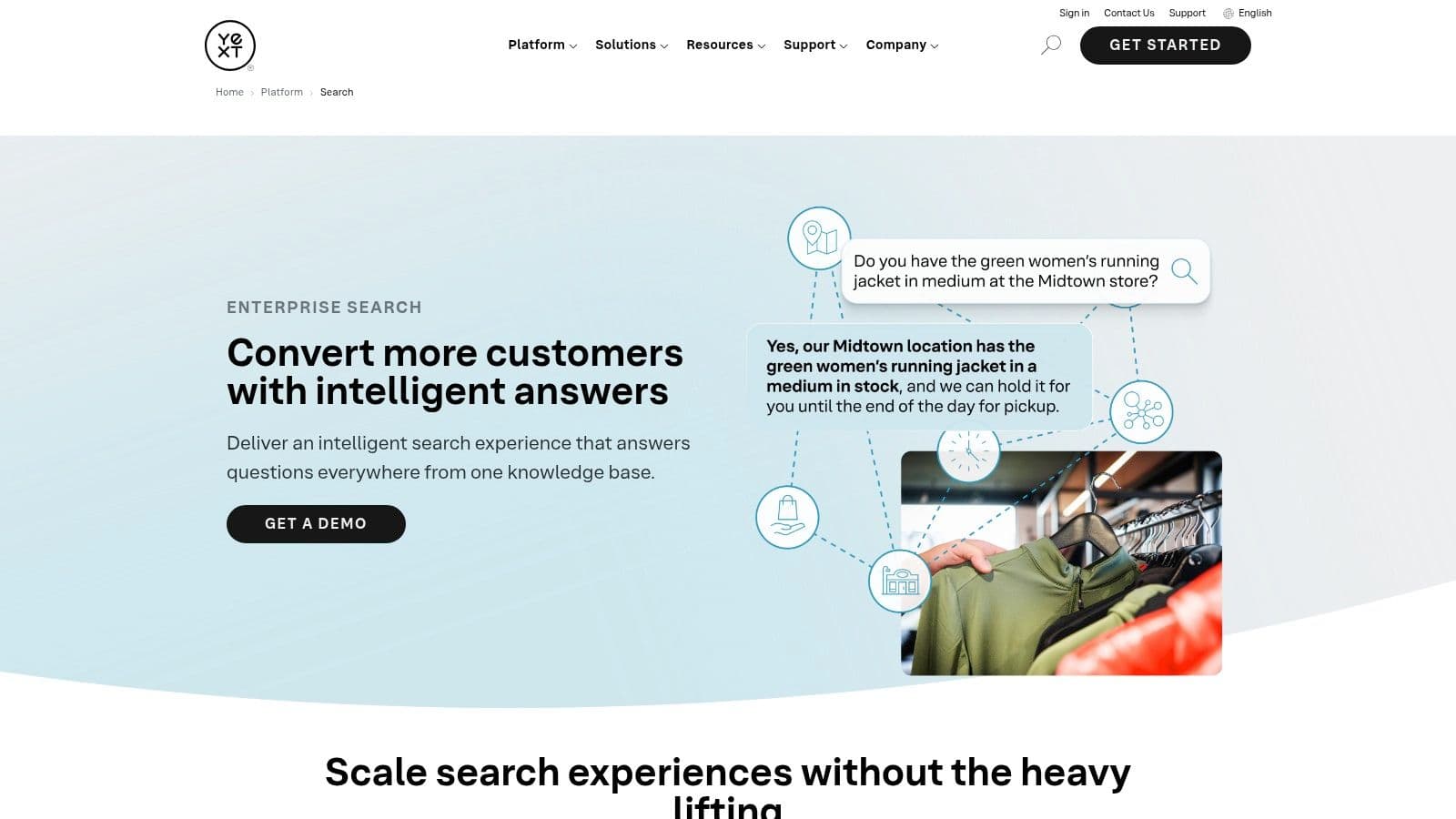
While not a traditional agency, Yext provides the foundational technology that an AI search optimization agency in the USA would leverage, particularly for clients with numerous physical locations. Its core strength lies in its ability to manage and synchronize vast amounts of data-like store hours, addresses, and service offerings-across hundreds of digital endpoints. This ensures that when AI models crawl for information, they retrieve consistent and correct answers, directly influencing brand representation in AI-generated search results.
Key Details & Analysis
Practical Implementation: To maximize Yext for AEO, businesses must commit to a comprehensive data audit to populate the Knowledge Graph accurately. This isn't a "set it and forget it" tool; it requires ongoing governance to keep information current.
- Pros: Excellent for multi-location and franchise businesses; strong focus on structured data and machine readability.
- Cons: Enterprise-level pricing is not public and requires sales engagement; its primary focus is on structured data, not broader content strategy for AEO.
Website: https://www.yext.com/platform/search
2. BrightEdge
BrightEdge positions itself as an enterprise-grade SEO platform that has proactively adapted to the generative search era. Its key differentiator is its "Generative Parser" technology, designed specifically to track and analyze patterns within Google’s Search Generative Experience (SGE) and AI Overviews. This allows businesses to monitor how their content is being surfaced, or omitted, within AI-powered summaries.
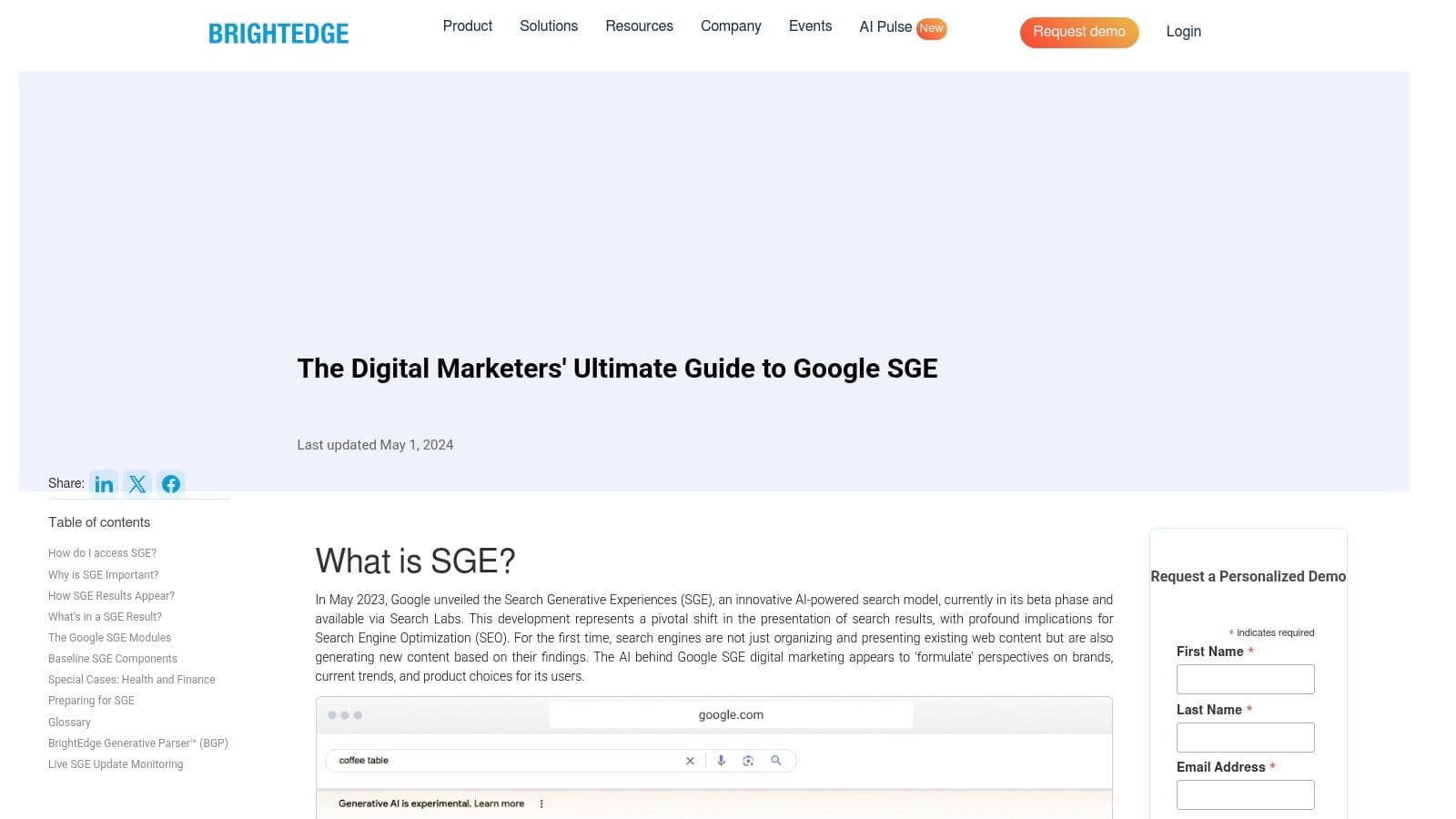
Rather than being a hands-on agency, BrightEdge provides the critical intelligence that an ai search optimization agency in the USA needs to build a data-driven strategy. The platform helps teams identify which queries trigger AI Overviews, which content assets are being cited, and where opportunities exist to gain visibility. This monitoring capability is fundamental for understanding the new AI-driven SERP landscape and adjusting content to align with what generative models favor. For a deeper dive into these strategies, you can learn more about AI search engine optimization.
Key Details & Analysis
Practical Implementation: Utilizing BrightEdge effectively for AEO requires a strategic approach to keyword selection. Teams should focus on monitoring high-intent, informational queries where AI Overviews are most prevalent to gain actionable insights.
- Pros: Early, well-documented coverage of SGE/AIO shifts; suitable for complex enterprise environments with established SEO teams.
- Cons: Pricing is not public and requires sales engagement; focused primarily on Google’s experiences versus broader LLM coverage.
Website: https://www.brightedge.com/google-sge
3. Conductor
Conductor provides an enterprise-level platform focused on measuring and improving AI search performance, a critical component of modern AEO. The platform is engineered to track how a brand appears across various generative AI engines like ChatGPT, Google AI Overviews, and Perplexity. It moves beyond simple rank tracking to analyze brand citations, sentiment, and overall share of voice within AI-generated responses, providing a clear picture of a brand's visibility in this new landscape.
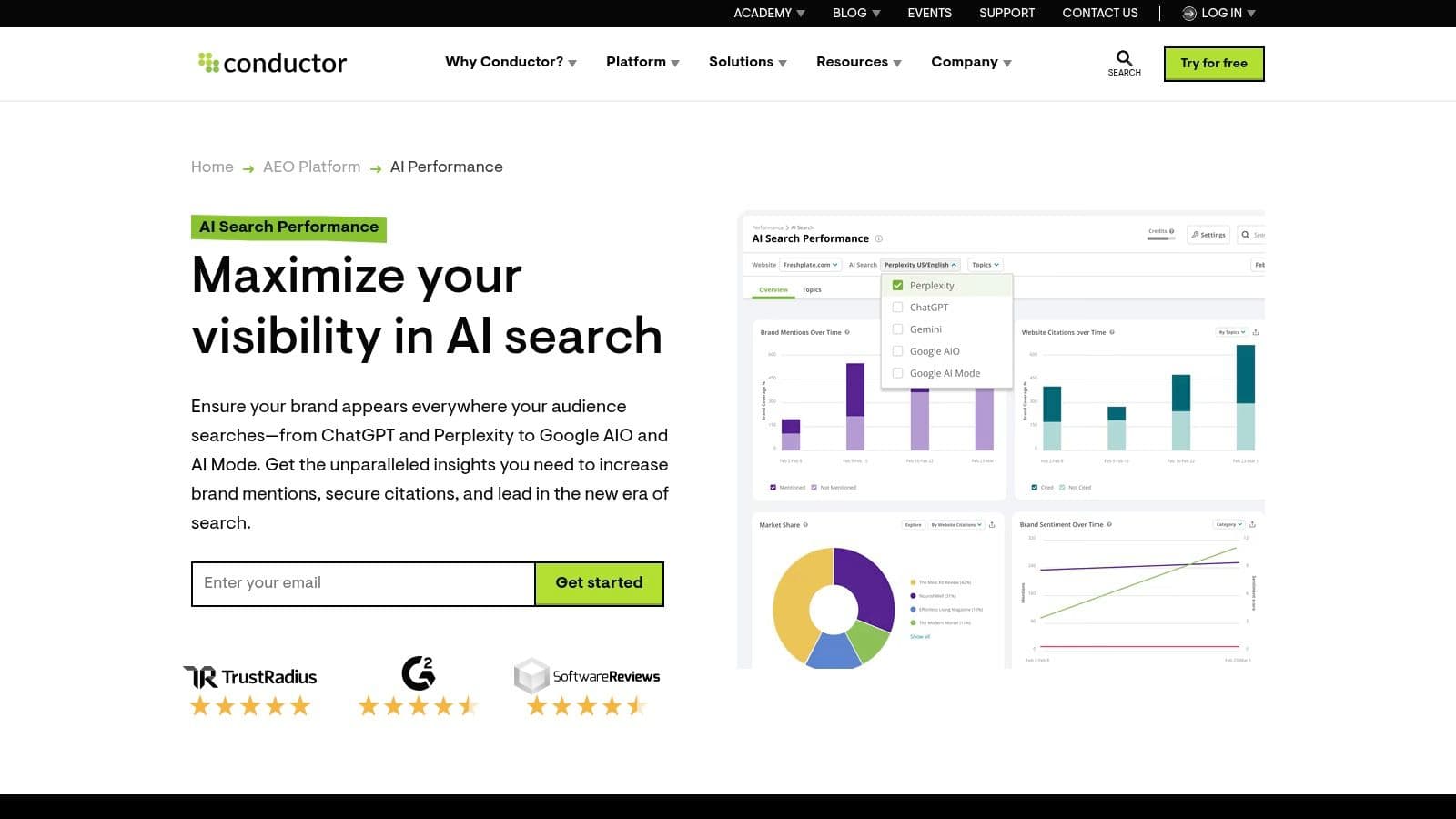
This tool is particularly valuable for an AI search optimization agency in the USA that needs to report tangible results to clients. Conductor's strength is its ability to quantify visibility within AI outputs, allowing agencies to demonstrate ROI from their optimization efforts. The platform’s integrations with BI tools and APIs make it a flexible data source for custom dashboards, which is a key requirement for agencies managing diverse client portfolios. The data-driven insights are invaluable for agencies aiming to refine their clients' content strategies for AI.
Key Details & Analysis
Practical Implementation: To get the most from Conductor, users should define a clear set of brand-critical topics and competitor sets. The platform’s full power is unlocked when its data is integrated into broader business intelligence workflows, which requires technical setup and a strategy for interpreting the results.
- Pros: Enterprise-grade security (SOC 2/ISO) and data portability; free 3-week trial significantly lowers the barrier to evaluation.
- Cons: Full capabilities require dedicated configuration and change management; usage-based pricing model necessitates careful forecasting to manage costs.
Website: https://www.conductor.com/platform/features/ai-search-performance/
4. Semrush
Semrush has evolved its powerful SEO toolkit to directly address the challenges of AI-driven search, making it an essential platform for visibility in the new landscape. It goes beyond traditional rank tracking by introducing AI visibility datasets and an "AI Mode," allowing users to see how their content appears within Google's AI Overviews and other generative AI responses. This positions Semrush as a critical data source for any AI search optimization agency in the USA aiming to build a data-backed strategy.
The platform's strength is its integration of AI search metrics with its established SEO workflows. A user can analyze keyword opportunities for traditional search and simultaneously assess their potential to be featured in AI-generated answers. This unified approach prevents the siloing of AEO and SEO efforts, enabling marketing teams to create content that performs well in both traditional blue links and conversational AI outputs. Semrush provides the competitive intelligence needed to understand who is winning in the AI-powered SERPs and why.
Key Details & Analysis
Practical Implementation: To leverage Semrush effectively for AEO, users should focus on the "AI Mode" within its keyword and position tracking tools. Identifying keywords where AI Overviews are prevalent and analyzing the sources cited is the first step. This data then informs content updates focused on clarity, structure, and factual accuracy. Understanding how to use these AI-powered SEO tools is key to a successful strategy.
- Pros: Broad data coverage and a strong SEO baseline; a clear enterprise narrative around AI visibility.
- Cons: Enterprise AEO features are gated to higher-tier plans; the platform's breadth can create a learning curve.
Website: https://www.semrush.com
5. seoClarity
seoClarity is a sophisticated analytics platform focused on measuring the tangible impact of Google’s AI Overviews (AIOs) on organic search performance. It provides enterprise-level tools for tracking AIO presence, citation frequency, and resulting traffic shifts across vast keyword sets. This makes it an essential diagnostic tool for understanding precisely how generative AI is reshaping a brand's visibility and user engagement within the SERPs.
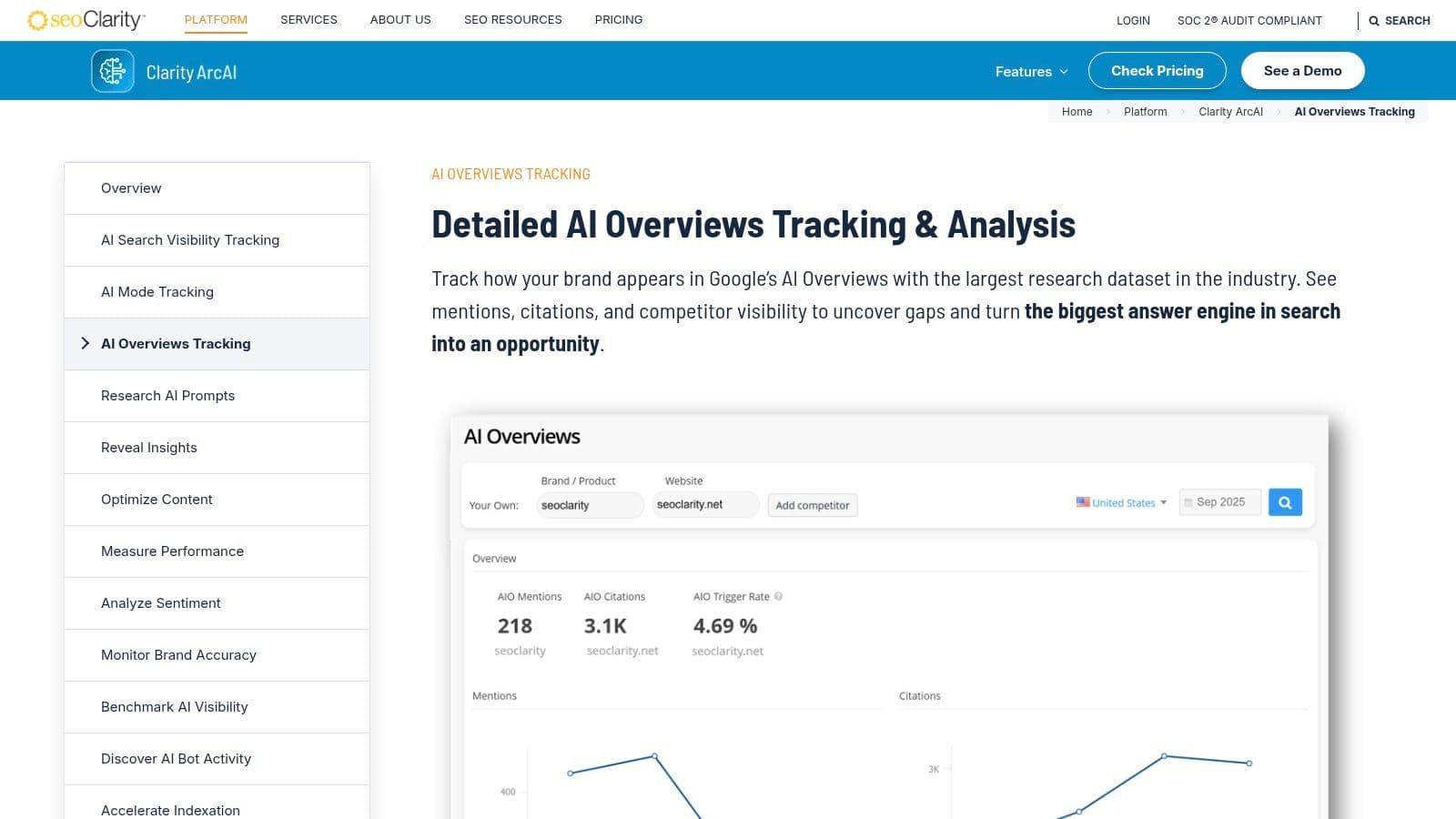
While seoClarity operates as a data platform rather than an agency, its insights are foundational for any AI search optimization agency in the USA aiming to build a data-driven strategy. The platform moves beyond theoretical optimization by delivering concrete metrics on AIO-driven click-through rate changes and competitor inclusions. This allows teams to pinpoint which content formats and keyword targets are succeeding or failing in the new AI-driven landscape, enabling precise strategic adjustments.
Key Details & Analysis
Practical Implementation: To leverage seoClarity effectively, users must have a well-defined set of strategic keywords to monitor. The value comes from analyzing trends over time, not from one-off checks, requiring a commitment to ongoing performance review.
- Pros: Delivers concrete measurement tying AIO presence directly to traffic changes; built for enterprise-scale keyword tracking and analysis.
- Cons: Primarily focused on Google AI Overviews rather than the full spectrum of LLMs; pricing is not public and requires a demo-led sales process.
Website: https://www.seoclarity.net/ai-overviews-tracking
6. SEOmonitor
SEOmonitor offers a highly focused toolset for tracking brand visibility within Google's AI Overviews, making it an essential platform for monitoring performance in the new search landscape. It provides daily tracking of AI Overview presence, mentions, and citations across specific keyword sets, integrating this data directly with traditional rank tracking metrics. This allows for a unified view of both classic and generative search performance.
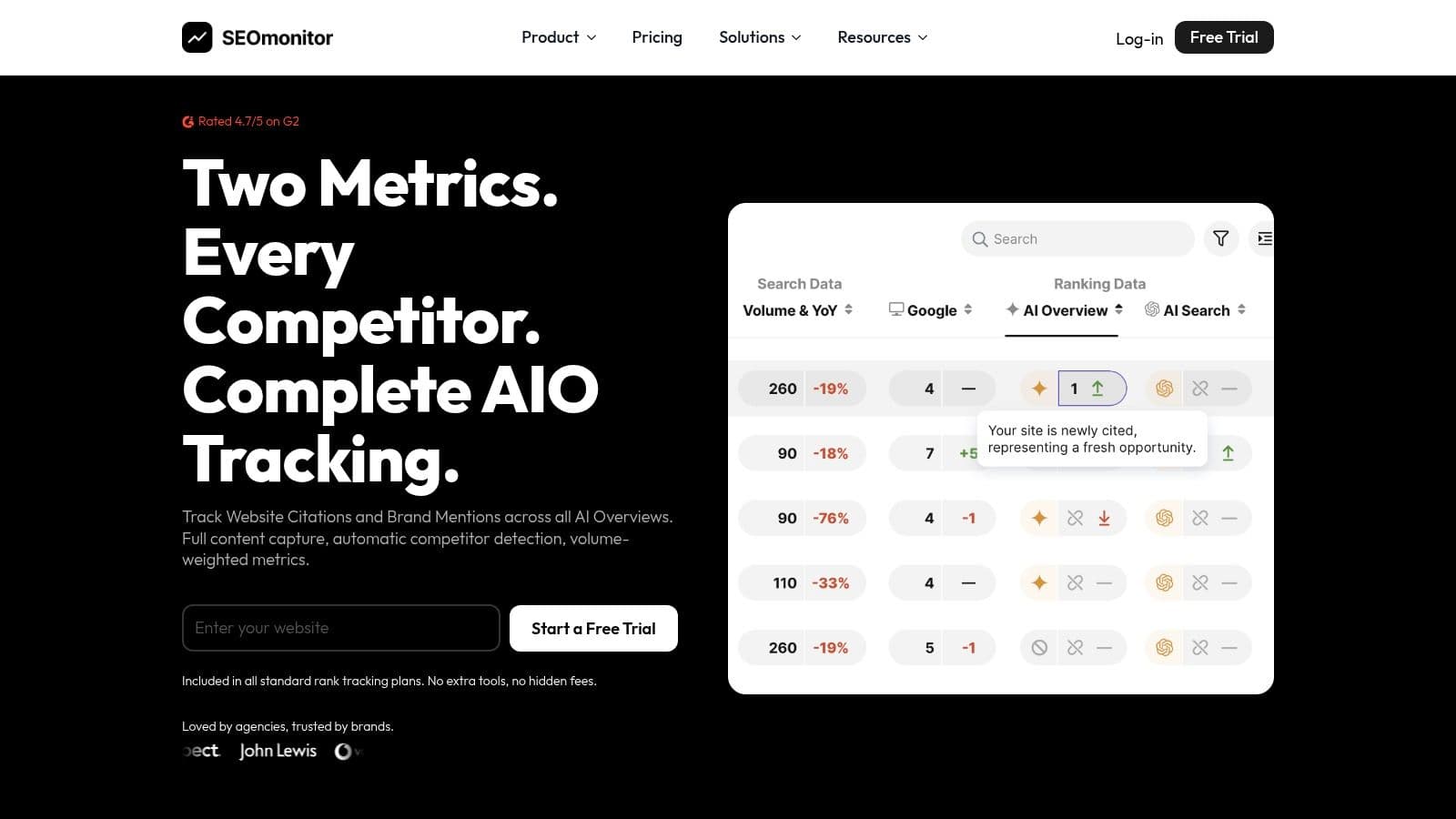
While SEOmonitor is a SaaS platform rather than a full-service agency, its specialized tracking capabilities are exactly what a leading AI search optimization agency in the USA would deploy to measure the impact of its strategies. The platform's strength is its granular, daily reporting on whether a brand is cited or merely mentioned in an AI-generated answer. This distinction is critical for understanding the true value and authority being attributed to a brand by the algorithm, providing precise data to refine AEO tactics.
Key Details & Analysis
Practical Implementation: The best way to use SEOmonitor is to leverage its 14-day free trial (no credit card required) to establish a baseline of AIO visibility. Tagging high-intent keyword groups allows you to closely monitor the impact of specific content optimizations on your presence in AI-generated results.
- Pros: Fast onboarding with a transparent and accessible free trial; provides a balanced set of AIO-specific KPIs for performance measurement.
- Cons: Primarily focused on Google's AI Overviews, not other generative engines; operates within a smaller ecosystem than some large enterprise SEO suites.
Website: https://www.seomonitor.com/sge-tracking/
7. Surva.ai
Surva.ai offers a purpose-built AI visibility tool designed to monitor and analyze how brands appear across major generative AI platforms. Unlike broad SEO suites, its focus is squarely on tracking brand mentions, citations, and overall sentiment within the responses of models like ChatGPT, Perplexity, and Gemini. This specialized function makes it a valuable asset for an AI search optimization agency in the USA looking for a precise, lightweight tool to complement its existing technology stack.
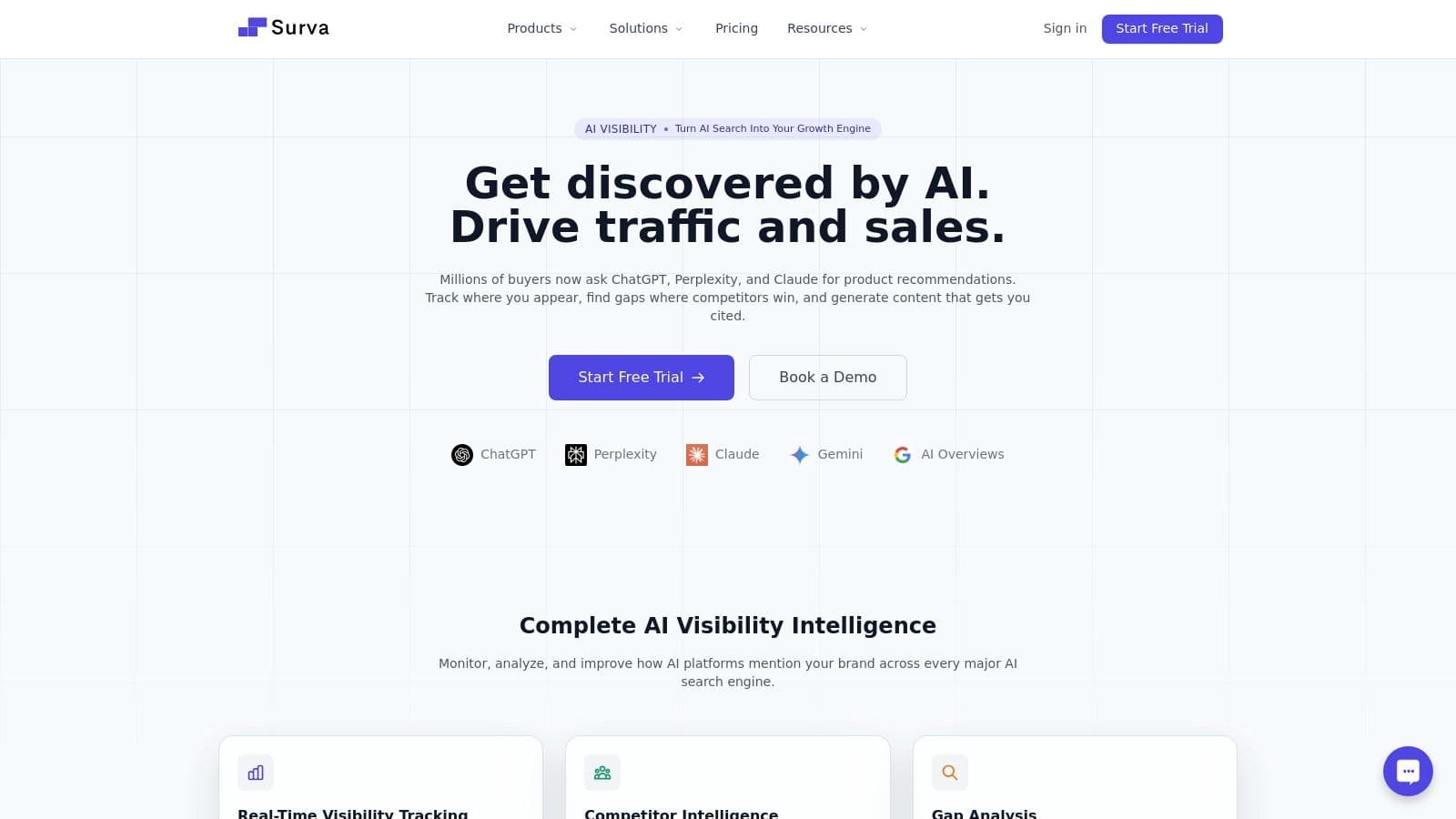
The platform queries AI engines to detect brand presence and provides actionable insights, such as identifying content gaps or highlighting where competitors are being cited instead. By turning abstract AI visibility into measurable data, Surva.ai allows agencies and brands to build targeted AEO strategies. It provides the diagnostic capabilities needed to understand current AI performance and recommends content optimizations to improve it, bridging the gap between monitoring and action.
Key Details & Analysis
Practical Implementation: Effective use of Surva.ai requires defining a clear set of brand-critical prompts and competitor names to monitor. The platform's value is maximized when its alerts and gap analysis reports are integrated into an ongoing content creation and optimization workflow.
- Pros: Highly focused on LLM/AI visibility and provides actionable reporting; easy to deploy for targeted monitoring.
- Cons: As a newer product, its enterprise controls may be less mature than established suites; pricing is not publicly listed on its product page.
Website: https://www.surva.ai/products/ai-visibility
8. InLinks
InLinks is a specialized entity SEO platform designed to build topical authority by automating the technical foundations that AI models rely upon. It focuses on creating a semantically rich, interconnected site structure through automated schema markup and internal linking. This approach helps search engines and LLMs understand the relationships between concepts on a website, positioning the brand as a reliable source of information for AI-generated answers.
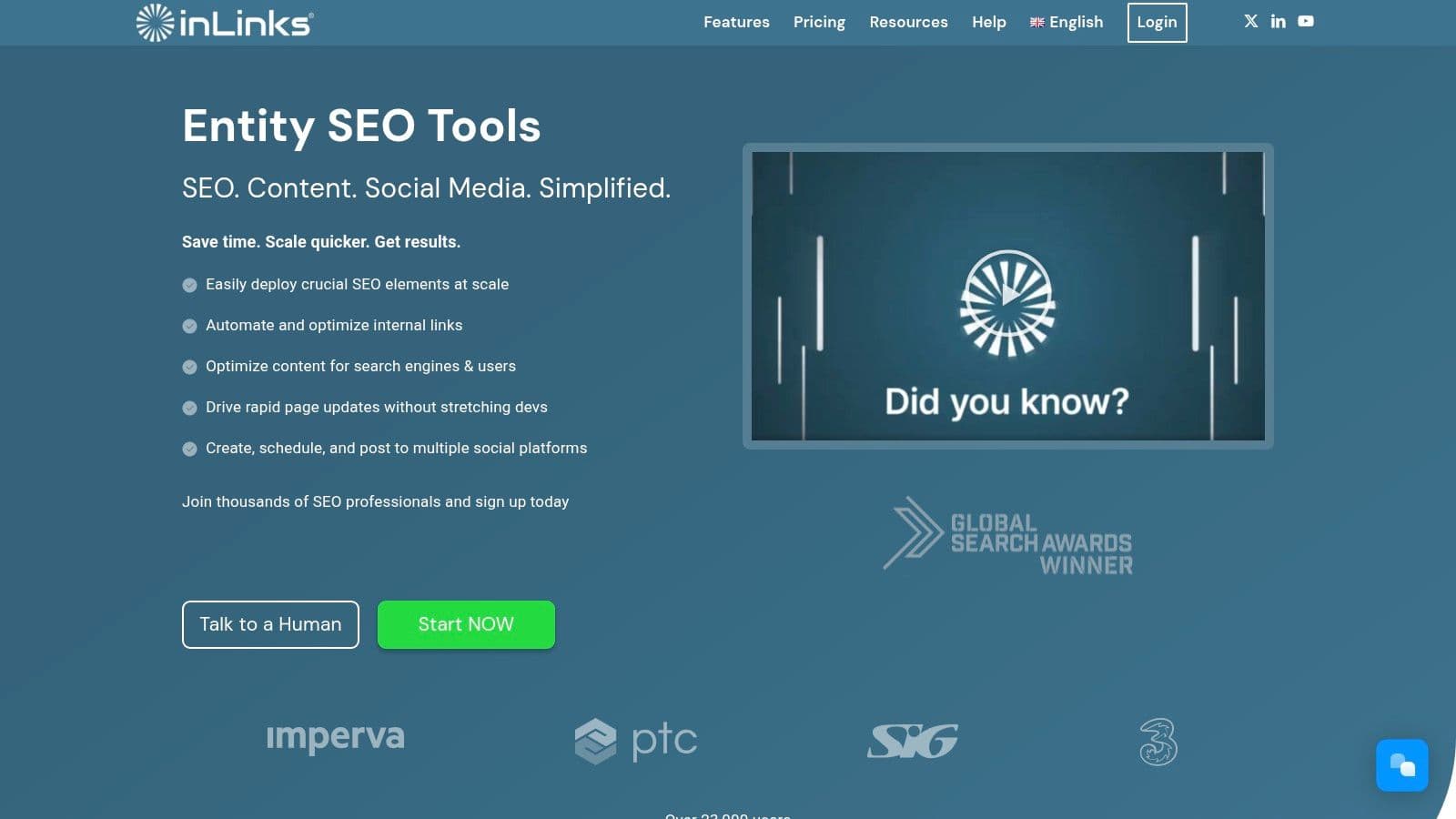
Unlike a full-service agency, InLinks provides the specific tools that an AI search optimization agency in the USA would use to execute an entity-based SEO strategy. Its core value is its ability to analyze content, identify key entities (people, places, concepts), and automatically generate the necessary JSON-LD schema and internal links at scale. This automation helps businesses master the principles of Answer Engine Optimization by ensuring their content is machine-readable and contextually relevant, a critical factor for being cited in AI search results.
Key Details & Analysis
Practical Implementation: Success with InLinks requires a content-first approach. The tool is most effective when applied to a substantial body of well-researched content, as it builds connections between existing assets. The credit-based model means users must plan which pages are most critical for entity optimization to manage costs effectively.
- Pros: Strong fit for entity-based AEO strategies; clear, low-cost entry point including a free plan for small projects.
- Cons: Primarily a tool, not a full visibility tracker; the credit/page pricing model requires strategic planning to avoid unexpected costs.
Website: https://inlinks.com/
9. Kalicube
Kalicube offers a unique blend of consulting, methodology, and a SaaS platform focused on Brand SERP optimization and knowledge graph management. Led by industry expert Jason Barnard, the company specializes in establishing and managing a brand's digital identity as a structured entity. This entity-first approach is fundamental for AEO, as it directly influences how AI models like ChatGPT and Google's SGE perceive, understand, and present information about a brand.
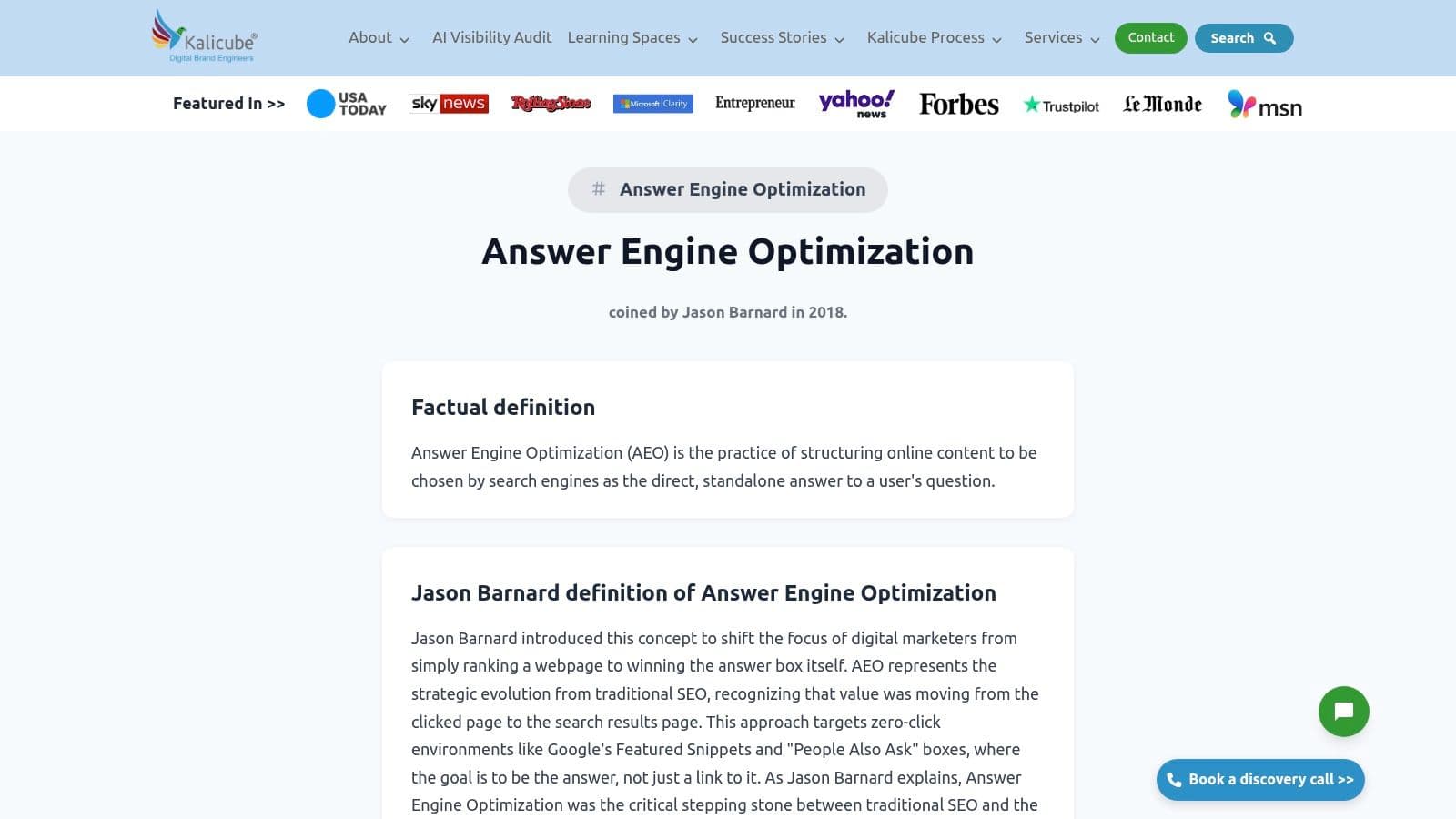
Rather than being a full-service agency, Kalicube provides the strategic framework and tools for businesses to control their own narrative in search. The Kalicube Pro platform helps organizations structure their digital ecosystem, ensuring that all brand-related content corroborates the same core facts. For any AI search optimization agency in the USA, partnering with or learning from Kalicube's methodology provides a masterclass in building the authoritative knowledge base that AI-powered answer engines require. This strategic guidance is crucial for long-term brand visibility.
Key Details & Analysis
Practical Implementation: Engaging with Kalicube is more about adopting a new strategic mindset than just using a tool. It requires a commitment to organizing all digital assets around a central brand entity, from your website's schema to your YouTube descriptions. Without this commitment, the platform's full value cannot be realized. For those looking to see how this translates into results, you can learn more about how to track your brand’s visibility in ChatGPT and other top LLMs.
- Pros: Deep specialization in entities and Brand SERP; provides strategic guidance that complements in-house teams and tools.
- Cons: Not a traditional rank tracker or full-service agency; access to the platform and pricing is typically part of a consulting or training engagement.
Website: https://kalicube.com/entity/answer-engine-optimization/
10. Semrush (Marketplace/Platform research & benchmarks)
Semrush positions itself as a critical resource for strategic planning in AI search optimization through its extensive research and educational content. Rather than offering direct agency services, it provides the data-backed intelligence that informs an effective AEO strategy. Its studies on Google's AI Overviews impact and industry-specific visibility indices are invaluable for businesses and agencies needing to benchmark performance and justify investment in this new landscape.
This focus on macro-level trends makes Semrush a strategic partner for any AI search optimization agency in the USA. The platform's research helps leadership understand the "why" behind AEO, offering a clear view of how generative AI is reshaping search visibility across different sectors. By leveraging this data, agencies can build more compelling business cases for clients and tailor their technical and content strategies to align with observable market shifts, moving from speculation to data-driven action.
Key Details & Analysis
Practical Implementation: Use Semrush's research not as a direct optimization tool but as a strategic compass. The data should guide which keywords to prioritize for AI visibility and help set realistic performance expectations with stakeholders.
- Pros: Data-backed insights to guide strategy; excellent for building business cases; complements the use of the core Semrush software suite.
- Cons: Research is a lagging indicator and doesn't replace real-time tracking for your own domain; some in-depth content may be gated or part of enterprise programs.
Website: https://www.semrush.com/blog/semrush-ai-overviews-study/
11. Upwork
Upwork serves as a global marketplace for sourcing on-demand talent, making it a highly flexible option for businesses needing specialized AEO skills without the long-term commitment of a full agency retainer. It allows companies to hire vetted freelancers for specific tasks like schema markup implementation, LLM.txt file creation, or AI-driven content audits. This model is ideal for piloting AEO initiatives, augmenting an in-house team, or handling overflow work during peak periods.
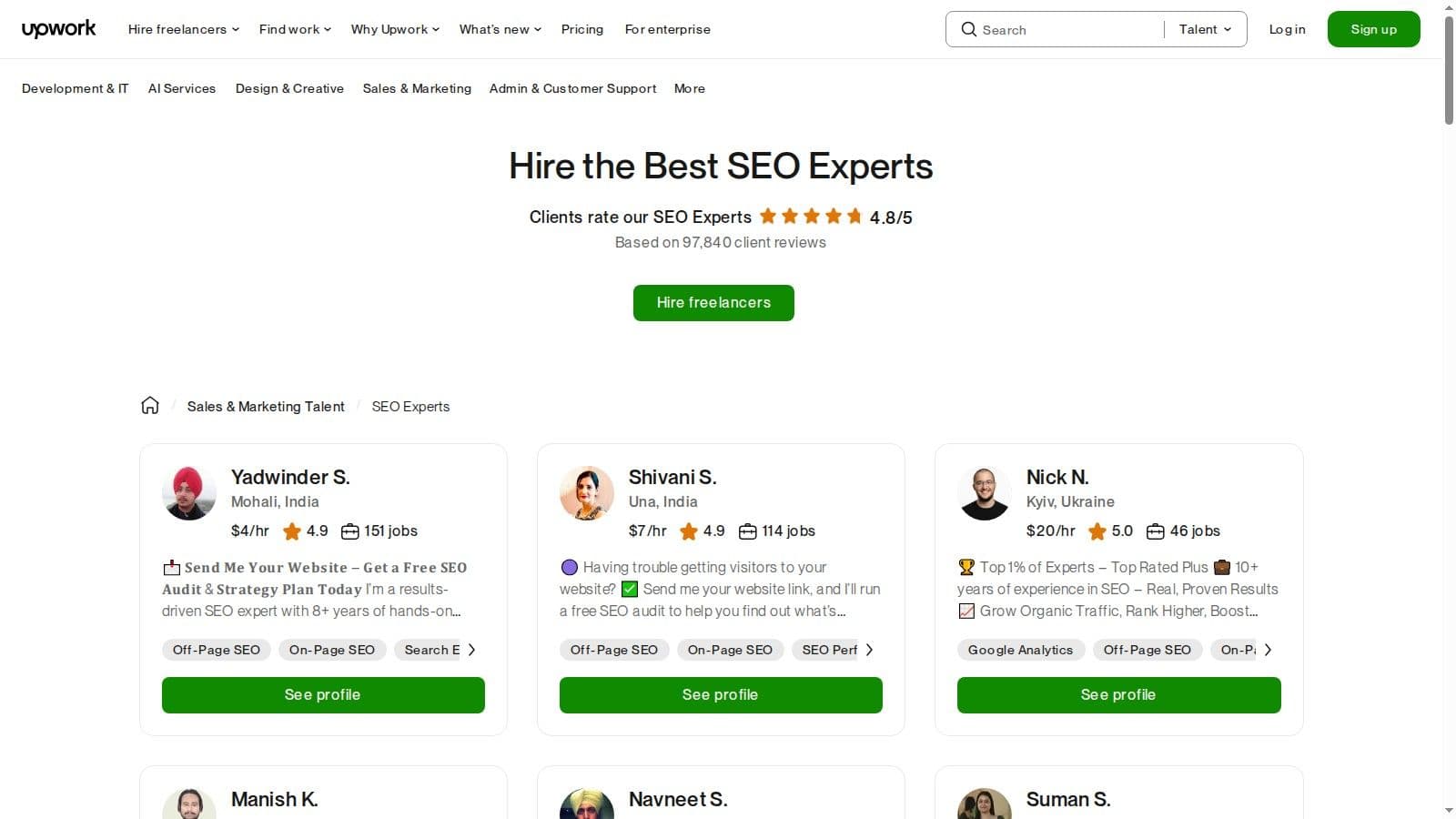
While not an agency itself, Upwork provides direct access to the individual experts who often power the tactical execution at an AI search optimization agency in the USA. Its strength lies in its scale and the ability to find niche expertise quickly. Businesses can define precise project scopes, set fixed budgets, or hire on an hourly basis, offering unparalleled control over costs and timelines. The platform’s review and rating system provides a layer of due diligence essential for finding reliable talent.
Key Details & Analysis
Practical Implementation: Success on Upwork requires writing a highly detailed project brief. Clearly outline the AEO objectives, required skills (e.g., knowledge of specific schema types), and expected deliverables to attract qualified, relevant proposals from experienced professionals.
- Pros: Fast sourcing with flexible budgets and tiers; useful to test AEO tactics before committing to an agency.
- Cons: Quality varies and requires careful screening; delivery consistency depends on the individual provider.
Website: https://www.upwork.com/hire/seo-specialists/
12. Fiverr
Fiverr provides a marketplace for freelance services, including emerging specializations like Generative Engine Optimization (GEO) and Answer Engine Optimization (AEO). While not a dedicated agency, it serves as a valuable platform for businesses to source tactical AEO support on a project basis. This gig-based model allows companies to test specific optimization strategies, such as content tuning for AI-generated answers or schema markup implementation, without committing to a long-term retainer.
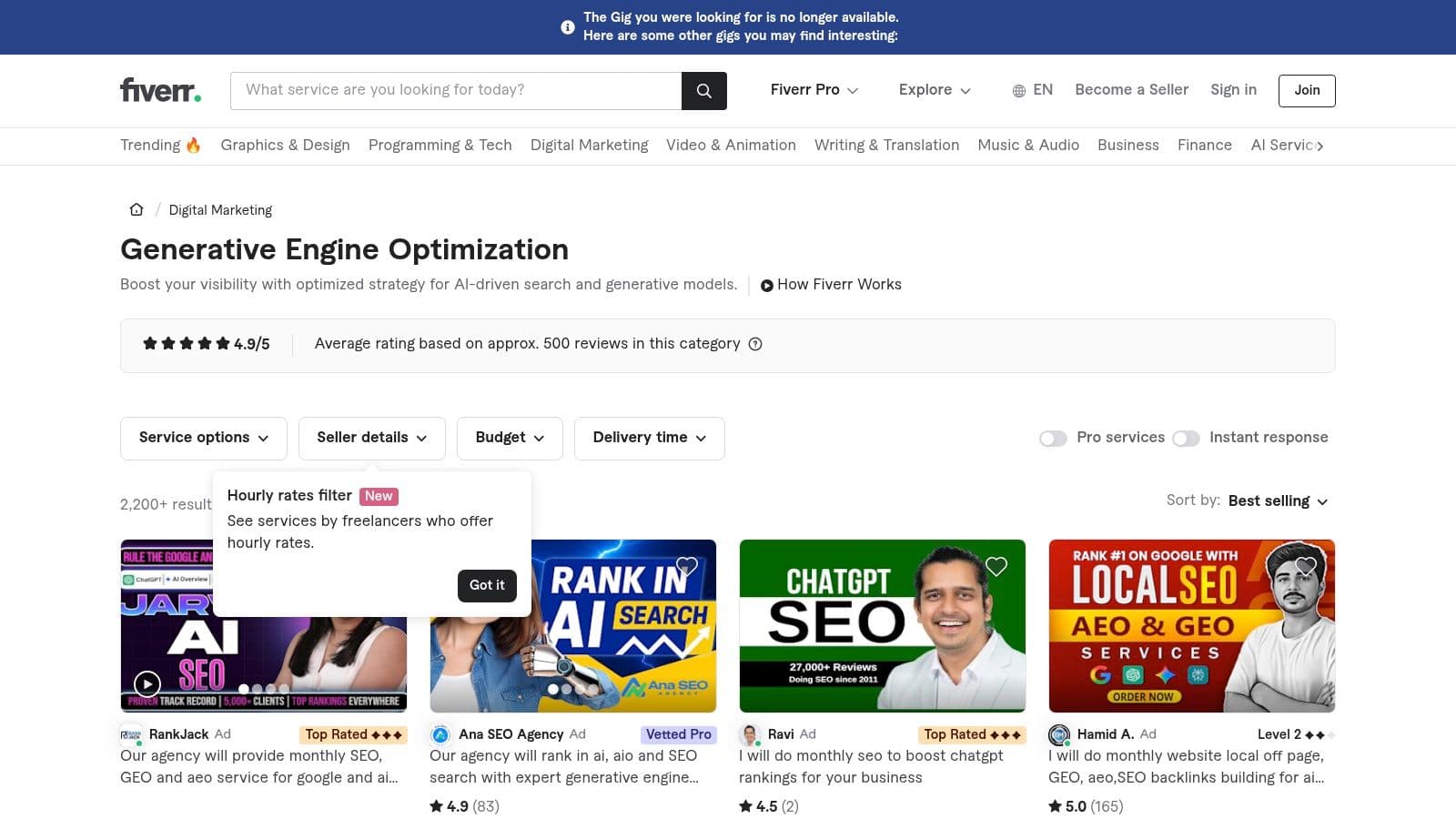
The platform is best suited for targeted, well-defined tasks rather than comprehensive strategy development. A business might hire a freelancer to optimize a batch of blog posts for question-and-answer formats or to audit a site for AEO readiness. Although it doesn't offer the strategic oversight of a full-service AI search optimization agency in the USA, Fiverr offers an accessible entry point for companies looking to experiment with AEO tactics quickly and cost-effectively.
Key Details & Analysis
Practical Implementation: Success on Fiverr hinges on meticulous vetting. Buyers must thoroughly review provider profiles, past work, and communication skills. It's crucial to create a detailed project brief to ensure the freelancer understands the specific AEO goals, as the platform's strength lies in execution, not strategic consulting.
- Pros: Quick and inexpensive way to pilot AEO tactics; transparent scopes and delivery timelines provide clarity.
- Cons: Highly variable quality and inconsistent results; best for tactical tasks, not comprehensive enterprise programs.
AI Search Optimization: 12 Agencies & Tools Comparison
From Visibility to Authority: Your Next Steps in AI Search
Navigating the emergent landscape of AI-driven search is no longer a futuristic consideration; it is a present-day imperative for market leadership. This comprehensive analysis has demystified the ecosystem, moving from enterprise-grade platforms like Yext and BrightEdge, which excel in structured data and large-scale deployment, to specialized, tactical tools such as InLinks and Kalicube that offer deep semantic and Knowledge Graph expertise. We have examined the full spectrum of solutions, acknowledging that the "best" choice is entirely contingent on your organization's specific context, maturity, and strategic objectives.
The primary takeaway is the fundamental shift from keyword-centric tactics to an entity-based, authority-driven strategy. Platforms like Conductor and seoClarity underscore the importance of integrating content creation, technical SEO, and performance analytics into a unified workflow. This integration is critical for generating the high-quality, authoritative content that AI models like Google's Search Generative Experience (SGE) and Perplexity favor. Your brand must be positioned not just as a provider of answers but as the definitive source of truth within your niche.
Furthermore, the rise of specialized agencies and marketplaces like Upwork and Fiverr, augmented by powerful research tools from Semrush, highlights a crucial trend: accessibility. While a full-scale partnership with a premier AI search optimization agency in the USA is a significant investment, businesses can now strategically supplement their in-house teams with specialized freelance talent for specific projects, such as prompt tuning or schema markup implementation. This hybrid model offers a flexible and cost-effective pathway to AI search readiness.
Actionable Roadmap for Implementation
To translate these insights into tangible results, your next steps should be methodical and strategic. Avoid the temptation to chase every new AI-powered feature. Instead, focus on building a resilient foundation that will serve you regardless of how search algorithms evolve.
Here is a structured approach to guide your decision-making process:
- Conduct a Comprehensive Audit: Before engaging any agency or platform, perform an internal audit. Assess your existing structured data (Schema markup), Knowledge Panel accuracy, and the topical authority of your content. Tools like those from Kalicube or Semrush can provide a baseline understanding of your brand's current entity-based footprint.
- Define Your Core Objective: What is your primary goal? Is it to dominate answer snippets in SGE? Do you need to build a comprehensive knowledge graph for your brand? Or is your immediate need to optimize existing content for conversational queries? Your objective will determine whether you need a full-service platform like Yext or a specialized consultant found through a marketplace.
- Start with Foundational Elements: Prioritize getting the basics right. Ensure your brand information is consistent across all digital touchpoints. Implement robust organization and person schema. This foundational work is a prerequisite for success with more advanced AI optimization techniques.
- Pilot a Test Project: Rather than committing to a long-term, high-cost contract, consider a pilot project. Engage a specialist from a platform like Upwork or a boutique agency like Surva.ai to tackle a specific, measurable challenge. This could be optimizing a key content cluster for AI answers or building out your brand's presence in Wikidata.
- Measure and Iterate: The AI search landscape is dynamic. The metrics for success are evolving beyond traditional rankings to include visibility in generative answers, brand mentions, and the accuracy of AI-generated summaries. Establish new KPIs and use platforms like SEOmonitor to track performance, ensuring your chosen AI search optimization agency in the USA is delivering measurable value and adapting its strategy as the technology matures.
Ultimately, the transition to AI search is a journey toward building unshakeable digital authority. It requires a strategic blend of advanced technology, deep subject matter expertise, and a commitment to creating genuinely valuable content. By carefully selecting the right partners and platforms, you can transform your brand from being merely visible in search results to being the authoritative voice that both users and AI systems trust.
While the agencies and platforms listed provide powerful solutions, executing a cohesive, data-driven AI search strategy requires a specialized approach. If you're looking to build a robust content foundation that establishes your brand as an undeniable authority for AI models, Attensira can help. We specialize in developing comprehensive, entity-based content strategies that directly address the signals AI search engines use to determine expertise and trustworthiness. Discover how our targeted approach can prepare your brand for the future of search at Attensira.