Searching for the best CitationIQ alternatives? Explore our in-depth review of 12 top tools for AI citation tracking, feature analysis, and SEO visibility.
CitationIQ carved out a specific niche by helping SEO and marketing teams track their brand's visibility within AI-generated search results, like Google's SGE and Perplexity. Its focus on citation intelligence was critical for understanding how Large Language Models (LLMs) source and present information. However, whether you're seeking more robust analytics, broader SEO tool integration, or different pricing structures, the market now offers several strong platforms. Finding the right fit depends entirely on your team's specific objectives, scale, and technical needs.
This guide provides a detailed, analytical breakdown of the 12 best CitationIQ alternatives. We move beyond marketing claims to give you an objective look at what each platform truly offers. For every tool, you will find:
- In-depth feature analysis: A close look at core capabilities, from AI search tracking to citation monitoring.
- Ideal use cases: Clear scenarios showing which tool works best for specific roles like SEO specialists, brand managers, or CMOs.
- Practical pros and cons: An honest assessment of each platform's strengths and limitations based on real-world application.
- Pricing and trial information: Direct insights into cost structures to help you evaluate ROI.
We've structured this resource to be scannable and direct, with screenshots and links for each entry, allowing you to quickly compare options and identify the platform that aligns with your strategic goals. As SEO continues to evolve, staying informed about advancements like the future of digital visibility leveraging AI SEO will be key for competitive advantage. Our goal is to equip you with the information needed to make a confident decision and effectively measure your brand's presence in the new era of AI-driven search.
1. Similarweb – GenAI Intelligence Toolkit
Similarweb’s GenAI Intelligence Toolkit stands out as a top-tier enterprise solution and a powerful CitationIQ alternative for teams needing to connect AI citation data with broader market intelligence. Its primary strength lies in integrating AI brand visibility metrics directly with Similarweb's robust traffic and audience analytics. This allows CMOs and brand managers to not only see where their brand is mentioned in AI-generated answers but also to quantify the downstream impact on website traffic and market share.
For an SEO specialist, the platform moves beyond simple mention tracking. You can analyze which prompts and topics trigger brand citations, benchmark your visibility against competitors, and track the provenance of sources used by AI models. This creates a direct feedback loop between your content strategy and its performance in AI ecosystems. Understanding the full picture of AI search visibility becomes possible by tying LLM appearances to actual user behavior.
Analysis & User Experience
The interface is data-rich, presenting time-series graphs that show citation trends and competitive dashboards. While the depth of data is a significant advantage, it can present a steeper learning curve for users accustomed to more basic tools.
- Pricing: Enterprise-focused. Pricing is not public and requires a custom quote, which may place it outside the budget for smaller teams or those just starting to track AI citations.
- Pros: Excellent for connecting AI citations to tangible business outcomes like traffic and market share. Strong competitive benchmarking features.
- Cons: Can be more complex and costly than necessary for simple citation monitoring. The enterprise focus means it lacks a self-serve or small-business plan.
Website: https://www.similarweb.com
2. Semrush – AI Visibility Toolkit (within Semrush One)
For teams already invested in the Semrush ecosystem, the AI Visibility Toolkit presents a compelling and integrated CitationIQ alternative. Its core value lies in adding a layer of AI citation tracking directly onto existing SEO workflows. Instead of operating a standalone tool, SEO specialists can monitor brand mentions in AI-generated answers from within the same platform they use for rank tracking, keyword research, and site audits. This lowers the barrier to entry for tracking AI search performance.
The toolkit allows you to input specific prompts and see if your domain is cited in responses from models like ChatGPT and Google's AI Overviews. It measures your citation rate and visibility share against key competitors, providing a clear benchmark for performance. The most practical feature is its gap analysis, which identifies prompts where your competitors are cited but you are not. This creates an actionable playbook for content creation and optimization, directly linking AI visibility efforts to familiar SEO tactics.
Analysis & User Experience
The interface is familiar to any Semrush user, making adoption nearly frictionless for existing customers. Data is presented alongside traditional SEO metrics, reinforcing the connection between content, rankings, and AI citations.
- Pricing: The toolkit is part of the Semrush One suite, an add-on to core plans. This means access requires a subscription, and prompt tracking is often subject to quotas that may be limiting for extensive analysis.
- Pros: Seamless integration with a comprehensive SEO toolkit, providing a unified view of search performance. The workflow is familiar, reducing the learning curve.
- Cons: Features and prompt quotas can be limited by plan level. Being sampling-based, it may not capture every single citation instance.
Website: https://www.semrush.com
3. Writesonic – GEO/AI Search Visibility Platform
Writesonic stands apart from other best CitationIQ alternatives by integrating AI visibility monitoring with direct content execution tools. It bridges the gap between identifying citation gaps and actively closing them. The platform is designed not just for diagnosis but for action, offering a workflow that helps teams increase the likelihood their content is cited by AI systems. An AI Visibility dashboard provides core metrics like citation percentage, market share, and sentiment, which is valuable for brand managers tracking brand health in generative AI.
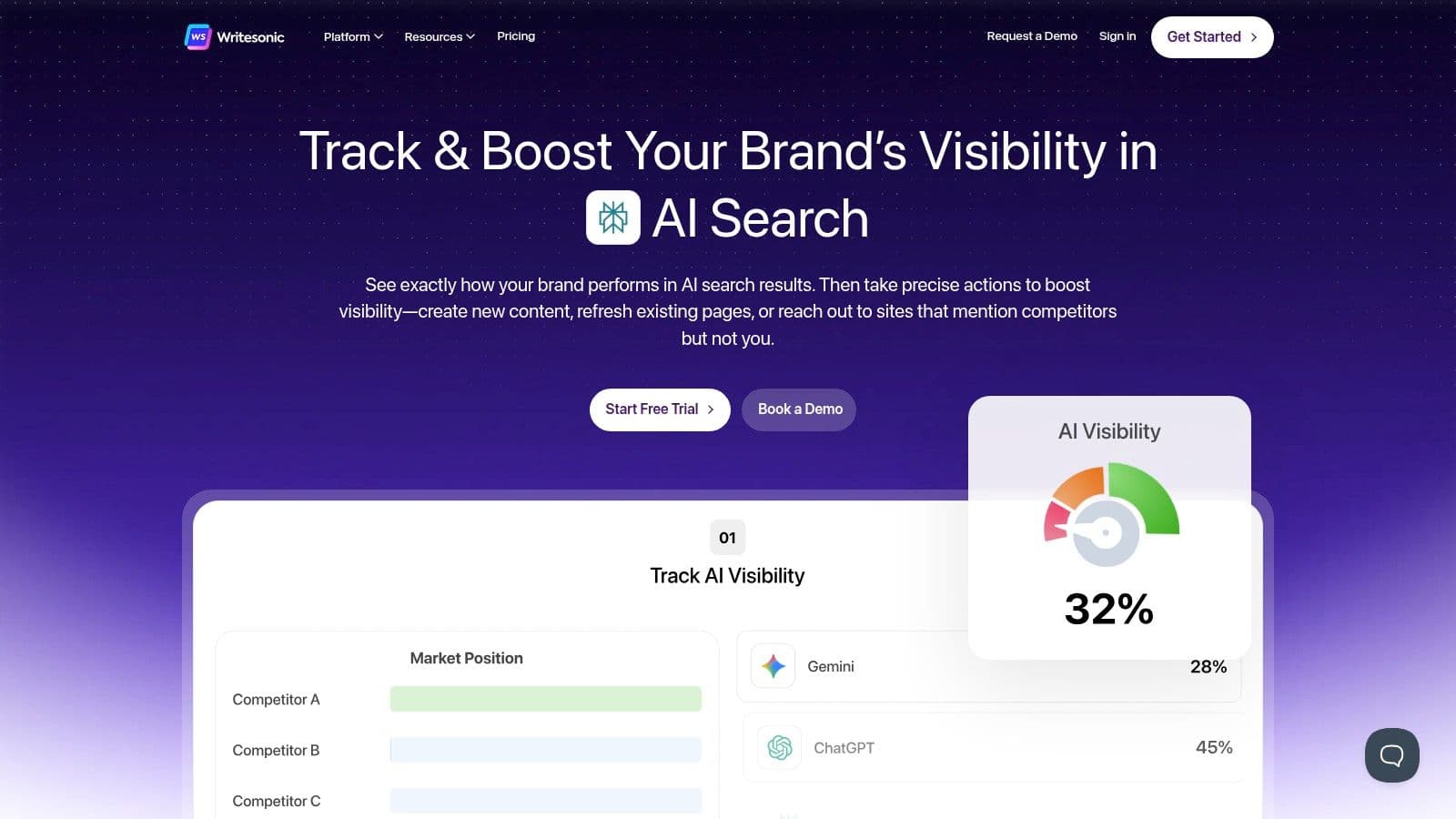
For an SEO or content strategist, the "Action Center" is the key feature. It pinpoints weaknesses and suggests concrete steps, from running site audits to generating AI-powered content briefs designed to meet the criteria for AI model citations. This direct link between analytics and execution makes it a practical tool for teams looking to implement a full-cycle Generative Engine Optimisation strategy. Instead of just knowing you are behind a competitor, you get the tools to start creating content that can outperform them.
Analysis & User Experience
The user interface successfully combines data visualization with actionable prompts, guiding users from analysis to content creation. While the platform is feature-rich, its focus on an end-to-end workflow makes it relatively intuitive for teams familiar with both SEO analytics and content generation tools.
- Pricing: GEO and AI search visibility features are part of the Professional and higher-tier plans. Pricing is tiered, making it more accessible than enterprise-only platforms, but advanced execution tools require a higher-level subscription.
- Pros: Pairs monitoring with direct content actions within a single platform. Excellent for teams that need both diagnosis and execution tools without switching applications.
- Cons: The broad feature set can be overkill for teams solely focused on citation monitoring. Key GEO execution features are gated behind more expensive plans.
Website: https://writesonic.com
4. Conductor – AI Search Performance (AEO/GEO)
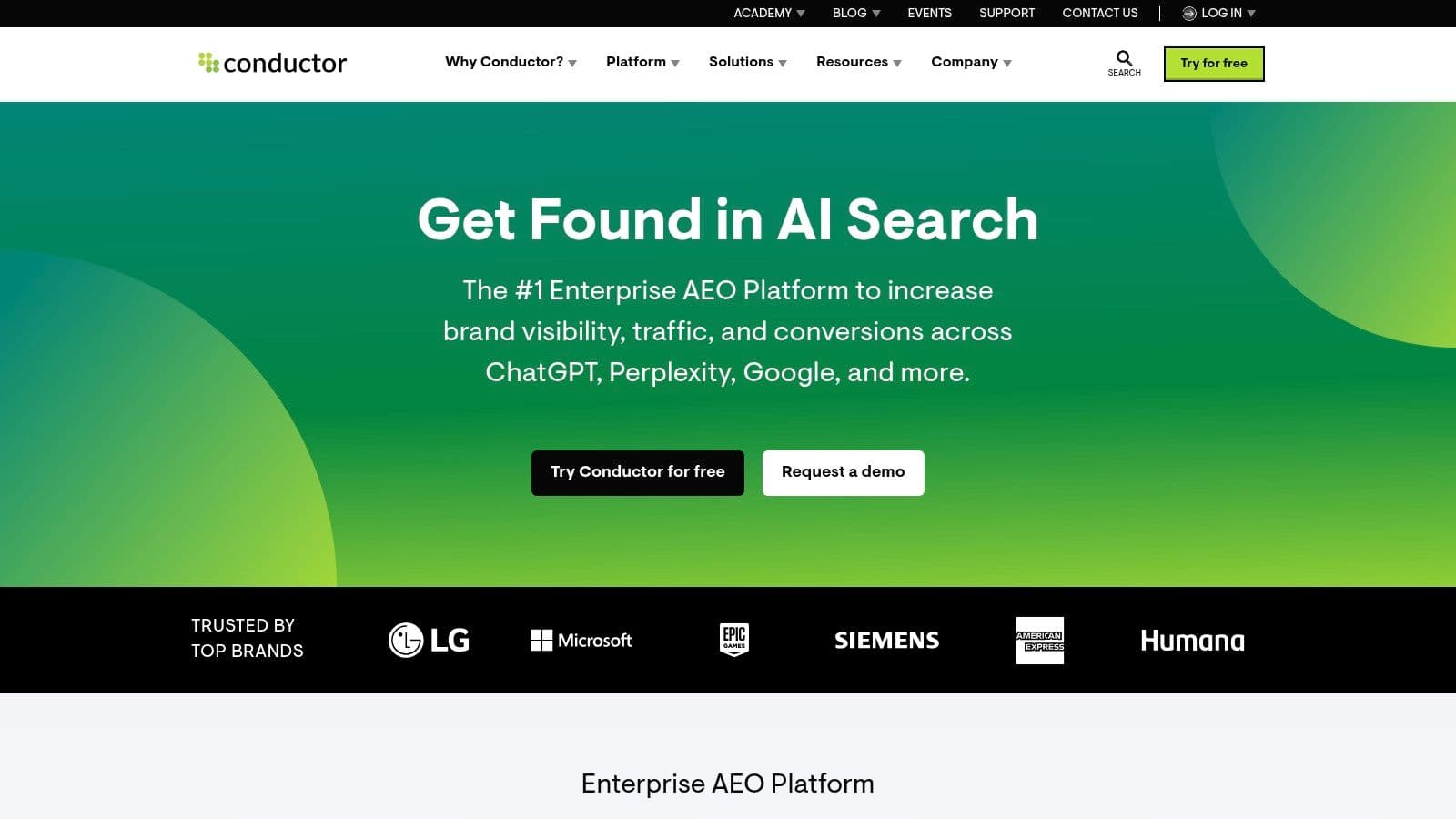
Conductor integrates AI search performance tracking directly into its established enterprise SEO platform, making it a strong contender among CitationIQ alternatives for large organizations. Its approach treats AI Engine Optimization (AEO) and Generative Engine Optimization (GEO) as natural extensions of existing SEO workflows. This allows teams to monitor brand mentions and citations across various AI platforms and analyze market share trends with daily or weekly rollups, all within a familiar environment.
For an enterprise SEO manager, Conductor's strength is its ability to centralize data. You can apply competitor filters and track property-level performance (both on-site and off-site) to see how your content strategy impacts AI visibility. This consolidation helps connect AEO efforts to broader SEO goals and provides a unified view for reporting to leadership, justifying investment in content that fuels generative AI answers.
Analysis & User Experience
The platform is built for large-scale SEO operations, offering clear workflows and governance features. The user experience is designed to fold AEO/GEO metrics into existing SEO processes, reducing the learning curve for teams already using Conductor. This makes it one of the best CitationIQ alternatives for companies seeking an all-in-one solution rather than a standalone tool.
- Pricing: Enterprise-level pricing is not public. A custom quote is required, positioning it as a premium solution for well-funded SEO departments.
- Pros: Excellent for integrating AEO/GEO into a mature enterprise SEO program. Offers strong support, governance, and integration capabilities.
- Cons: High cost makes it inaccessible for smaller businesses. The platform's depth means new users may require dedicated onboarding to realize its full value.
Website: https://www.conductor.com
5. Ahrefs – Free AI Visibility Checker
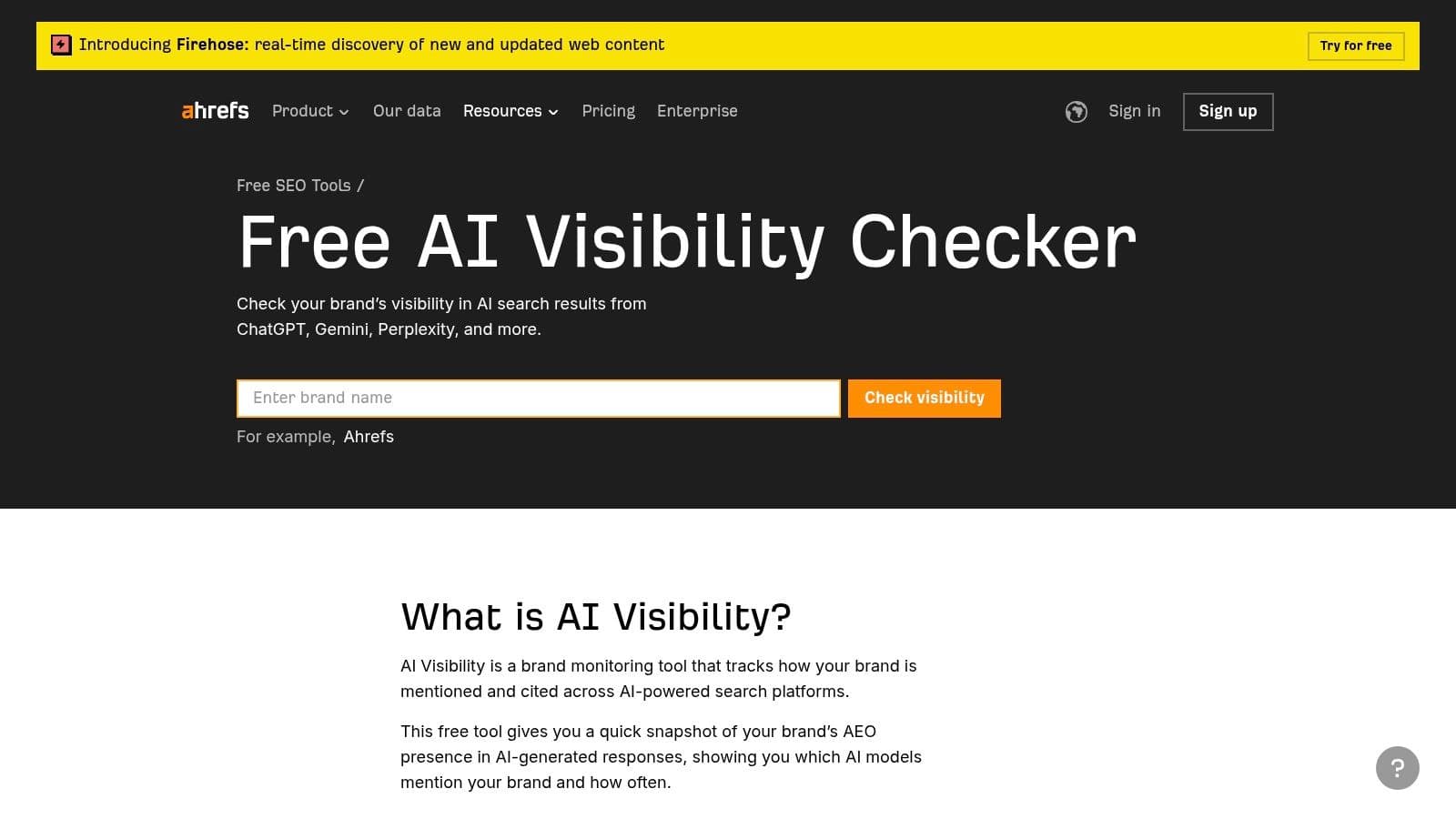
For teams looking for a quick, no-cost entry point into AI citation tracking, the Ahrefs Free AI Visibility Checker is an excellent starting point and a practical CitationIQ alternative. Its main function is to provide an instant snapshot of a brand's presence in prominent AI models like Google's SGE and Perplexity. This makes it ideal for SEO specialists or marketers who need a quick diagnostic without committing to a full-featured, paid platform.
The real value for Ahrefs users is the clear upgrade path. After getting a baseline understanding of your AI visibility, the tool naturally guides you toward Ahrefs' core SEO suite. An SEO manager can use the initial data to identify content gaps and then dive into Ahrefs' Content Explorer and Keywords Explorer to find topics and build articles designed to earn citations. This creates a direct workflow from AI visibility analysis to content execution within a familiar ecosystem, making it a strong contender among the best CitationIQ alternatives for existing Ahrefs subscribers.
Analysis & User Experience
The interface is simple and direct, requiring only a domain name to generate a report. The results are presented clearly, showing which of your pages are being cited and by which AI models. Its strength is its accessibility, but it is not built for continuous, in-depth monitoring.
- Pricing: The AI Visibility Checker is completely free. Deeper analysis requires a paid Ahrefs subscription, which starts at $99 per month for the Lite plan.
- Pros: Free to use and provides instant results. The user experience is familiar to anyone who has used Ahrefs before. A great way to test the waters of AI citation tracking.
- Cons: Very lightweight compared to dedicated enterprise suites. Ongoing monitoring and historical data tracking are limited without upgrading to a paid plan.
Website: https://ahrefs.com/free-ai-visibility
6. Citefy – AI Visibility & Citation Engine for LLMs
Citefy positions itself as a narrative intelligence platform, making it a compelling CitationIQ alternative for teams focused on the forensic details of brand representation in AI. Its core function is to analyze not just if a brand is cited, but how it is described and which specific sources LLMs use to construct their answers. This provides a deep dive into the provenance of information, helping marketing and enterprise teams understand the accuracy of claims made about them.
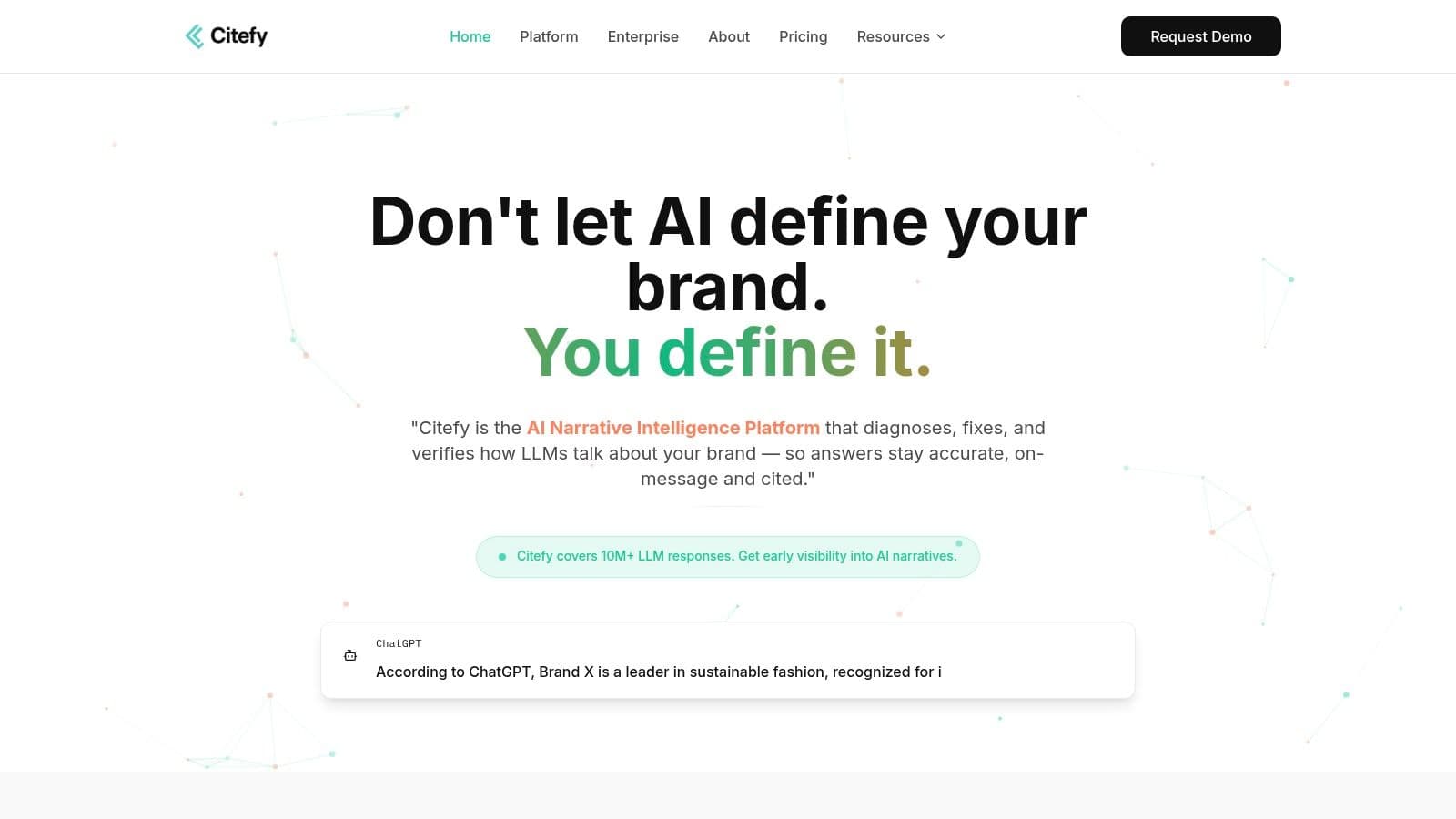
For a brand manager, Citefy moves beyond simple mention tracking to diagnostic analysis. The platform is designed to map citations and sources, identify inaccuracies or negative sentiment, and then provide actionable recommendations for remediation. This focus on a strategic feedback loop is its key differentiator, turning raw data on AI visibility into a concrete plan for improving brand narrative and expanding source coverage within prominent AI models.
Analysis & User Experience
Citefy's approach is strategic and consultative, geared toward organizations that need to manage their brand reputation with precision. The experience is less about self-serve dashboards and more about receiving detailed reports that diagnose issues and prescribe solutions to influence AI-driven narratives.
- Pricing: As an early-stage platform, public pricing is not available. Access likely requires engaging directly with their team for a demo and a customized enterprise plan.
- Pros: Excellent for deep-diving into citation provenance and the narrative accuracy of AI answers. Provides concrete remediation steps and strategy-oriented reporting.
- Cons: Limited public information on pricing and features due to its early-stage status. The enterprise focus may mean it's not accessible for smaller teams or self-serve users.
Website: https://citefy.ai
7. MeasureLLM – AI Citation Tracking
MeasureLLM offers a focused and direct approach to AI citation monitoring, making it a strong CitationIQ alternative for teams who prioritize clarity and actionable data over an all-in-one market intelligence suite. Its core strength is providing granular, query-level performance metrics across multiple AI platforms like ChatGPT, Perplexity, and Gemini. This allows SEO and content teams to pinpoint exactly where they are being cited and, just as importantly, where they are absent.
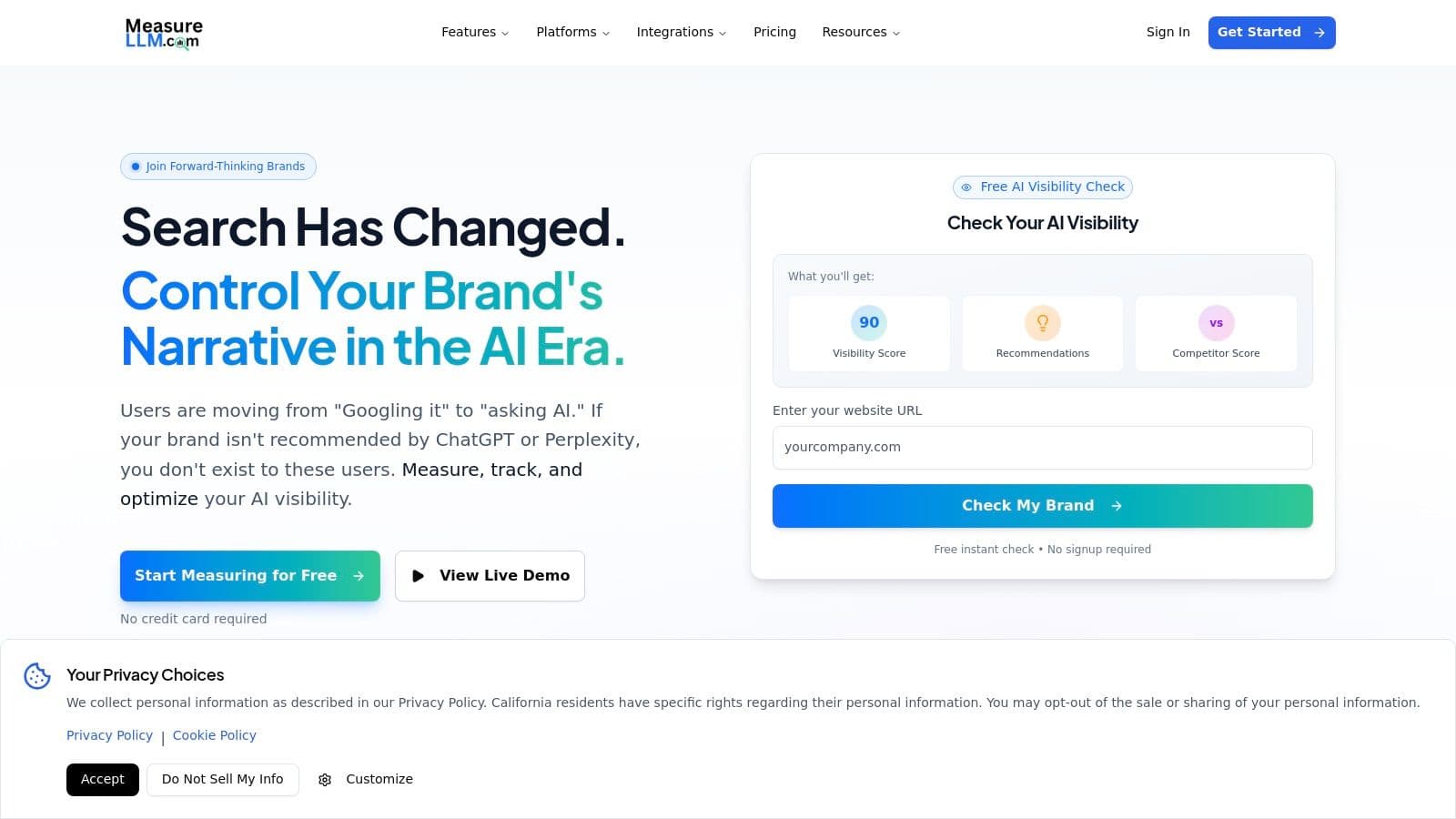
For a brand manager, the platform's time-based trend analysis is invaluable for tracking the impact of content initiatives on AI visibility. You can see how your citation rate changes over weeks or months, broken down by individual AI models. This specificity helps justify content budgets by showing direct performance improvements. This dedicated function places it among the best LLM tracking tools to monitor AI search for teams that need precise, citation-specific insights.
Analysis & User Experience
The user interface is built for clarity, focusing on easy-to-read charts that track citation rates and identify gaps. This streamlined design makes it accessible for teams without a dedicated data analyst, enabling them to quickly understand performance and take targeted action.
- Pricing: Pricing is not public and requires direct contact for a quote. This suggests a B2B focus rather than a self-serve model for small businesses or individuals.
- Pros: Highly focused on the specific task of AI citation monitoring. Delivers clear, platform-by-platform benchmarking and change detection.
- Cons: Its narrow scope means it must be paired with other SEO and AEO tools for a complete picture. Lack of public pricing can be a barrier for initial evaluation.
Website: https://www.measurellm.com
8. LLMS Central – Citation Tracking
LLMS Central’s Citation Tracking tool positions itself as a practical solution for teams moving from passive monitoring to active Answer Engine Optimization (AEO). It is a notable CitationIQ alternative for its focus on providing actionable insights alongside its core monitoring function. The platform goes beyond just reporting on brand mentions across large language models; it integrates gap analysis and preview tools to help SEO specialists and technical marketers formalize their AEO strategies and proactively earn more citations.
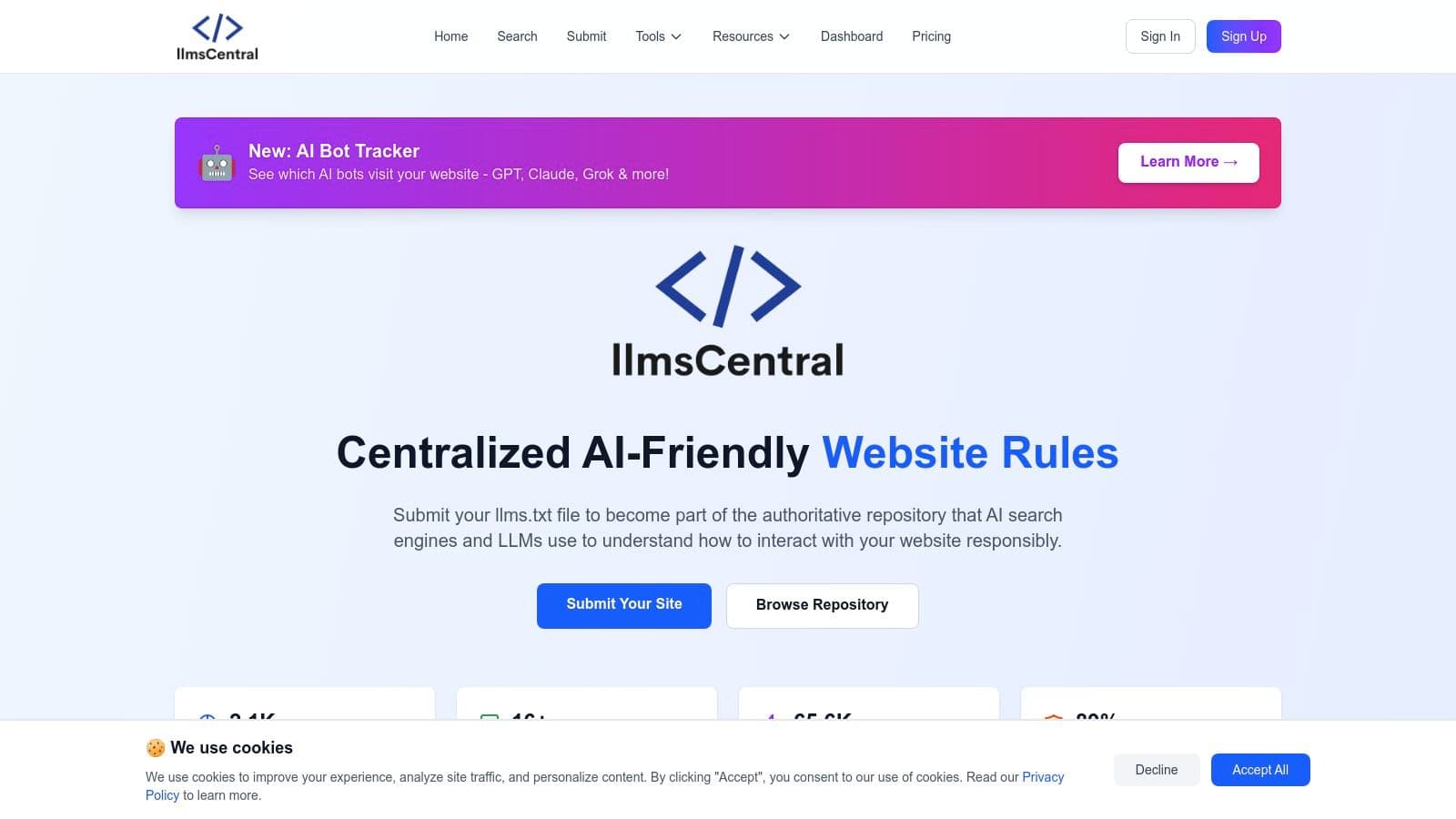
For a technical SEO, the key differentiator is the inclusion of llms.txt coverage analysis and an AEO preview utility. This allows you to not only see if you are being cited but also to understand technical barriers or opportunities for improvement. The preview tool helps assess how content changes might impact your visibility in AI-generated answers, creating a clear workflow from analysis to implementation. This makes it one of the more forward-thinking options for teams wanting to build a repeatable AEO process.
Analysis & User Experience
The platform is designed to connect monitoring data with optimization tasks, making it appealing for hands-on practitioners. The user experience is geared toward identifying a problem (e.g., a competitor is cited for a key topic) and then providing the tools to diagnose why (e.g., source gaps, llms.txt issues). As a newer entrant, it lacks the extensive track record or volume of third-party reviews of more established players.
- Pricing: Pricing and specific packaging details are not publicly available on the website, indicating a likely sales-led or custom quote process. This may create a hurdle for smaller teams needing immediate access or transparent pricing.
- Pros: Effectively combines citation monitoring with practical AEO and technical optimization features. The
llms.txtanalysis is a distinct advantage for technical SEO teams. - Cons: Limited public information on pricing and packaging. Being a newer platform, it has less of a proven reputation compared to market leaders.
Website: https://llmscentral.com
9. AEO Engine – AI Search Tracking
AEO Engine enters the market as a dedicated AI search tracking platform, making it a focused CitationIQ alternative for practitioners specializing in Answer Engine Optimization (AEO). Its core value is providing share-of-voice metrics specifically for AI-generated answers. The platform is built from the ground up to measure brand mentions and citations across major AI systems, which is ideal for AEO/GEO specialists and agencies needing to quantify their impact.
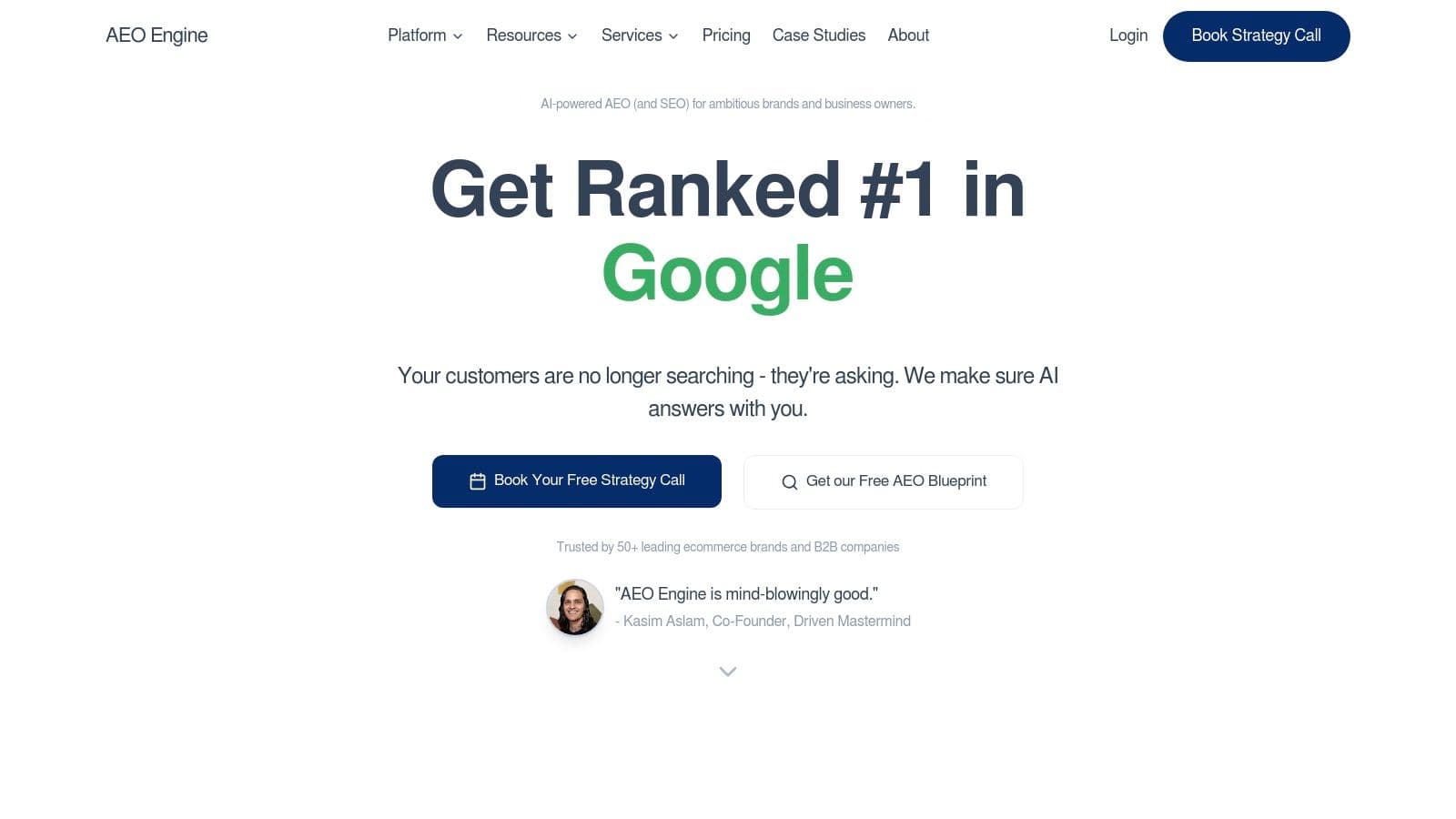
For an agency managing multiple clients, AEO Engine provides prompt-based monitoring and dashboards that frame visibility in competitive terms. You can track citation rates against direct competitors for specific query sets, offering a clear way to report on AEO campaign progress. This shifts the conversation from simply being mentioned to understanding how often you are the preferred source in AI responses relative to others in your market.
Analysis & User Experience
The user interface is designed with AEO practitioners in mind, prioritizing metrics like citation share and prompt performance. This specificity makes it highly relevant for its target audience but less suited for general brand monitoring. As an early-stage platform, users should be prepared to work within a developing ecosystem and validate the data methodology against their own findings.
- Pricing: Pricing is not publicly listed and requires direct contact for a quote. This suggests a model geared toward agencies and specialized teams rather than individual users.
- Pros: Built specifically for Answer Engine Optimization with relevant metrics. Strong out-of-the-box competitor benchmarking is useful for agencies.
- Cons: The platform is part of an early-stage ecosystem, so its data and methodologies may require independent validation. Lacks public pricing for easy evaluation.
Website: https://aeoengine.ai
10. Track My Visibility – AI Citation & Brand Visibility
Track My Visibility offers a streamlined and accessible approach to AI citation tracking, making it a noteworthy CitationIQ alternative for agencies and in-house teams who prioritize simplicity and daily monitoring. Its core strength is its clear distinction between a source being ‘used’ by the AI to inform an answer versus being explicitly ‘cited’ with a URL. This nuance allows teams to better prioritize content updates, remediation, or outreach efforts based on the type of mention.
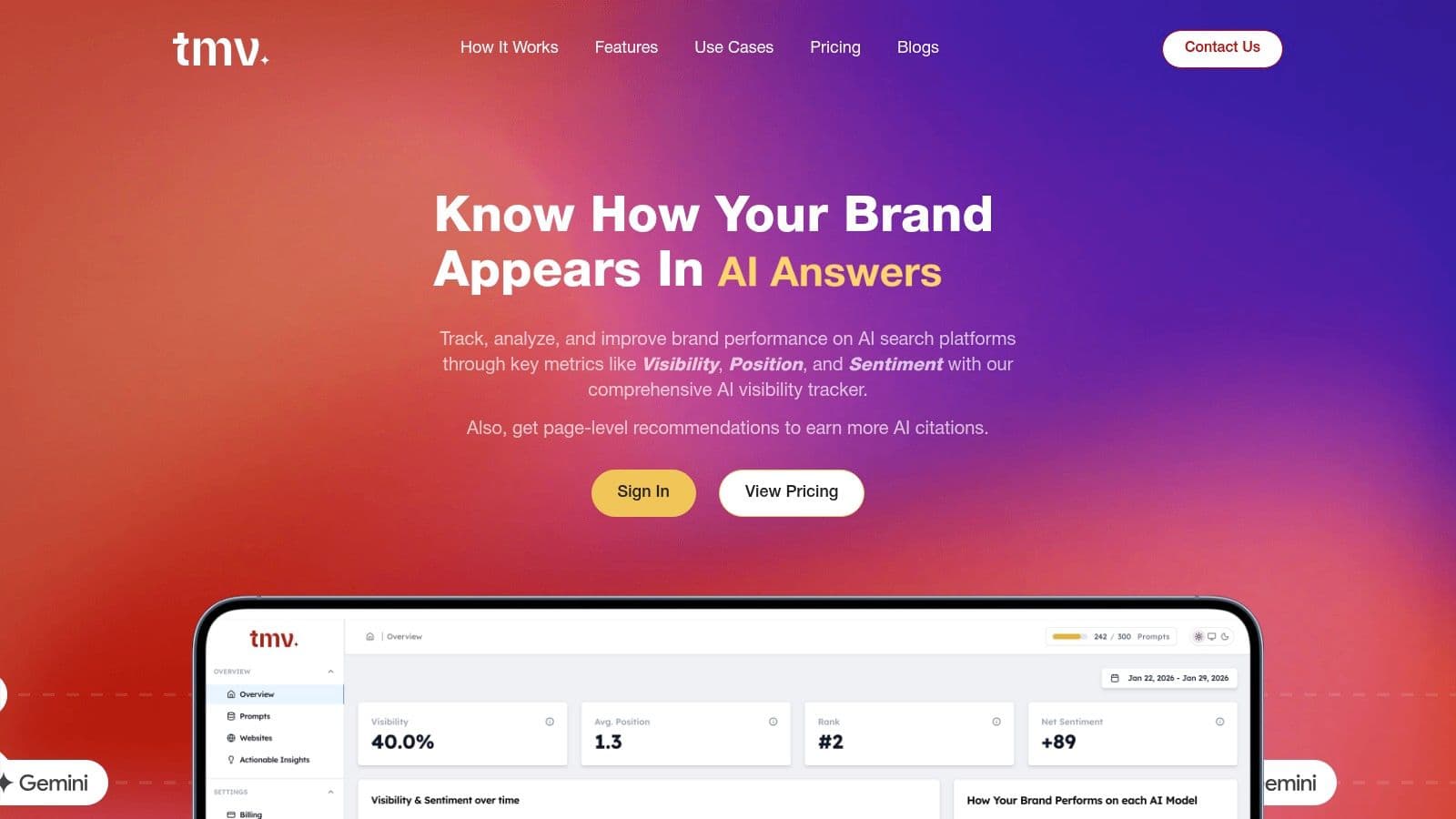
For a marketing agency, the platform delivers daily prompt tracking and straightforward share-of-voice reports that are easy to export for client presentations. The countdown timer to the next data refresh adds a sense of immediacy, ensuring users always have the latest visibility data. This focus on daily cadence and reporting makes it a practical tool for ongoing AI brand monitoring without the complexity of enterprise-level suites.
Analysis & User Experience
The user interface is clean and lightweight, with dashboards designed for quick adoption and immediate insight. Users can easily set up keyword and competitor tracking and see results populate within 24 hours. The focus is on core metrics, avoiding the data overload that can come with more feature-heavy platforms.
- Pricing: Specific pricing is not public, but it is positioned as a more accessible option. Prospective users should contact them for a quote and to verify platform coverage and current prompt quotas.
- Pros: Clear, lightweight dashboards are excellent for fast adoption. Ideal for agencies that require simple, client-friendly weekly or monthly reporting. The ‘used’ vs. ‘cited’ distinction is a key analytical advantage.
- Cons: As a younger product, its feature set is narrower than larger suites. Teams with extensive needs should vet the model coverage and tracking limits to ensure it meets their scale.
Website: https://trackmyvisibility.com
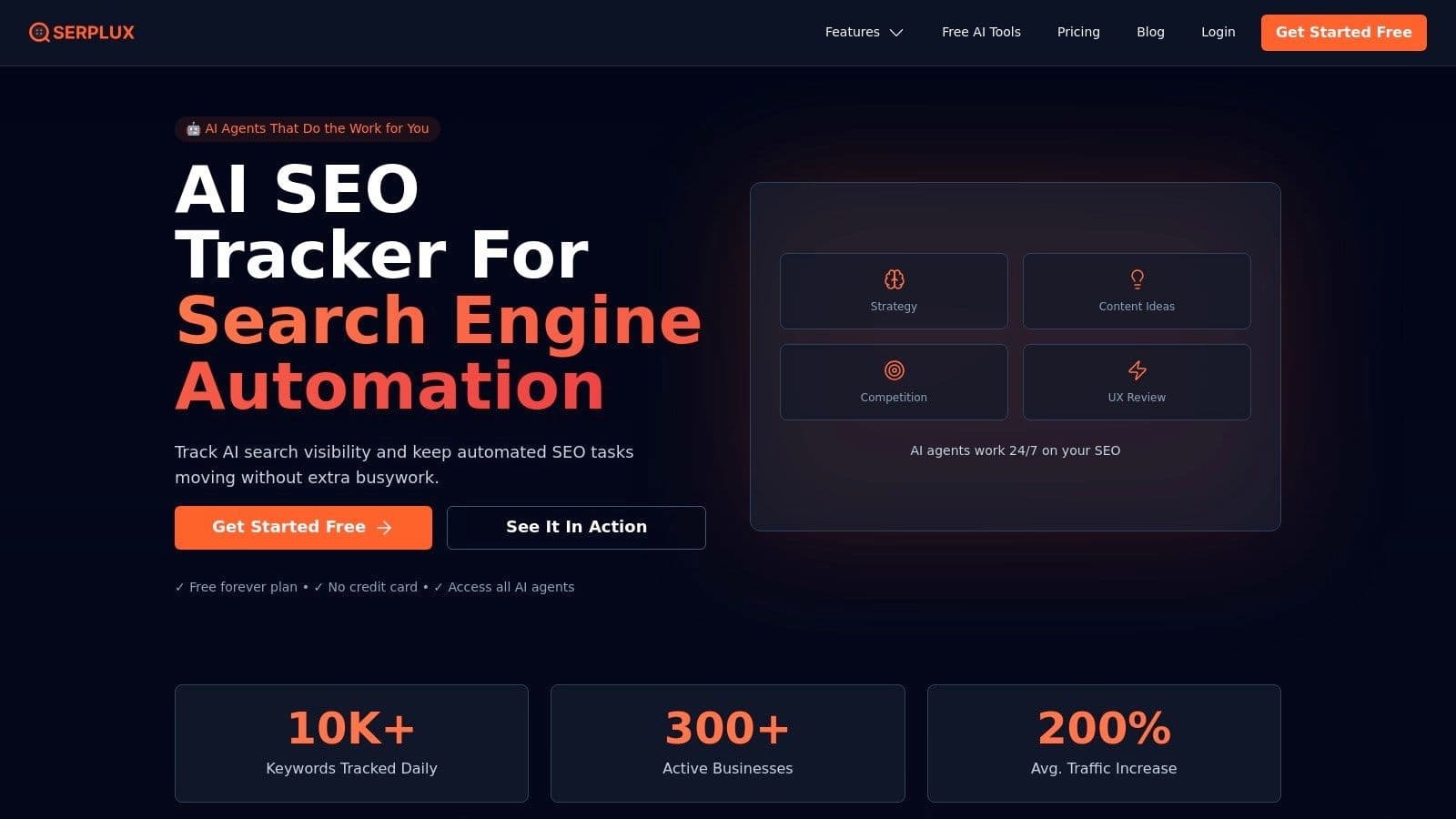
11. Serplux – AI Search Tracker & Citation Monitor
Serplux presents itself as a specialized citation monitoring tool designed for teams focused squarely on AIO/AEO visibility. As a direct CitationIQ alternative, its appeal lies in a concentrated feature set that promises to track brand presence in AI Overviews and other generative AI responses without the complexity of a broad market intelligence suite. This tool is built for SEOs and content managers who need to quickly assess their visibility and get straightforward recommendations.
The platform emphasizes providing actionable insights to improve coverage. Instead of just showing you where you are cited, Serplux aims to guide your strategy on how to appear more frequently. This practical approach could be a significant advantage for teams that are resource-constrained and need clear, tactical direction rather than just raw data. It’s positioned as a solution for those who want to get started with AI citation tracking efficiently.
Analysis & User Experience
As a newer entrant, the user experience is designed to be direct, focusing on the core problem of citation tracking. This targeted approach suggests a potentially faster onboarding process compared to larger, more multifaceted enterprise platforms. The interface is expected to be clean and centered on its primary tracking and reporting functions.
- Pricing: Pricing details are not publicly available, requiring direct contact. This lack of transparency can make initial evaluation difficult for teams needing to compare costs upfront.
- Pros: Highly focused on the core problem of AI citation monitoring. Actionable recommendations are a key part of the offering, not just data.
- Cons: Limited public track record and customer proof points. The lack of transparent pricing and detailed feature breakdowns makes it harder to assess against established competitors.
Website: https://serplux.com
12. Structiq – AI Citation Intelligence Platform
Structiq introduces a unique, technically-focused approach to the AI citation landscape, making it a compelling CitationIQ alternative for teams interested in the why behind their visibility. Instead of just tracking mentions, the platform diagnoses the underlying structural and content factors that influence an AI model's decision to cite a source. It audits your website's architecture, content sourcing, and technical setup to generate a "citation likelihood" score. This proactive stance is its key differentiator, moving beyond monitoring to active optimization.
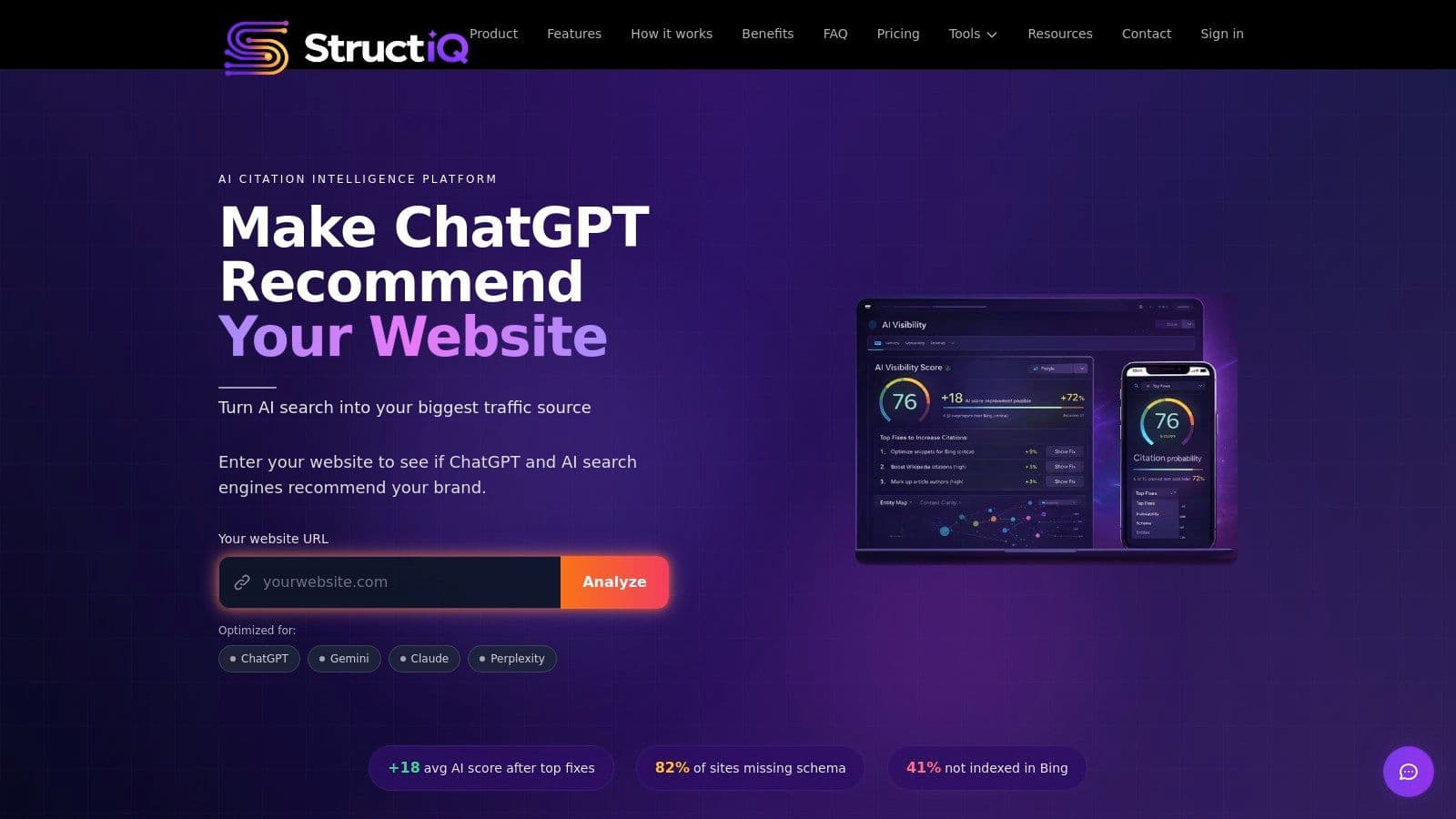
For a product manager or technical SEO, Structiq provides actionable recommendations to improve citation probability. For instance, it might identify that your internal linking structure fails to signal authority to key pages or that your external source choices are seen as low-quality by LLMs. This shifts the focus from purely tracking outcomes to engineering the conditions for success, bridging the gap between Generative Engine Optimization (GEO) theory and practical site-level implementation. It’s one of the best CitationIQ alternatives for organizations with the resources to execute on technical and content architecture changes.
Analysis & User Experience
As an early-stage platform, the user experience is centered around guided demos and direct consultation. The value lies in the diagnostic reports and expert recommendations rather than a self-serve dashboard. The focus is on providing a clear roadmap for development and content teams to follow.
- Pricing: Details are not public and are provided only after a demo. The consultative nature suggests it is geared toward mid-market or enterprise clients who can invest in implementation.
- Pros: Strong focus on the technical and structural root causes of citation performance. Provides actionable, site-level recommendations for improvement.
- Cons: Requires significant development and content resources to act on its findings. Being an early-stage product, its features and user interface may evolve.
Website: https://www.structiq.pro
Top 12 CitationIQ Alternatives — AI Citation & Visibility Comparison
Final Thoughts
The search for the best CitationIQ alternatives reveals a market undergoing significant change, driven by the rise of Generative AI and its integration into search engine results pages (SERPs). Our deep dive into tools like Similarweb, Semrush, Conductor, and Ahrefs, alongside emerging AI-native platforms such as Citefy and Structiq, shows that tracking brand and content citations is no longer a simple matter of monitoring backlinks. It has become a complex discipline focused on visibility within AI-generated answers, large language model (LLM) knowledge bases, and new search formats.
The key takeaway is that your choice of tool must align directly with your strategic priorities. Are you a large B2B enterprise primarily concerned with competitive intelligence and market share within AI overviews? A comprehensive suite like Similarweb's GenAI Intelligence Toolkit or Conductor's AEO/GEO platform offers the necessary depth. In contrast, an SEO specialist focused on tactical execution might find Semrush's integrated AI Visibility Toolkit or a dedicated tracker like Serplux more practical for daily workflow.
Making Your Selection: A Strategic Framework
Choosing the right platform from this list requires careful consideration beyond just features. It’s an investment in your brand's future visibility. As you evaluate these best citationiq alternatives, frame your decision around three core pillars:
- Scope of Monitoring: Do you need to track citations within specific LLMs like ChatGPT and Perplexity, or is your focus primarily on Google’s Search Generative Experience (SGE) and AI Overviews? Tools like Citefy and MeasureLLM are built for the former, while platforms like Conductor and Ahrefs are adapting their powerful SEO engines to cover the latter.
- Integration with Existing Workflows: How will this new data source connect with your current SEO, content, and brand management processes? For teams already embedded in a major platform, adding a module from Semrush or Similarweb creates a more unified data environment. A standalone tool like Structiq or Track My Visibility, however, might offer more specialized insights but requires a separate process for implementation.
- Role-Specific Needs: The ideal tool varies dramatically by job function.
- CMOs and Brand Managers will gravitate towards platforms that provide high-level competitive analysis and share-of-voice metrics within AI-driven search, making Conductor or Similarweb a strong fit.
- SEO Specialists need granular data on which specific pages and content snippets are being cited, why, and how to optimize for more. Ahrefs, Serplux, and Semrush provide this tactical-level information.
- Content and Product Teams can use tools like Citefy or even Writesonic to understand how their educational content and product descriptions are being interpreted and referenced by AI, guiding future content strategy.
Implementation and Final Considerations
Once you've shortlisted your options, the trial or pilot period is critical. Don't just activate the tool; define a clear test case. Select a core set of 5-10 strategic keywords or a specific product line to monitor. This focused approach will help you assess the platform's accuracy, the actionability of its recommendations, and its overall user experience without getting overwhelmed.
Ultimately, navigating this new frontier of AI-driven search is about adapting and staying informed. The platforms we've analyzed represent the current vanguard in a rapidly advancing field. By selecting a tool that matches your operational needs and strategic goals, you are not just replacing a legacy system; you are equipping your organization to compete effectively for visibility in the next generation of search.
If you're looking for a partner to not only track your AI visibility but also to build the foundational authority that gets you cited in the first place, Attensira can help. We specialize in creating high-authority, data-driven content that positions your brand as a primary source for both search engines and LLMs. Visit Attensira to see how our strategic content approach can secure your brand's place in the AI-powered future.