
Discover the best AI writing tools to scale your content. Our guide reviews Jasper, Copy.ai, and more for features, pricing, and B2B use cases.
Finding the right AI writing tool for your business is no longer about simply generating text. It's about finding a strategic partner that can scale content production, improve quality, and drive measurable marketing results. The market is saturated with options, each claiming to be the definitive solution. This creates a significant challenge for marketing leaders and content teams: how do you select the one that aligns with your specific workflows, security standards, and business objectives without sinking countless hours into trial-and-error?
This guide cuts through the noise. We provide a detailed analysis of the best AI writing tools available, moving beyond surface-level feature lists. For each platform, you'll find an objective breakdown of its core capabilities, ideal use cases, and genuine limitations. We've included screenshots and direct links to help you evaluate each option efficiently.
You will learn which tools excel at:
- Creating long-form, SEO-optimized articles.
- Generating high-converting ad and social media copy.
- Enforcing brand voice and style guidelines across your organization.
- Integrating directly into your existing content management and marketing platforms.
Whether you're a CMO aiming to increase content ROI, an SEO specialist trying to dominate search rankings, or a brand manager tasked with maintaining consistency, this resource provides the clarity needed to make a confident investment. We'll examine everything from Jasper and Copy.ai to enterprise-focused platforms like Writer and Microsoft Copilot, giving you the information to choose the tool that will actually work for your team.
1. Jasper
Jasper has positioned itself as one of the best AI writing tools specifically for marketing and business teams that require brand consistency at scale. Rather than functioning as a general-purpose AI chat, it provides a structured environment designed to produce on-brand content across various channels. Its core strength lies in its ability to centralize and enforce a company's unique voice, making it a dependable choice for CMOs and growth leaders managing multiple campaigns. The platform allows users to build comprehensive campaigns, starting from a single brief to generate an array of assets like social media posts, ad copy, and blog articles, all aligned with the same core messaging and tone.
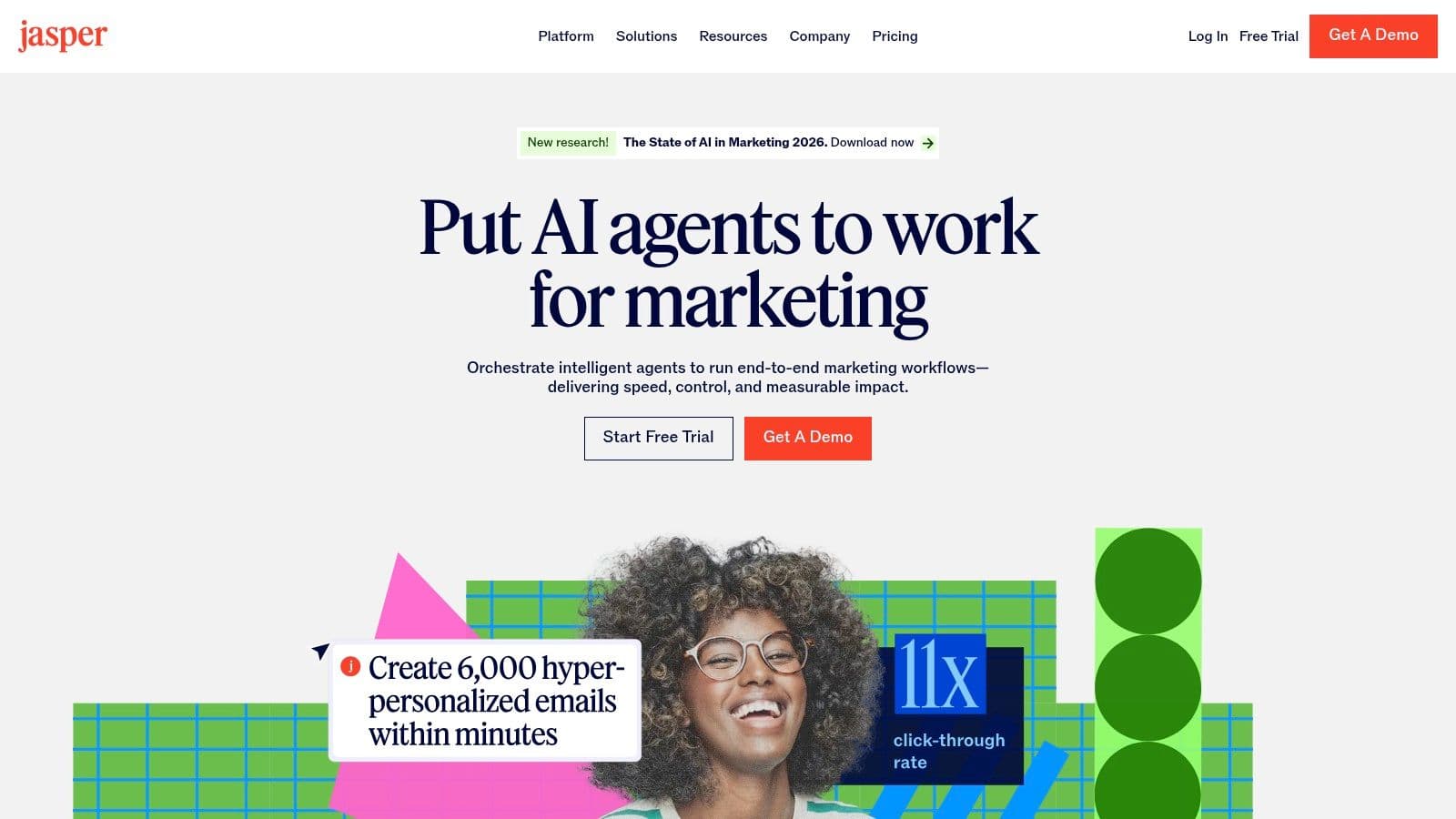
This focus on brand governance is what sets it apart. While many tools can produce high-quality text, Jasper's "Brand Voice" feature analyzes your style guides, product catalogs, and existing content to create a model of your brand identity. It then applies these guardrails to all outputs, reducing the time spent on manual edits and correcting off-brand messaging. This approach helps operationalize what is AI-generated content within an organization, ensuring consistency whether the user is a junior marketer or a senior copywriter.
Analysis & Key Features
- Core Strengths: Purpose-built for marketing teams, strong brand guardrails, and enterprise-level governance. It excels at creating multi-asset campaigns from a single input, saving significant coordination time.
- Weaknesses: The pricing model can be complex, combining a base platform fee with a credits-based system for certain actions. For individuals or small teams needing only occasional content snippets, the feature set may be excessive and not cost-effective.
- Ideal Use Case: Mid-to-large-sized marketing departments needing to maintain brand consistency across all digital channels, from ad campaigns to long-form SEO content.
Pricing: Jasper offers tiered plans for Teams and Businesses, with pricing that includes a base fee and a hybrid credits system for advanced actions or higher-volume generation.
2. Copy.ai
Copy.ai positions itself as a go-to-market AI platform, focusing on generating and automating marketing and sales copy at scale. It appeals to growth teams who need repeatable, efficient workflows for content production. Unlike tools that primarily function as a single chat interface, Copy.ai builds on this with a powerful Workflow Builder and Content Agents. This allows users to create custom, reusable automations for tasks like generating personalized outreach emails or drafting social media campaigns, making it a strong contender among the best AI writing tools for teams focused on operational efficiency.
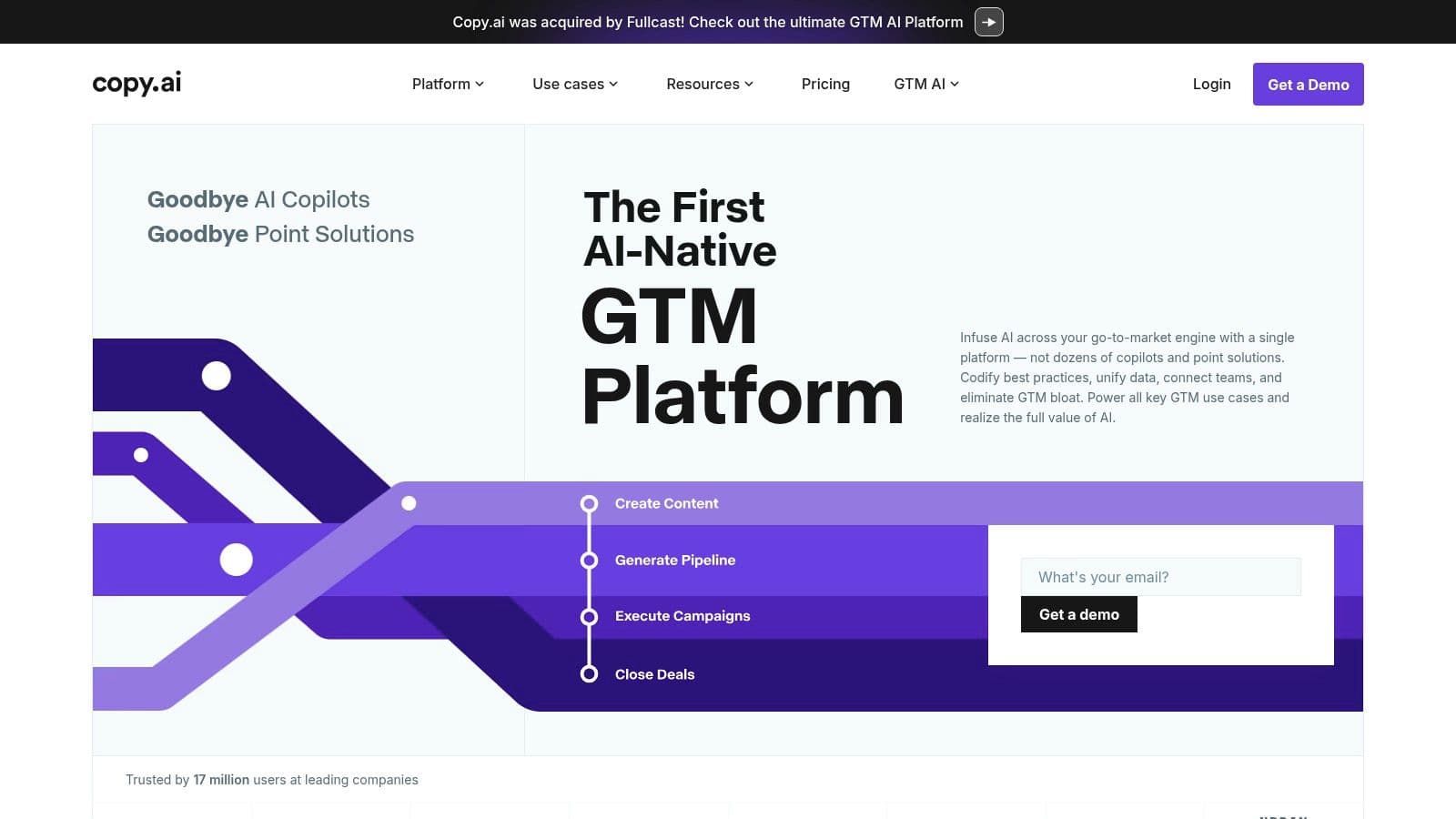
The platform's key distinction is its emphasis on automation and integration within the sales and marketing stack. With over 20 native integrations and a robust API, it is designed to connect directly into a company's go-to-market processes. For instance, a team can build a workflow that pulls lead data from a CRM, generates personalized copy, and pushes it to an outreach tool. This focus on connecting systems and automating output lowers the manual effort required for high-volume content needs. Enterprise buyers will also note its SOC 2 Type II compliance, which provides an important layer of security and data governance.
Analysis & Key Features
- Core Strengths: Exceptional at creating repeatable, automated workflows for sales and marketing tasks. The Workflow Builder is a significant asset for teams needing to scale content production without extensive prompt engineering. The platform offers a strong automation-to-output ratio and easy onboarding.
- Weaknesses: Brand governance features are not as deep or centralized as those found in platforms like Jasper. While effective, the credit system for advanced automation can become a constraint for teams running very high volumes of complex workflows.
- Ideal Use Case: Growth and sales teams that need to automate repetitive copy generation for GTM activities like outbound prospecting, lead nurturing, and content repurposing. Teams can learn more about how this fits into a broader strategy for automated content creation.
Pricing: Copy.ai offers multiple tiers, including a free plan and paid plans for Pro, Team, and Enterprise users. Paid plans offer unlimited words in Chat, with credits allocated for running workflows and using the API.
3. Writesonic
Writesonic distinguishes itself among the best AI writing tools by directly connecting content generation with performance in the emerging landscape of AI-powered search. While many platforms focus solely on producing text, Writesonic extends its utility to what it calls Generative Engine Optimization (GEO). This positions it as a practical tool for SEO specialists and marketers who are not just creating content, but are also concerned with how that content will be discovered and presented by AI assistants and conversational search interfaces like Google's SGE and Perplexity.
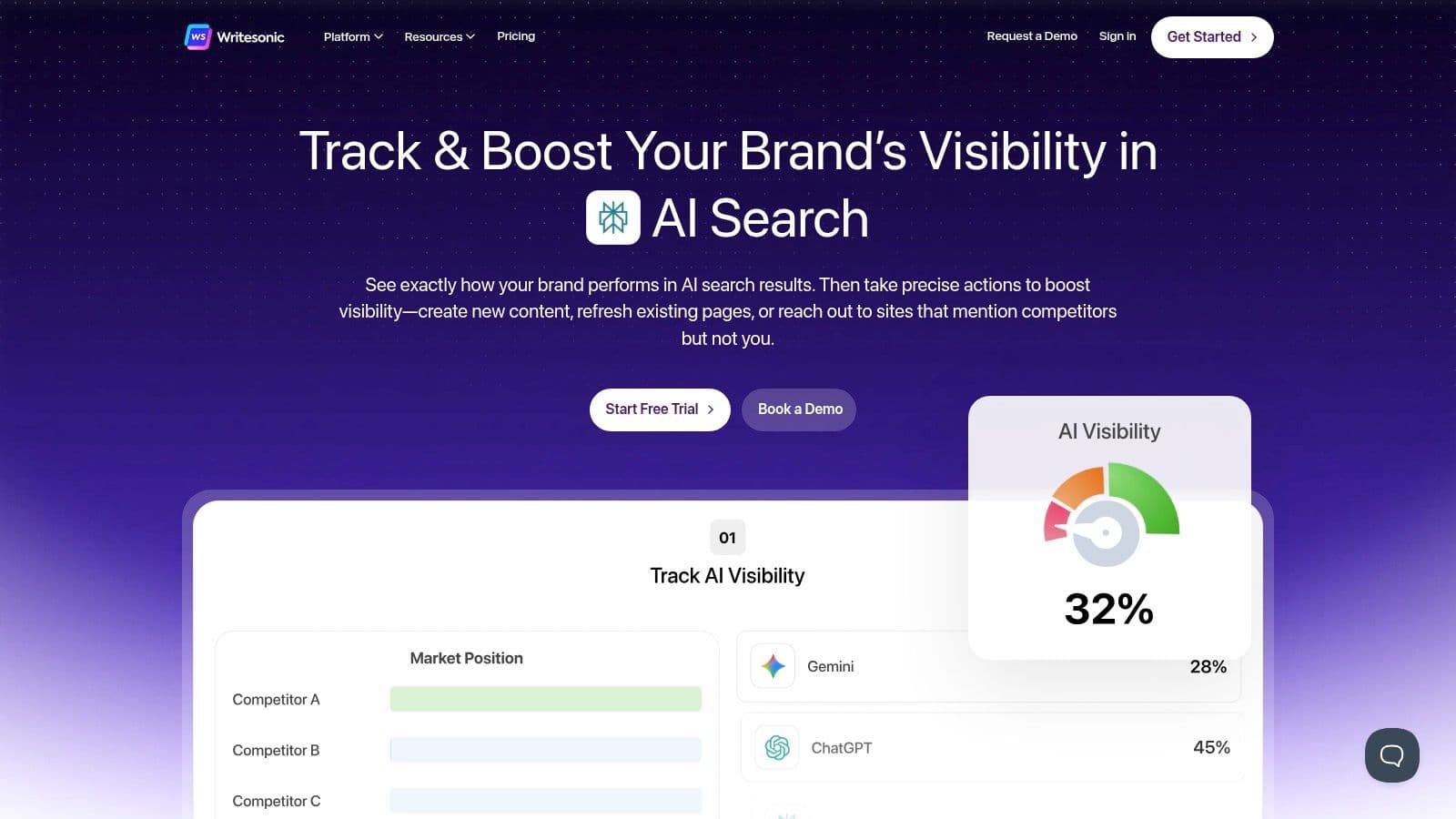
The platform’s approach is built on integrating familiar SEO data sources, such as Google, Ahrefs, and Semrush, directly into the content creation workflow. This allows users to build articles that are optimized for traditional search while also tracking their brand’s visibility within AI-generated answers. Its AI search tracking and bot traffic monitoring features offer an early look into a new and critical area of digital marketing, providing data on how a brand is being represented in this new channel. This makes Writesonic a forward-looking choice for teams aiming to stay ahead of search trends.
Analysis & Key Features
- Core Strengths: Bridges the gap between AI content creation and AI search visibility monitoring. The built-in integrations with major SEO data providers simplify the research and optimization process, making it a powerful, all-in-one solution for performance-driven content.
- Weaknesses: The platform's features and pricing tiers are evolving quickly, which can create some uncertainty; buyers should confirm specific plan inclusions at the time of purchase. Its enterprise-level controls for team management and brand governance are functional but still maturing compared to more established suites.
- Ideal Use Case: SEO agencies and in-house marketing teams that need to produce optimized content at scale while simultaneously preparing for and monitoring their visibility in generative AI search results.
Pricing: Writesonic offers a range of plans, including a Free Trial, and tiered options for Individuals, Teams, and Enterprises, with pricing based on word count and feature access.
4. Grammarly
Grammarly has evolved from a ubiquitous writing assistant into a formidable AI writing tool, deeply integrated into the daily workflows of countless enterprises. Rather than focusing on generating entire campaigns from a brief, its strength is in improving and refining existing human-written text for clarity, consistency, and correctness. This makes it an excellent choice for organizations looking to elevate the quality of all written communication, from internal emails to client-facing reports, with minimal friction or training.
Its ubiquitous browser extensions and app integrations mean it works where teams already write, providing real-time suggestions for grammar, tone, and conciseness. For businesses, Grammarly’s enterprise-grade security, including SOC 2 Type II compliance and SSO, offers peace of mind. The platform provides centralized administrative controls, allowing companies to set style guides and monitor adoption, ensuring a consistent voice across the entire organization. The addition of generative AI features allows users to rewrite sentences, adjust tone, or create short text snippets directly within their workflow.
Analysis & Key Features
- Core Strengths: Exceptional at improving existing content quality and consistency across an entire organization. Its widespread adoption and minimal training requirements allow for immediate impact. Strong security posture makes it a safe choice for enterprise deployment.
- Weaknesses: Less suited for long-form, brief-to-draft content generation compared to specialized AI writers. The generative AI capabilities are more focused on refinement and short-form creation rather than producing full articles or campaign assets from scratch.
- Ideal Use Case: Companies seeking to enforce writing quality and brand consistency at scale across all departments. It's perfect for improving the clarity of day-to-day business communication, not just marketing copy.
Pricing: Grammarly offers a free version with basic suggestions, a Premium plan for individuals, and a Business tier with features like style guides, brand tones, and centralized billing.
5. Anyword
Anyword differentiates itself from other AI writing tools by focusing on measurable performance. It is engineered for marketing and B2B teams that prioritize conversion lift and data-backed creative decisions. Instead of just generating text, the platform provides a predictive performance score for copy variations, giving users a quantitative signal of which version is most likely to resonate with their target audience. This score is derived from its model trained on extensive historical marketing data, making it a practical asset for teams needing repeatable, high-performing content.
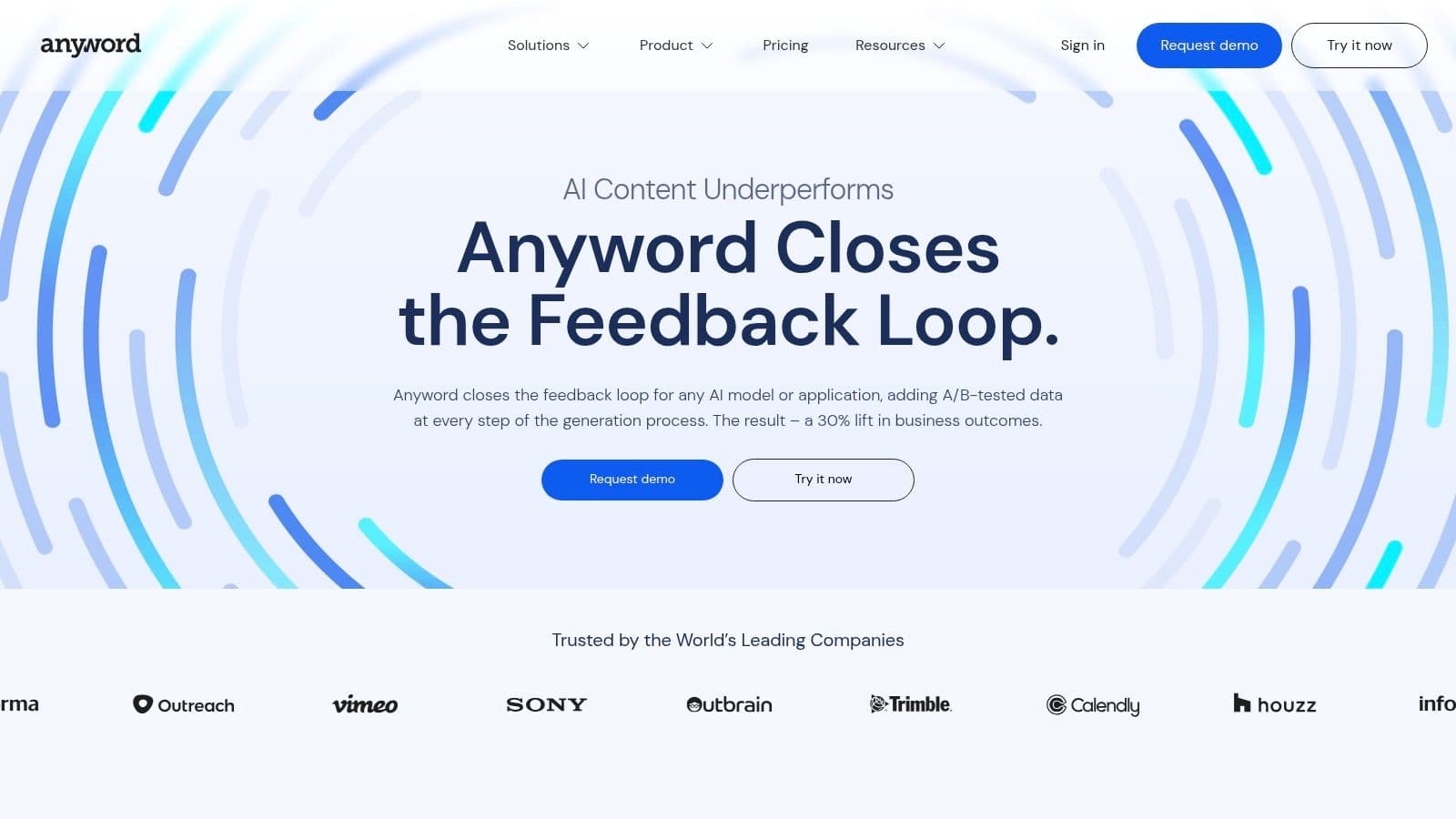
The platform's analytical approach is its core appeal. Anyword allows companies to connect their own ad accounts and past campaign data, which the AI uses to develop a deeper understanding of what works for their specific brand and audience. This custom copy intelligence, combined with its brand voice management and templates, helps teams produce on-brand content that is also optimized for engagement from the start. This makes it one of the best AI writing tools for organizations that view content creation through a performance marketing lens.
Analysis & Key Features
- Core Strengths: Predictive performance scores to guide copy selection, custom intelligence from ingesting a company's past campaign data, and strong brand voice controls. It excels at quickly generating and evaluating multiple copy options for ads, social media, and landing pages.
- Weaknesses: The predictive scores are directional and not a guarantee of success, still requiring human oversight and testing. The tool's full potential is only reached when meaningful historical performance data is available to connect.
- Ideal Use Case: B2B marketing teams and performance-driven agencies that need to produce and justify conversion-focused copy for ads, emails, and websites with a data-oriented methodology.
Pricing: Anyword offers several plans, including a free tier, a Starter plan for individuals, and tiered Business plans designed for teams needing collaboration, brand controls, and data integration.
6. Writer
Writer establishes itself as a full-stack generative AI platform designed for enterprise needs, moving beyond simple content creation to offer a secure, integrated solution. Its architecture is built for companies in regulated industries or those with strict security protocols, such as healthcare and finance. The platform's main differentiator is its focus on governance and data security, holding SOC 2 Type II compliance and providing a private, self-hosted model option. This allows organizations to build and deploy custom AI applications using their own data without that information being used to train public models.
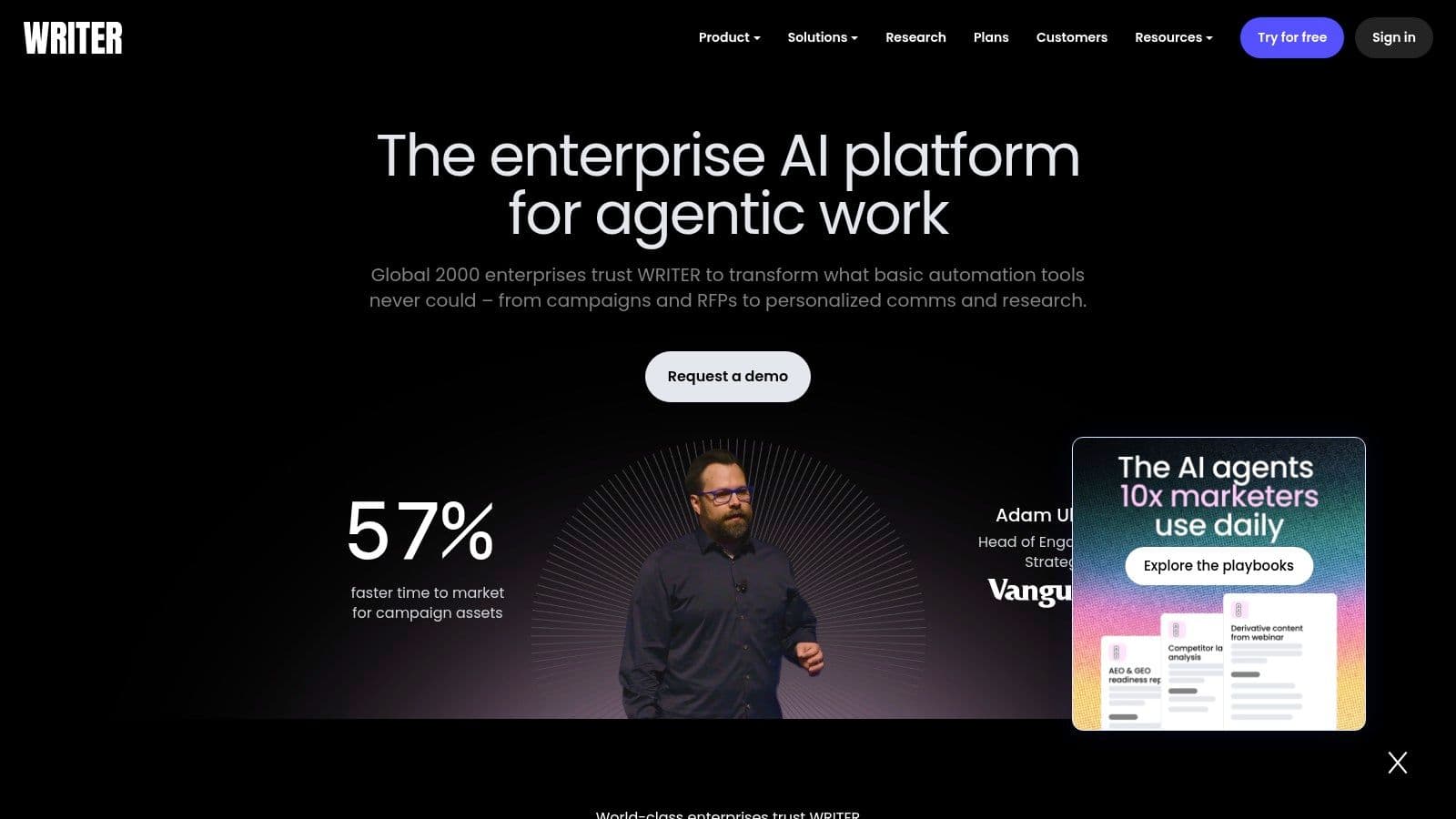
Unlike many AI writing tools that operate as standalone applications, Writer is designed for deep integration across an organization’s entire tech stack. It connects to various data sources through its Knowledge Graph to ensure all generated content is accurate and grounded in company facts. This system of retrieval-augmented generation (RAG) means outputs are not just creative but also factually correct, pulling from internal documentation, databases, and business applications. It provides a structured framework for deploying custom AI agents and workflows that are consistent and auditable.
Analysis & Key Features
- Core Strengths: Enterprise-grade security with SOC 2 compliance, robust governance features, and strong data privacy controls. The platform’s ability to connect to internal knowledge sources ensures factual accuracy and brand consistency.
- Weaknesses: The platform's complexity and enterprise focus make it a poor fit for individuals or small teams. Pricing is sales-led and requires a significant implementation process, which can be a barrier for those seeking a quick, simple solution.
- Ideal Use Case: Large B2B organizations, particularly in regulated industries, that require a secure, auditable, and deeply integrated generative AI platform for multiple business functions, from marketing to support.
Pricing: Writer's pricing is customized for enterprise clients and provided through a sales consultation process. It is not available as a simple monthly subscription.
7. Hypotenuse AI
Hypotenuse AI is engineered for e-commerce and B2B companies that need to produce high-quality product content at scale. It distinguishes itself from general-purpose writing assistants by focusing on the operational challenges of managing large SKU catalogs. The platform is built around bulk content generation, allowing operations and marketing teams to create thousands of unique product descriptions, ad copy, and SEO meta tags from a simple CSV file or through direct CMS integrations. This makes it an essential tool for distributors, online retailers, and marketplaces where content velocity is critical.
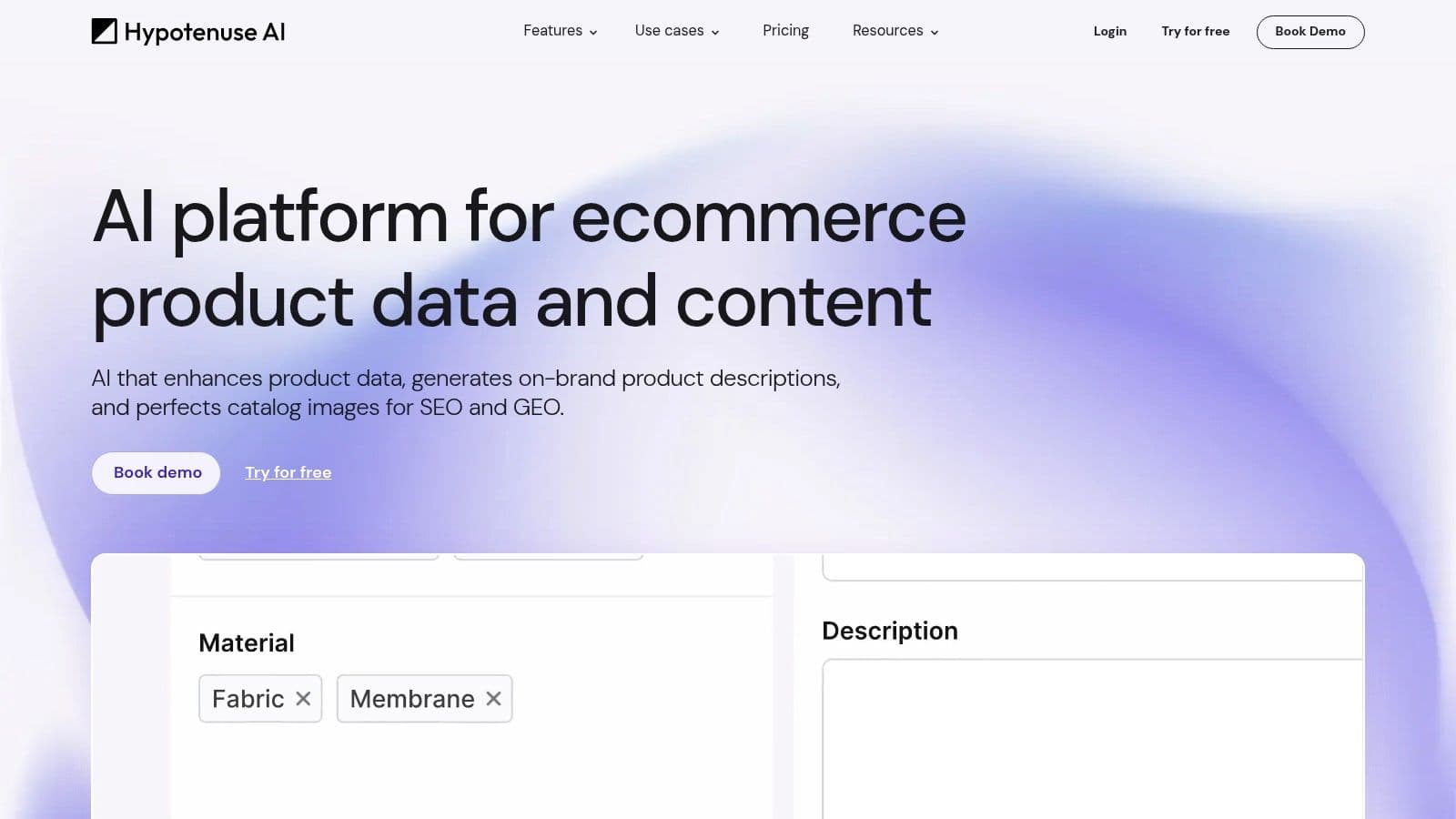
The platform’s real strength is its workflow efficiency for product-centric content. While other tools offer creative writing capabilities, Hypotenuse provides a structured, repeatable process for turning raw product data into compelling copy. Its "SEO Pro Mode" integrates factual research by referencing SERP data and "People Also Ask" results, helping to create content that is not only descriptive but also optimized for search performance. With SOC 2 Type II compliance and a policy of not using customer data for public model training, it meets the security requirements of enterprise users, making it one of the best AI writing tools for regulated or data-sensitive industries.
Analysis & Key Features
- Core Strengths: Exceptional at bulk content generation from data files (CSV/XLSX), making it ideal for large SKU catalogs. Its SEO modes and direct integrations with platforms like Shopify streamline e-commerce workflows. Clear, predictable pricing is a plus for budget management.
- Weaknesses: The tool is highly specialized for product, catalog, and SEO content. It is less suited for creating long-form thought leadership, creative storytelling, or complex narrative-driven articles. Advanced SEO features are reserved for higher-tier plans.
- Ideal Use Case: E-commerce businesses, B2B distributors, and digital marketplaces needing to automate the creation of thousands of product descriptions and SEO-optimized landing pages efficiently.
Pricing: Hypotenuse AI offers tiered plans with straightforward word and seat allocations, making it easy to predict costs based on content volume needs.
8. Surfer (Surfer SEO + Surfer AI)
Surfer distinguishes itself by embedding its AI writer directly within a robust SEO optimization suite. Instead of treating content creation and optimization as separate tasks, it integrates them into a single, data-driven workflow. This makes it one of the best AI writing tools for SEO specialists and content teams focused on organic search performance. The process starts with a comprehensive brief based on SERP analysis, which then guides the AI in drafting an article that is pre-optimized with relevant terms, structure, and word count targets.
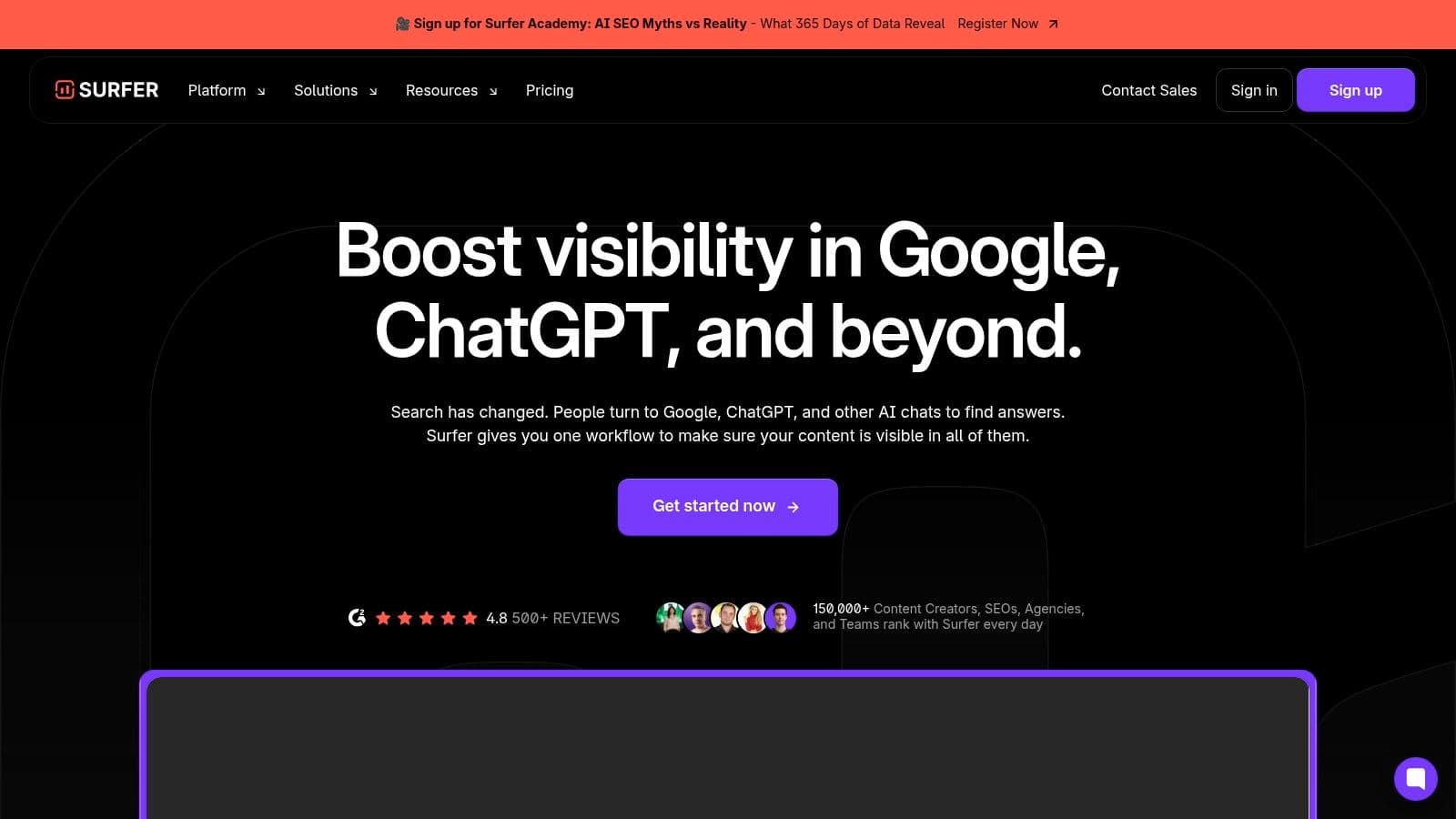
The platform’s core value lies in its SEO-first approach. While other general-purpose writers can generate text, Surfer’s AI is specifically conditioned to produce rank-ready drafts. Its Content Editor provides real-time feedback and NLP-driven suggestions to improve a document's on-page score, bridging the gap between initial draft and final, optimized content. This methodology helps teams produce articles that meet search engine requirements from the outset, reducing the manual effort of post-writing optimization. For businesses that see organic search as a primary growth channel, this integrated system offers a clear advantage over standalone AI writers.
Analysis & Key Features
- Core Strengths: Strong SEO-first guidance that informs the entire writing process. It consolidates briefing, drafting, and optimization into a single workflow, which is a major efficiency gain for content teams. This is a key reason many view it as one of the best AI-powered SEO tools available.
- Weaknesses: The pricing structure, which includes a base subscription plus extra costs for AI credits and other add-ons, can become expensive. The AI-generated content still requires review from a subject-matter expert to ensure factual accuracy and sufficient depth.
- Ideal Use Case: SEO agencies and in-house content teams whose primary goal is creating long-form content designed to rank high in search engine results.
Pricing: Surfer offers several subscription tiers, with AI writing available through a credits system. Additional features like the AI Tracker and SERP Analyzer are available as add-ons.
9. Frase
Frase has established itself as an end-to-end agentic SEO platform, moving beyond simple text generation to cover the entire content lifecycle from research to performance tracking. It's designed for SEO specialists and content teams who need a unified system for creating and optimizing content that ranks on both traditional and AI-native search engines. The platform's main differentiator is its focus on the complete workflow, allowing users to research competitors, generate detailed briefs, write optimized articles, and then monitor whether AI search engines like Perplexity or Google's AI Overviews cite their content.
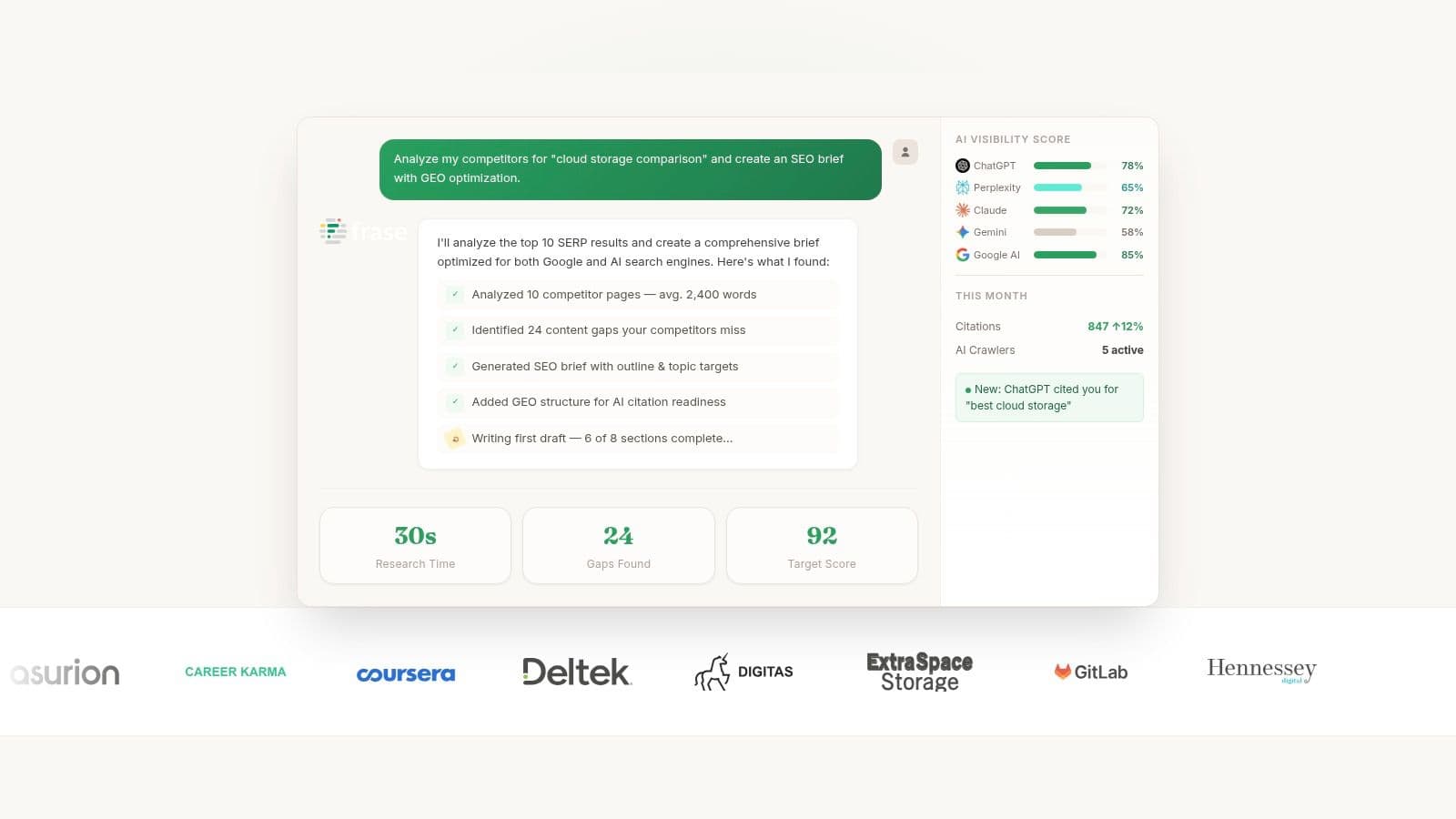
This holistic approach makes Frase one of the best AI writing tools for teams aiming for measurable SEO impact. Its AI Agent uses over 80 specific skills to conduct research and draft content, while the in-editor optimization tools provide real-time feedback on keyword density and topic coverage. The addition of GEO (Generative Engine Optimization) and AI Visibility tracking directly addresses the emerging need to measure content performance within AI-driven answer engines, providing a forward-looking advantage for content strategists.
Analysis & Key Features
- Core Strengths: Provides a complete solution from research and drafting to optimization and AI citation tracking. Its clear packaging and scalable add-ons make it adaptable for growing teams. The focus on GEO gives it a distinct edge for future-proofing content strategy.
- Weaknesses: The limits on GEO and AI visibility tracking prompts require careful planning to use effectively. Access to more advanced features like API access and SOC 2 compliance is restricted to higher-tier enterprise plans.
- Ideal Use Case: SEO agencies and in-house content teams that manage the entire content production process and need to prove the ROI of their SEO and AI-driven content efforts.
Pricing: Frase offers several subscription tiers, with clear usage limits that can be expanded through add-ons for greater flexibility. Enterprise-level features are available on custom plans.
10. Semrush Content Toolkit
For teams already invested in the Semrush ecosystem, the Semrush Content Toolkit offers a direct path to integrating SEO data into AI-powered content creation. Rather than treating SEO research and AI drafting as separate functions, this platform merges them into a single, cohesive workflow. Its main value is for users who want to ground their AI-generated articles in Semrush's competitive and keyword data from the very start, moving from topic discovery to an optimized draft within one environment. This makes it one of the best AI writing tools for content marketers focused squarely on search performance.
The toolkit is designed around an SEO-first content lifecycle. It starts with the Topic Finder to identify relevant ideas based on keyword data and competitor analysis. From there, users can generate an SEO Brief that outlines structural and keyword targets before using the AI to write the article. The built-in Content Optimizer then provides real-time feedback to refine the draft for search engine visibility. This systematic process helps ensure that every piece of content produced is engineered for a specific SEO purpose, reducing the guesswork in content strategy. For those exploring different SEO-focused AI platforms, it's useful to see how other Semrush AI toolkit alternatives compare.
Analysis & Key Features
- Core Strengths: Natively integrates Semrush’s powerful keyword and competitive data directly into the content workflow. The all-in-one process from topic research to optimization is efficient for SEO-driven teams. Simple, fixed-price packaging is a plus for smaller teams.
- Weaknesses: The base plan limits the number of "SEO-boosted" articles per month, requiring credit purchases for higher volume. Advanced SEO work may still require using the broader Semrush platform, as the toolkit is focused primarily on content creation.
- Ideal Use Case: Small to mid-sized content teams and SEO specialists who rely on Semrush data and want a streamlined, data-informed process for creating and optimizing articles for search rankings.
Pricing: The Content Toolkit is available as a standalone subscription with a fixed monthly price that includes unlimited standard AI articles and a set number of SEO-boosted article credits. Additional credits can be purchased.
11. Microsoft Copilot for Microsoft 365
Microsoft Copilot for Microsoft 365 distinguishes itself by embedding AI assistance directly into the applications enterprises use daily. Instead of a standalone platform, it functions as a native extension within Word, Outlook, PowerPoint, and Excel, making it one of the best AI writing tools for organizations standardized on the Microsoft ecosystem. This deep integration is its main advantage, as it meets users within their existing workflows to draft documents, summarize email threads, generate presentation outlines, and analyze data, significantly reducing the friction of adopting a new tool.
The tool’s value for large businesses is magnified by its reliance on Microsoft's enterprise-grade security and compliance framework. Copilot processes data within the user’s own Microsoft 365 tenant, adhering to existing data residency, privacy, and identity controls. This provides a layer of security and governance that standalone AI tools cannot easily match, making it a more tenable option for regulated industries or companies with strict data handling policies. The focus is less on creative brand voice and more on productivity and secure information synthesis within an established corporate environment. As AI reshapes how content is discovered, understanding how to track the performance of AI-generated content is becoming essential to validate its ROI.
Analysis & Key Features
- Core Strengths: Seamless native integration into Microsoft 365 apps lowers the barrier to adoption and change management. It benefits from enterprise-level security, identity, and compliance controls already in place.
- Weaknesses: The per-user, per-month add-on cost can become a material expense when deployed at scale. Output quality can be inconsistent and often requires significant human editing to align with a specific brand voice or stylistic nuance.
- Ideal Use Case: Large enterprises heavily invested in the Microsoft 365 ecosystem that need to boost employee productivity in tasks like email drafting, meeting summarization, and initial document creation while maintaining strict security and data governance.
Pricing: Available as an add-on to Microsoft 365 Business Standard/Premium and E3/E5 plans for a fixed per-user monthly fee. A "Copilot Pro" version is available for individual consumers.
Visit Microsoft Copilot for Microsoft 365
12. Sudowrite
Sudowrite carves out a unique niche among the best AI writing tools by focusing almost exclusively on long-form creative and narrative writing. Instead of targeting marketing copy or technical articles, it serves as a co-author for novelists, screenwriters, and storytellers. This specialization makes it a powerful asset for brands that rely on narrative-driven content, such as detailed case studies, brand storytelling, or ideating scripts for video campaigns. The platform is built to help users expand on ideas, overcome writer’s block, and refine the emotional tone of their work.
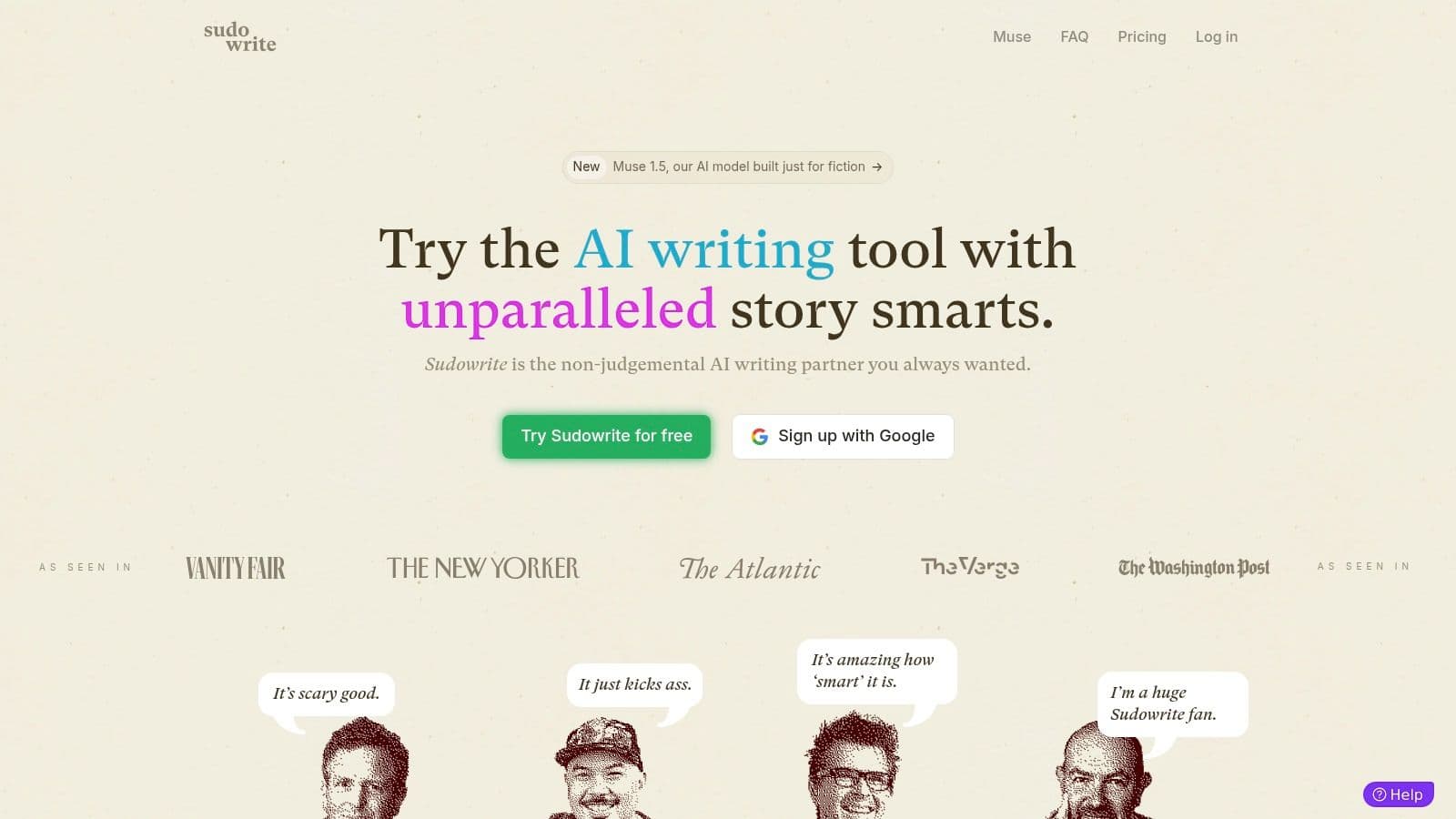
What makes Sudowrite distinct is its set of narrative-specific functions. Features like "Show, not Tell" help transform bland descriptions into vivid imagery, while the "Expand" tool can flesh out a simple scene into a detailed sequence. It guides the writer through plot points and character arcs, acting more like a brainstorming partner than a simple text generator. This approach is particularly effective for content teams looking to build a deeper connection with their audience through compelling stories, moving beyond standard blog posts and ad copy.
Analysis & Key Features
- Core Strengths: Excellent for ideation, character development, and refining narrative voice. Its features are purpose-built to assist with the creative process, making it a valuable tool for anyone stuck on a story. The credit system is generous and plans are straightforward.
- Weaknesses: The platform is not an SEO suite and lacks features for optimizing content for web publishing. It is less effective for producing technical, data-driven, or conversion-focused marketing content.
- Ideal Use Case: Content creators, brand storytellers, and marketing teams focused on building narrative-rich content like long-form articles, video scripts, and detailed case studies that require a strong emotional or creative element.
Pricing: Sudowrite offers tiered monthly or annual plans with different credit allowances. The top-tier plans include generous credit rollovers.
Top 12 AI Writing Tools Comparison
Final Thoughts
Our extensive review of the top AI writing tools has demonstrated one clear reality: these platforms are no longer a fringe benefit but a core component of a modern content and marketing strategy. From crafting high-converting ad copy with tools like Anyword to building comprehensive, SEO-optimized articles with Surfer AI, the applications are as diverse as the business needs they serve. The key is no longer if you should adopt an AI writer, but which one aligns with your specific objectives, workflow, and team structure.
This exploration reveals that the market for the best AI writing tools has matured significantly. We've moved beyond simple text generation into a new phase of specialized, purpose-built assistants.
Key Takeaways for Selecting Your AI Writing Partner
Choosing the right tool requires a strategic assessment, not a gut decision. Reflecting on our analysis of platforms like Jasper, Copy.ai, and Writesonic, several core decision-making pillars emerge:
- Primary Use Case: Be brutally honest about your main goal. If your team spends 80% of its time on long-form blog content, a tool like Frase or Surfer that integrates research and optimization is more valuable than one focused on social media snippets. Conversely, if quick, high-volume ad variations are the priority, Anyword or Hypotenuse AI would be a better fit.
- Integration is Everything: A powerful tool that exists in a vacuum creates more work. Consider how a platform integrates with your existing stack. Microsoft Copilot’s deep integration into the 365 ecosystem is a massive advantage for enterprises already invested there. Likewise, Semrush's ContentShake AI benefits users already managing their SEO campaigns within the Semrush environment.
- Balancing Quality and Control: Tools like Writer offer strict brand governance and custom style guides, providing a high degree of control for enterprise teams. In contrast, a more creatively-focused tool like Sudowrite gives individual writers immense imaginative freedom. Your choice depends on whether your priority is brand consistency or creative exploration.
- The Human-in-the-Loop Factor: None of these tools are "set it and forget it" solutions. The best results always come from a partnership between a skilled human editor and a capable AI assistant. Factor in the time and expertise required to guide, edit, and fact-check the AI's output. The true ROI comes from accelerating your human experts, not replacing them.
Implementing AI Writing Tools for Maximum Impact
Once you’ve made a selection, successful implementation is critical. Start with a pilot project focused on a specific, measurable goal. For example, task a small team with using an AI tool to increase blog production by 25% in one quarter or to improve the CTR on a specific ad campaign. This provides a clear benchmark for success and helps build a business case for wider adoption.
It's also beneficial to stay informed by consulting other expert roundups. For those looking to explore even more options or gain a different perspective on top AI solutions, we recommend reviewing other lists of the 12 best AI writing software tools for a supplementary viewpoint.
Ultimately, the most successful teams will view these platforms not as simple text generators but as strategic assets. They are research assistants, creative partners, and optimization engines all in one. The journey to finding the best AI writing tools for your organization is an investment in future efficiency, creativity, and market visibility. By choosing thoughtfully and implementing strategically, you can position your brand to not just keep pace but to lead the conversation in your industry.
You’ve selected the best AI writing tools and are ready to scale your content production. But how do you measure the actual impact on your search visibility and organic traffic? Attensira provides the crucial next step, monitoring your content's performance and providing the data-driven insights needed to prove the ROI of your AI-assisted content strategy. See how your new content is performing by visiting Attensira today.